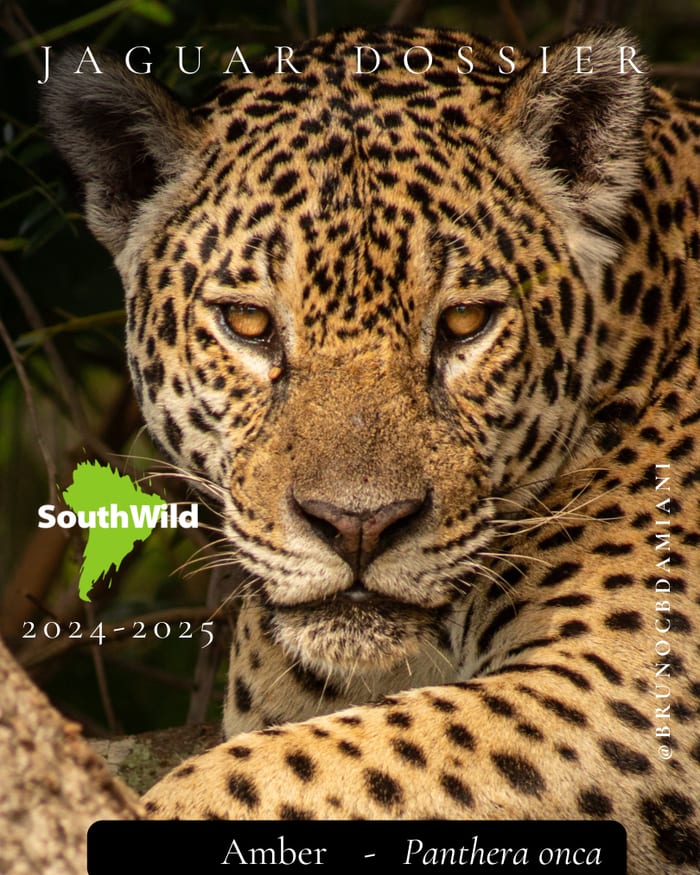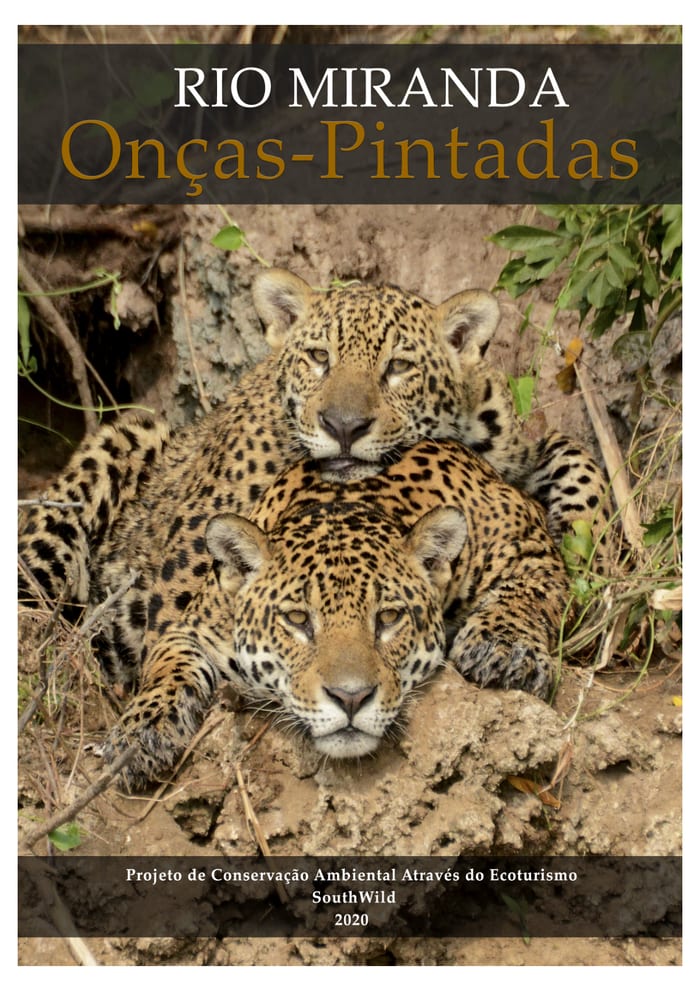
The SouthWild Jaguar Dossier is far more than a photographic catalog. It is one of the longest-running individual identification projects for wild Jaguars anywhere in the world.
Our first records date back to 2006, when SouthWild began systematically identifying every Jaguar photographed in Jaguarland using unique spot patterns that each Jaguar has on its faces and sides, much like human fingerprints. What began as an internal identification system evolved into an extraordinary archive documenting the lives, families, and histories of hundreds of wild Jaguars across two decades.
Every Jaguar Has a Story
To most visitors, a Jaguar encounter is unforgettable.
To SouthWild, that encounter is also another chapter in a much larger story.
We know who many of these cats are.
We know who named them.
We know where they first appeared.
We know their mothers, siblings and offspring.
We know which territories they occupy and how their family lineages have evolved through multiple generations.
Some females have been followed continuously for well over a decade, allowing us to witness cubs becoming mothers themselves, creating one of the richest long-term records of wild jaguar families ever assembled.
A Bold Idea
When SouthWild began naming individually recognized wild Jaguars in 2006, the idea generated considerable debate.
Some critics argued that wild animals should never receive names because they were not zoo animals. Others believed that assigning names would somehow diminish their wild nature.
Our philosophy has always been different.
A name does not domesticate a Jaguar, and obviously the cat does not care what we call it when we are speaking with other humans.
A name creates a connection.
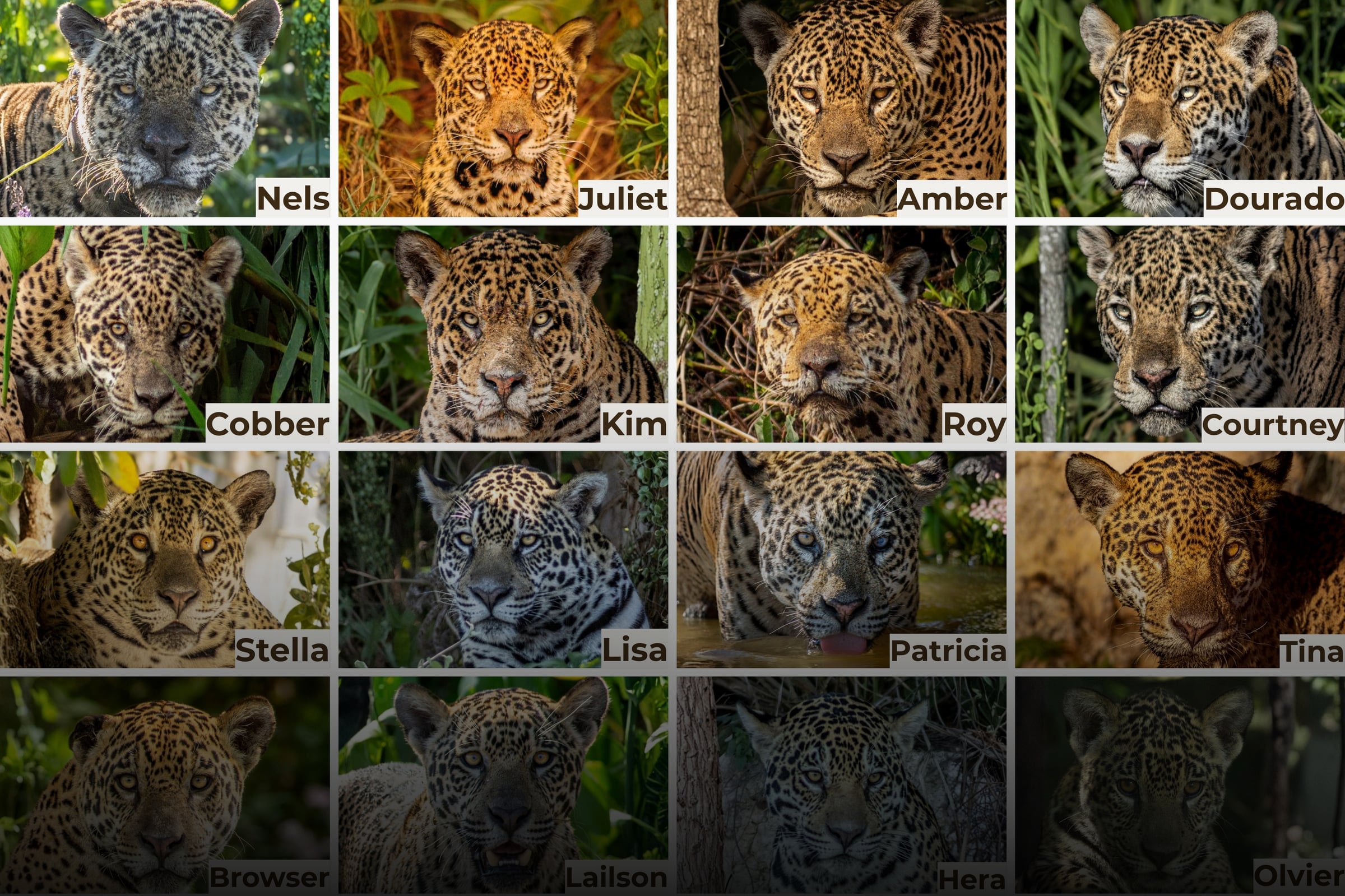
People naturally care more deeply about an individual than about an anonymous number. Once a Jaguar becomes Courtney, Amber, Nels, Tina or Ginger, visitors remember that animal, follow its story, celebrate the birth of its cubs, and become emotionally invested in its future. That connection inspires conservation.
Over time, the local community came to recognize the value of this approach. Individual identification became an essential tool for education, guiding, long-term monitoring and conservation.
Today, many organizations working in Jaguarland have adopted similar identification systems, and some have even assigned different names to Jaguars that SouthWild originally identified and named years earlier. The names used by SouthWild have to be approved by our CEO, as he insists that the names be easy to spell and to say in Portuguese, English, and Spanish. Such “easy” names are useful, as they are easy to remember and to pronounce.
We do not see that copying our idea is competition, but rather as confirmation that our idea has proven value. After all, imitation is the sincerest form of flattery.
Science Through Photography
Every photograph taken by our guests has the potential to become valuable scientific information.
By comparing spot patterns from both sides of each jaguar, our naturalists continually update the life history of each individual, documenting:
- Individual identification
- Family relationships
- Reproductive success
- Longevity
- Territory use
- Physical changes and injuries
- New arrivals to Jaguarland
- Population trends over time
Few destinations anywhere in the world possess such an extensive, continuous photographic record of a population of top predators.
Beyond Jaguars
What began with Jaguars has now expanded beyond the Pantanal.
The same philosophy and identification techniques developed through the Jaguar Dossier are now being applied to other iconic wildlife species. In 2024, SouthWild launched an individual identification project for King Penguins on Tierra del Fuego in extreme southern Chile, extending the concept of long-term photo monitoring to one of the world’s most charismatic birds.
The species may be different, but the goal remains the same: to transform photographs into knowledge, knowledge into appreciation, and appreciation into conservation.
Conservation Through Knowledge
The Jaguar Dossier is more than a collection of photographs.
It represents 100,000 hours spent in the field by SouthWild naturalists, guides, researchers, photographers and guests.
Every new observation contributes another page to a living archive that continues to grow season after season.
Because conservation begins with recognition.
And every great conservation story begins when a wild animal ceases to be just another Jaguar, and becomes an individual whose life matters.