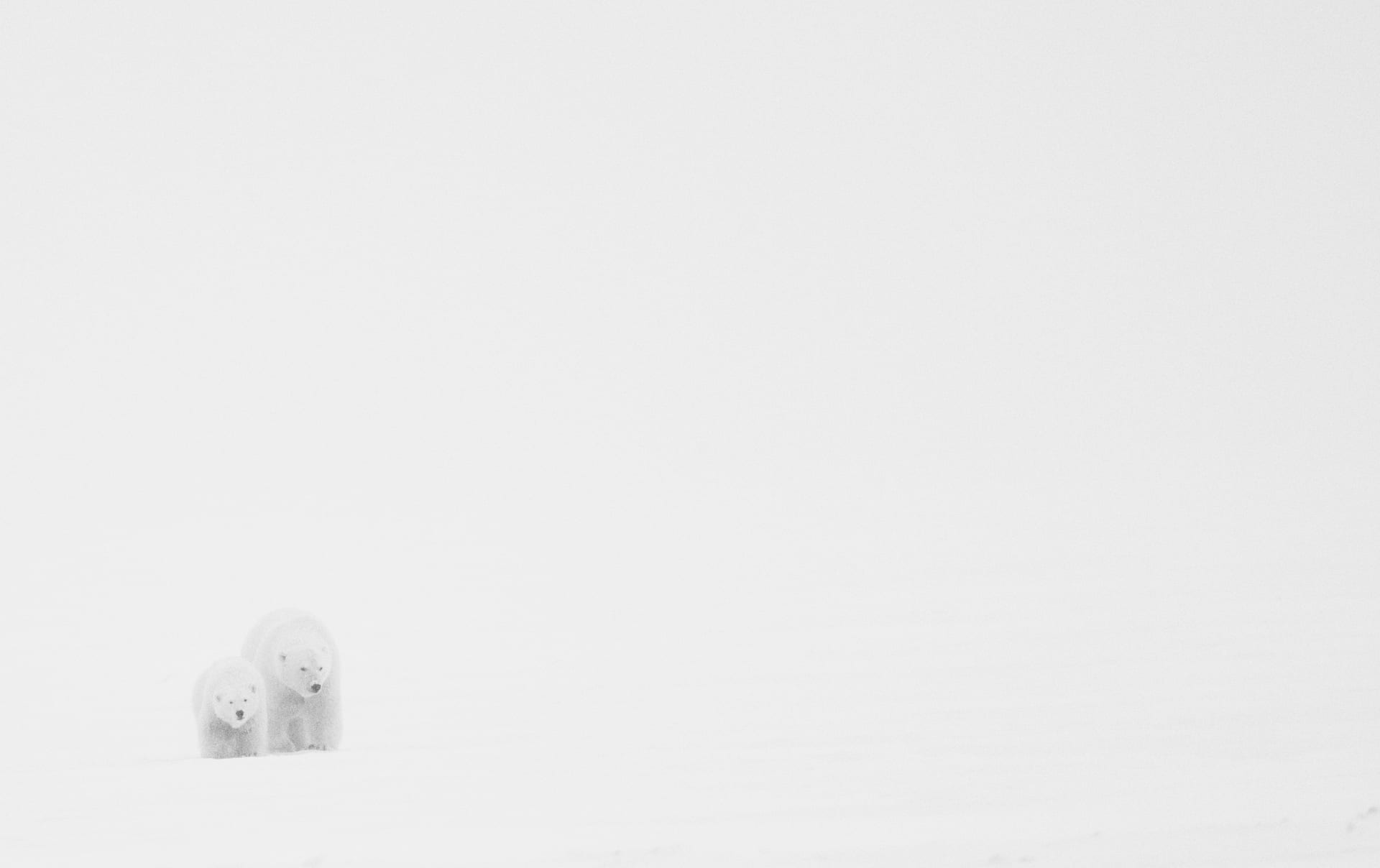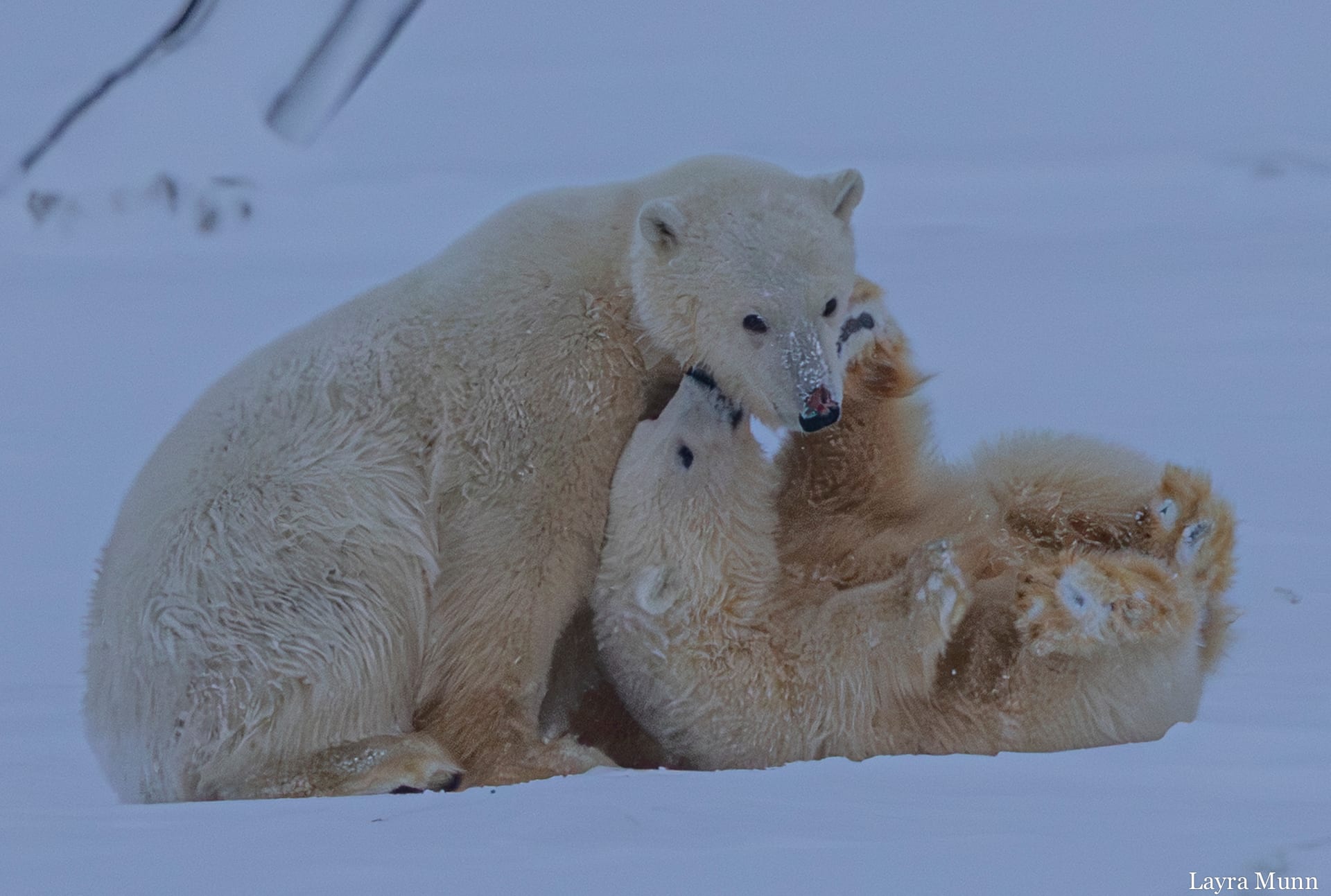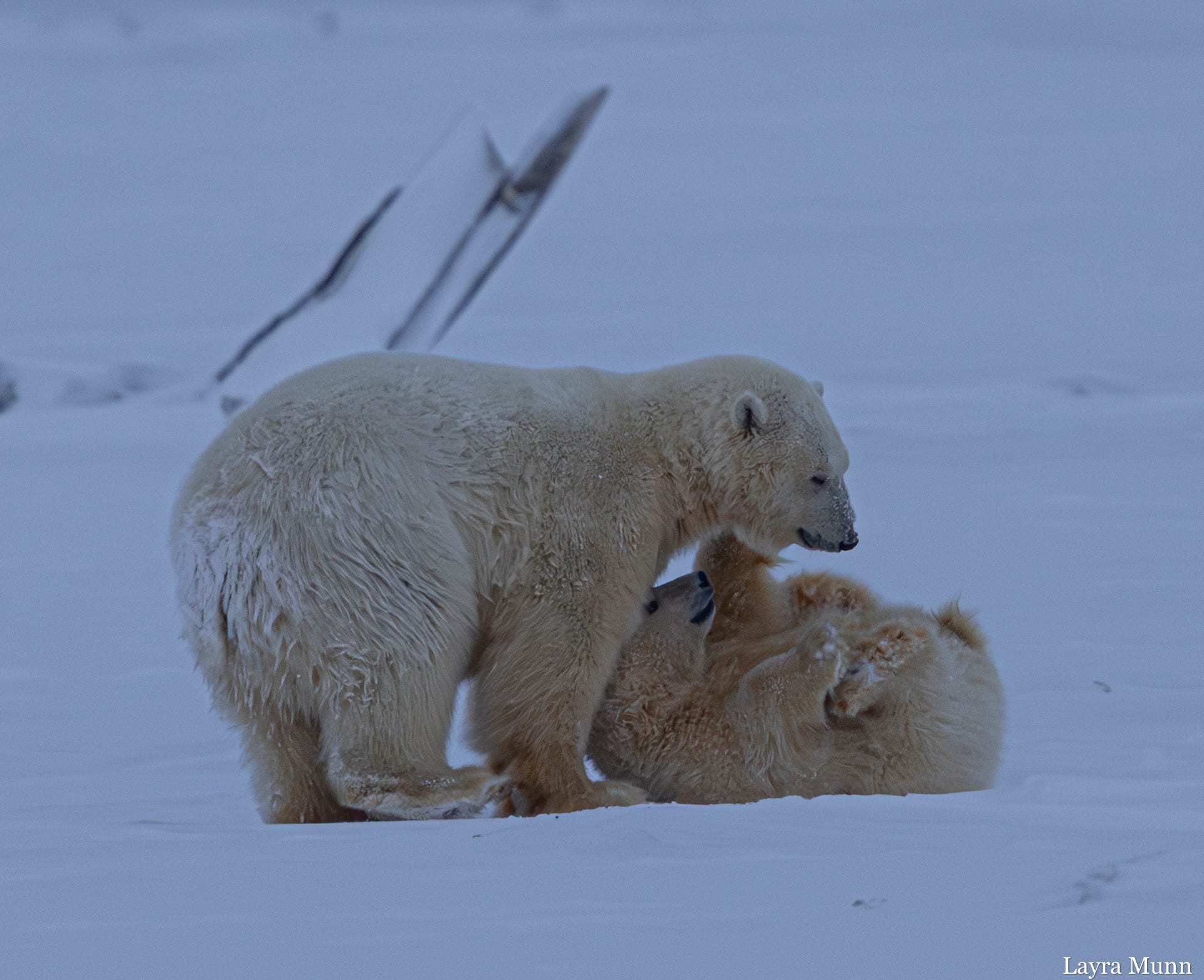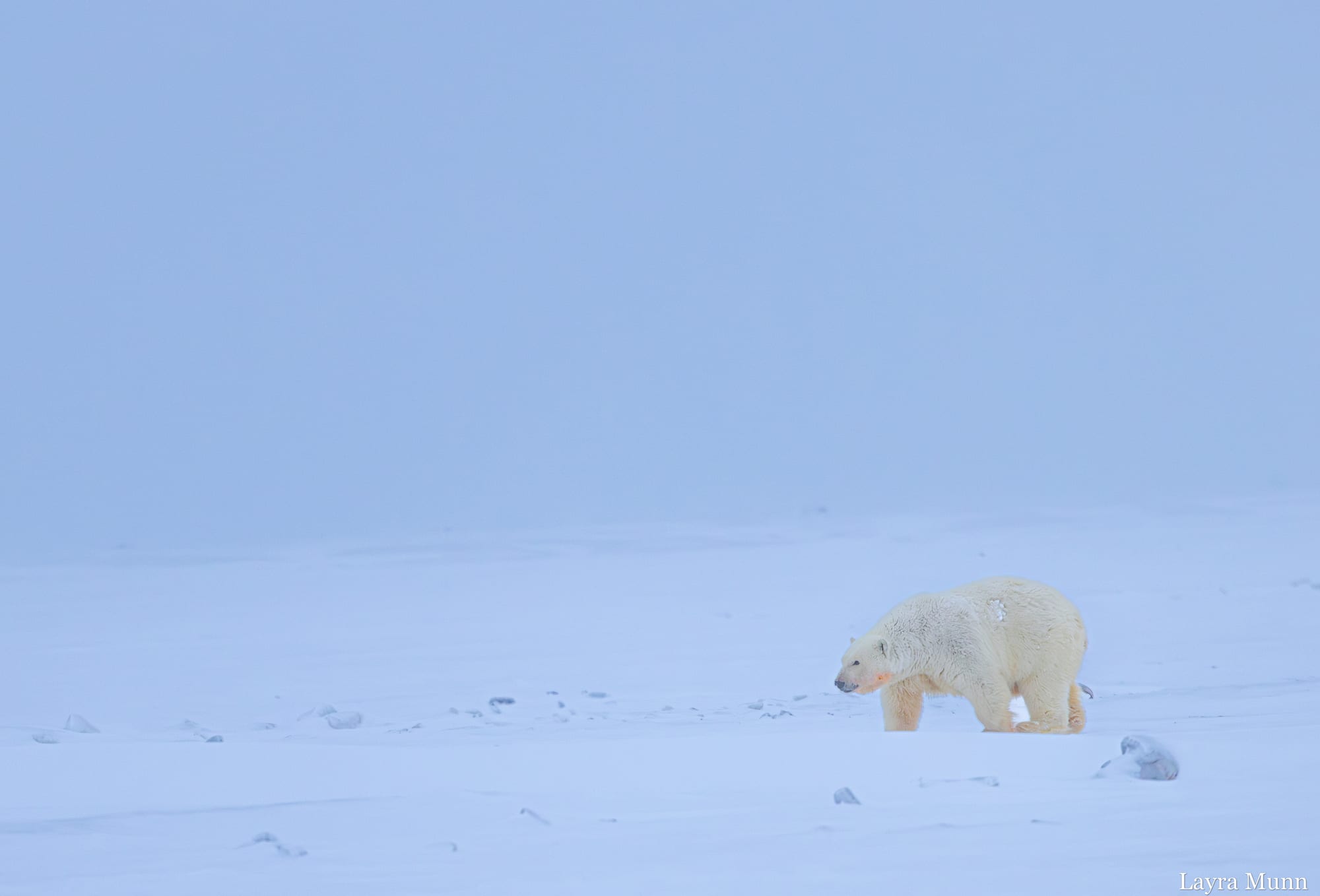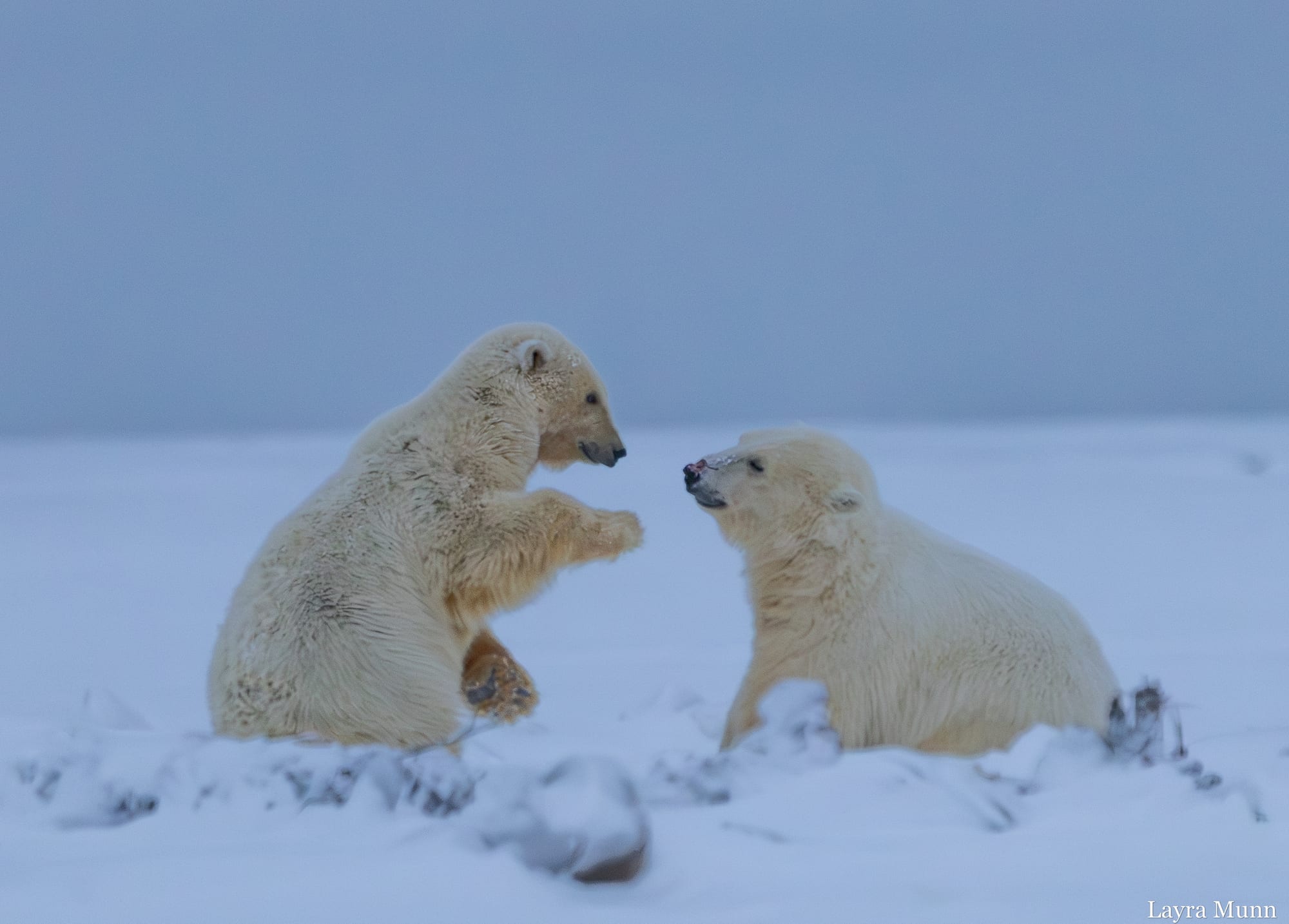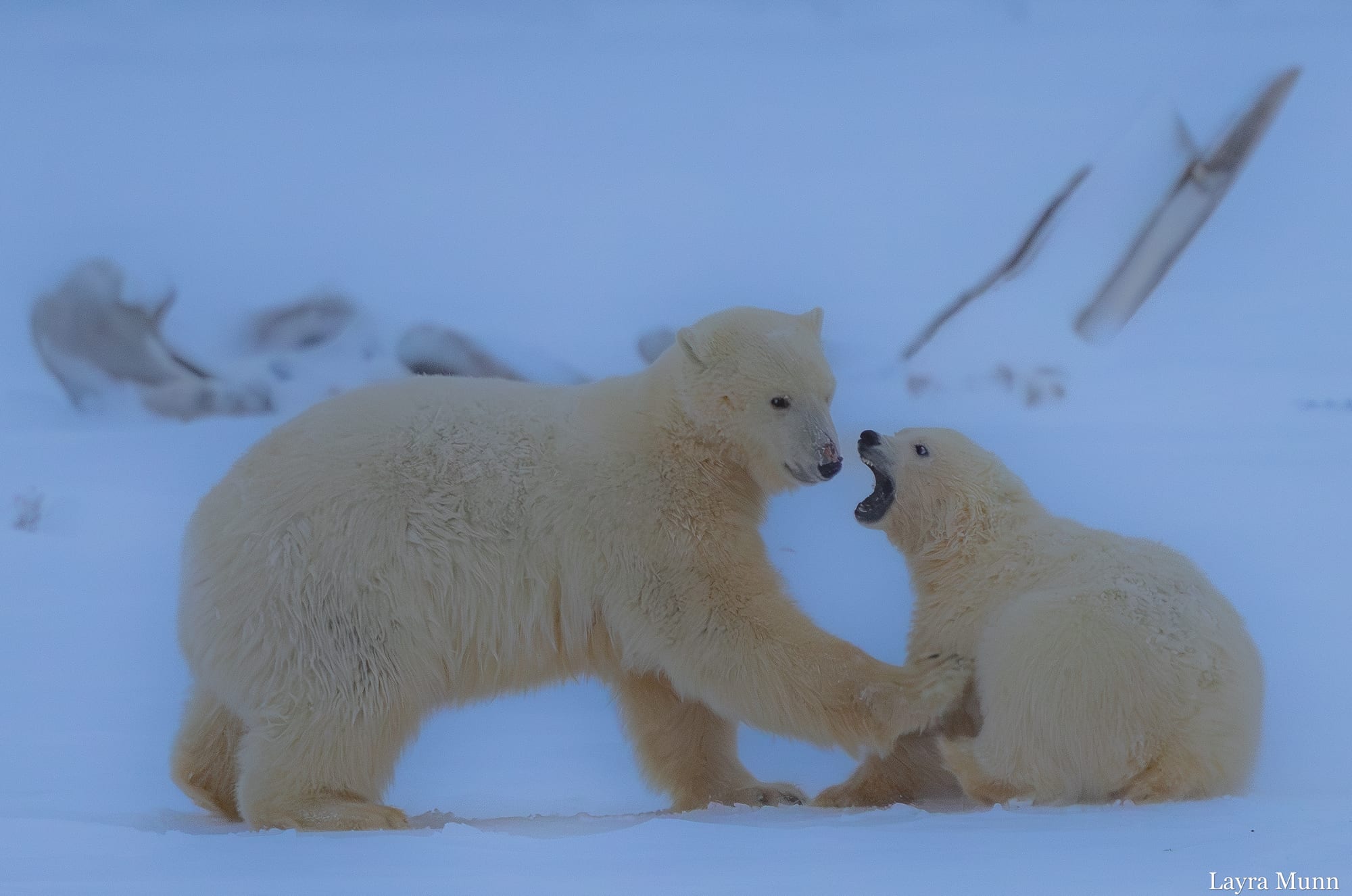
This story is an improbable and amazing story of “win-win” between a fascinating, ancient, indigenous culture and these ice-obligated bears, both of whom are under threat of extinction, the first from aggressive American culture and the second from rapid loss of sea ice.
The indigenous culture of Kaktovik is “Iñupiat” (pronounced “in-OO-pee-at”), though much of the world might call them “Eskimos”. This 12,000-year-old culture, which has its own tribal language and rich cultural traditions, survives and can thrive year round in the extreme far north of North America by hunting land and sea mammals and by fishing, depending on the season. As up to half of the 15 separate populations of the world’s Polar Bears, which add up to 26,000 bears, are declining due to loss of sea ice, it is critical to help the bears to keep them from going extinct within a few more decades. It turns out that a specific Iñupiat hunting tradition still in full practice in Kaktovik provides just such a surprising lifeline for scores or perhaps hundreds of Polar Bears in that part of the Arctic.
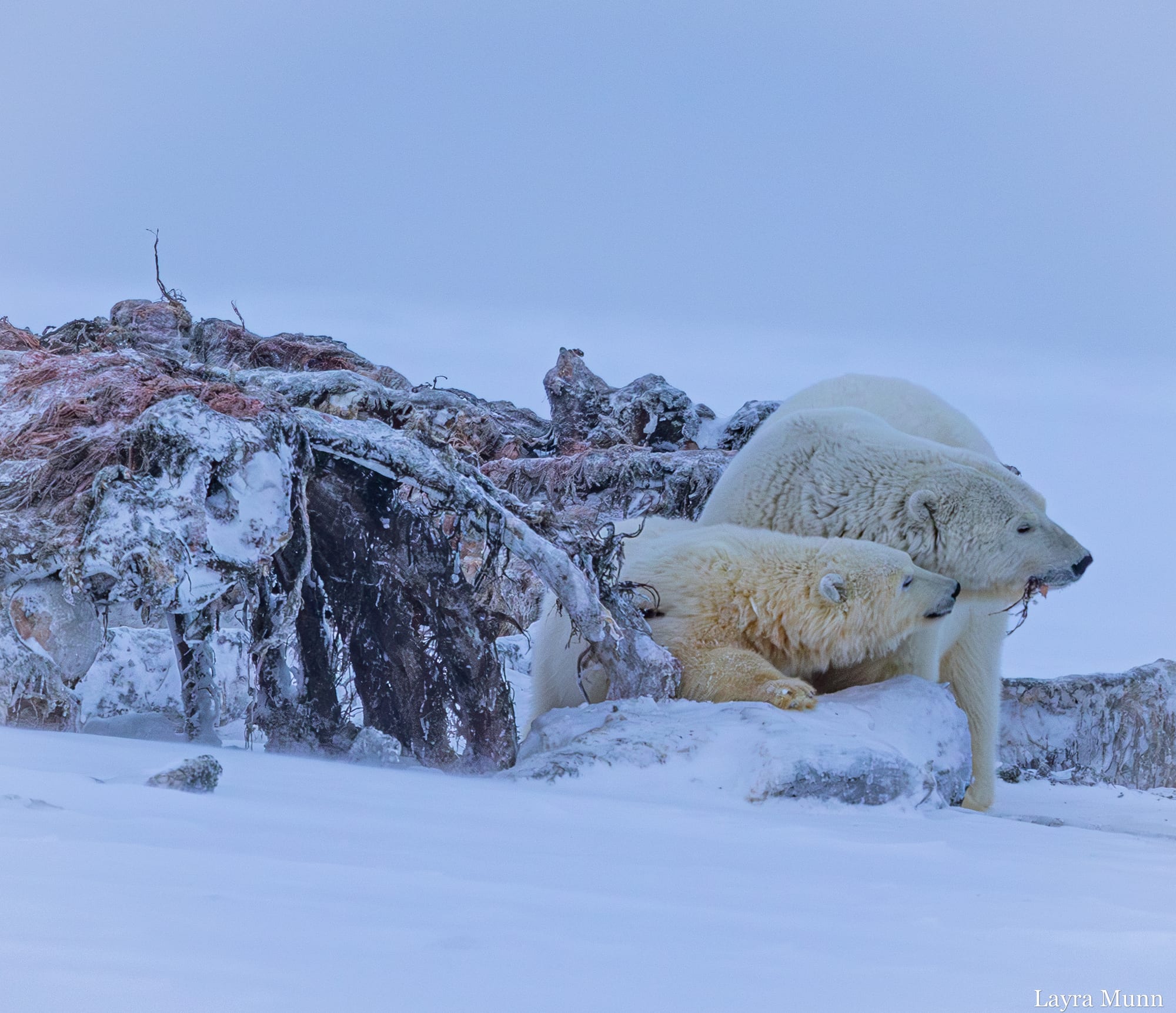
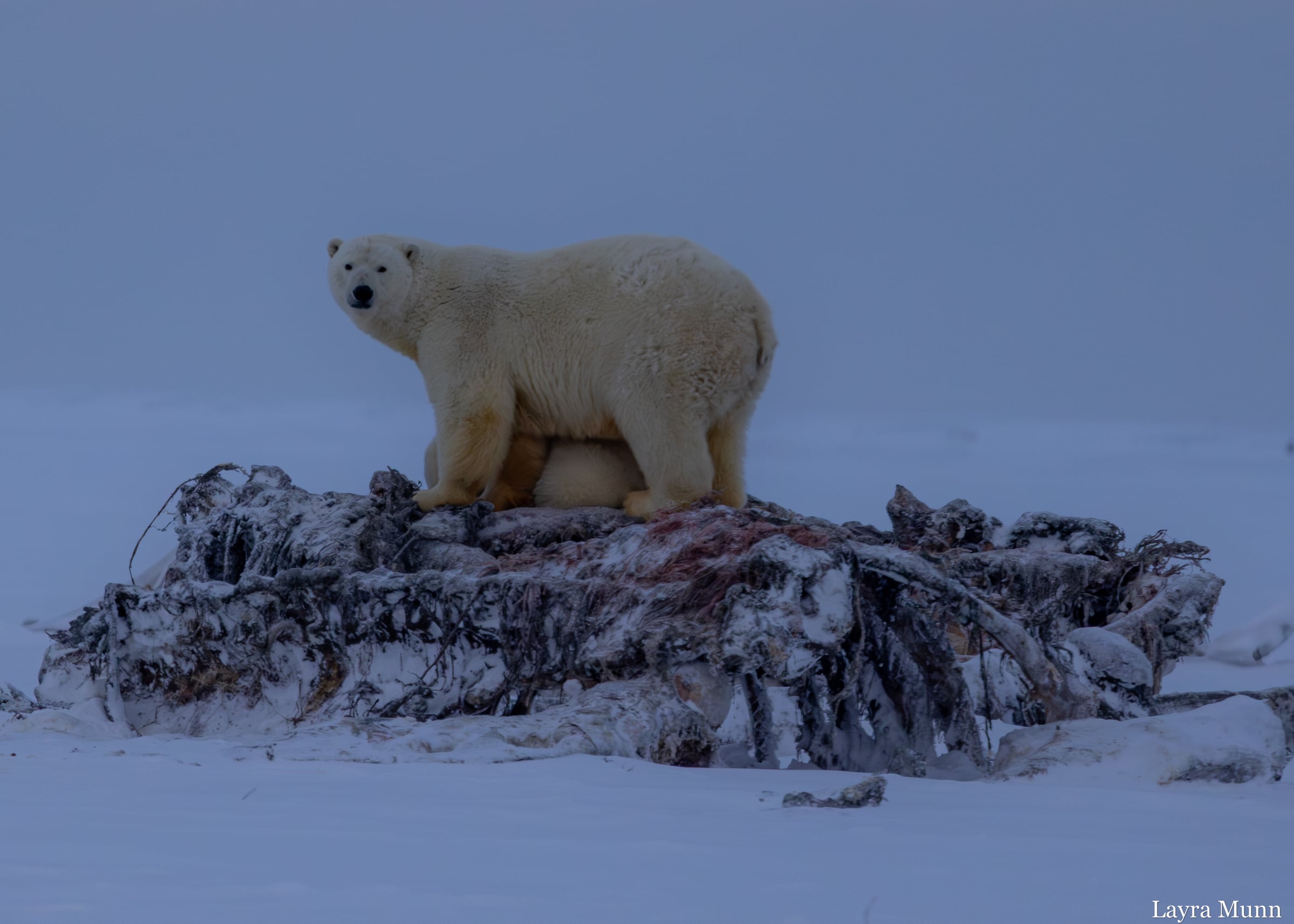
Traditional hunting by Iñupiat natives of simply enormous Bowhead Whales (which have the largest baleen of any species of whale) provides the bears with a major food source in precisely the season in which the bears are most desperately hungry, namely September, October, and November, before the sea freezes again and the bears can resume hunting seals, their main prey. The sea used to freeze in October, but now it is freezing much later, and without ice, the bears continue to go hungry.
It turns out that the global population of Bowhead Whales is fairly stable, and the population in that part of the Arctic Ocean, which is called “the Beaufort Sea”, is increasing by 3% per year for many years. Given that since 1971, U.S. federal law prohibits all whaling in the coastal waters of the USA, it is fortunate for the Iñupiat villages of the north shore of Alaska that the government opened a small exception to the whaling ban to show respect for the ancient traditional lifestyle of these indigenous peoples.
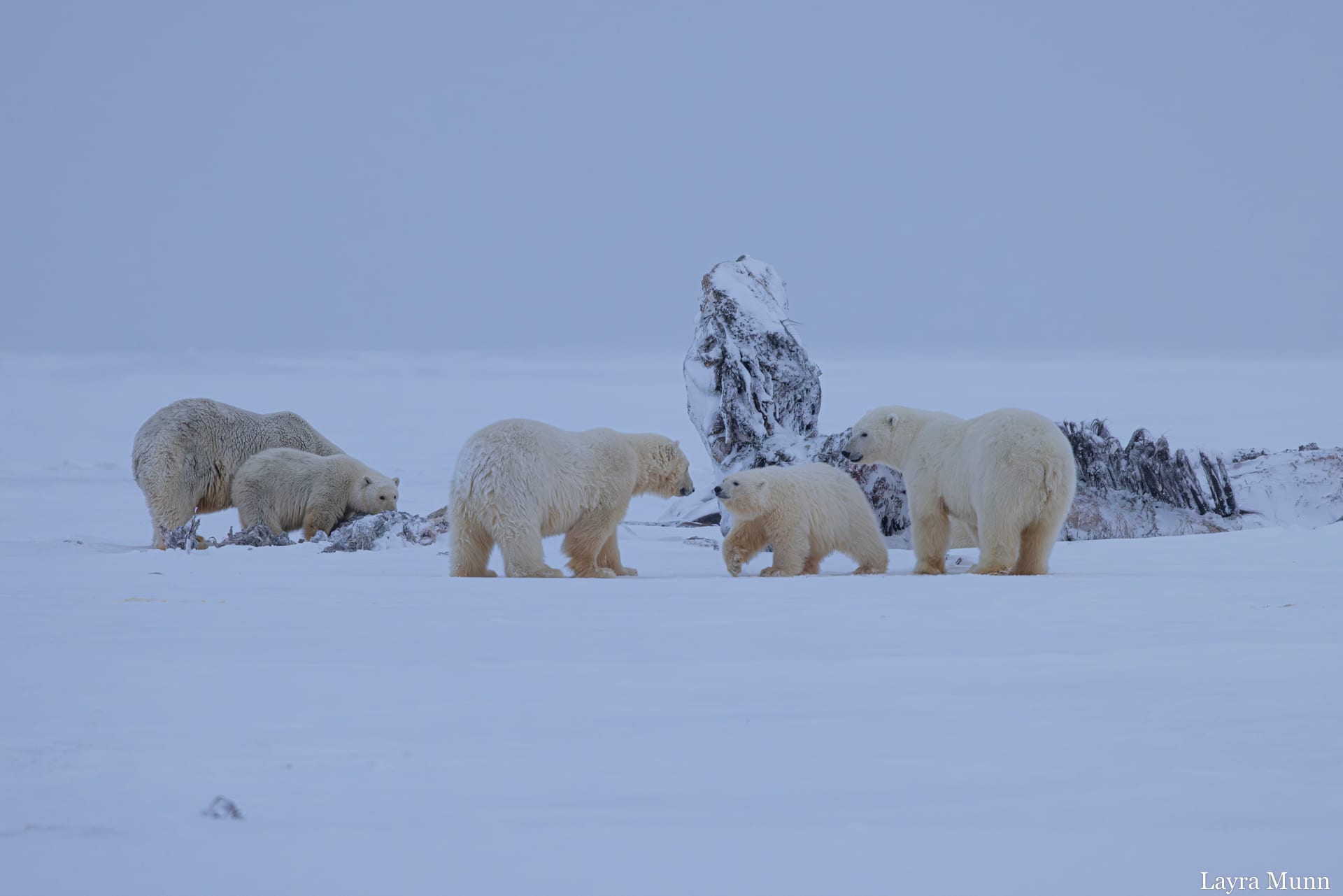
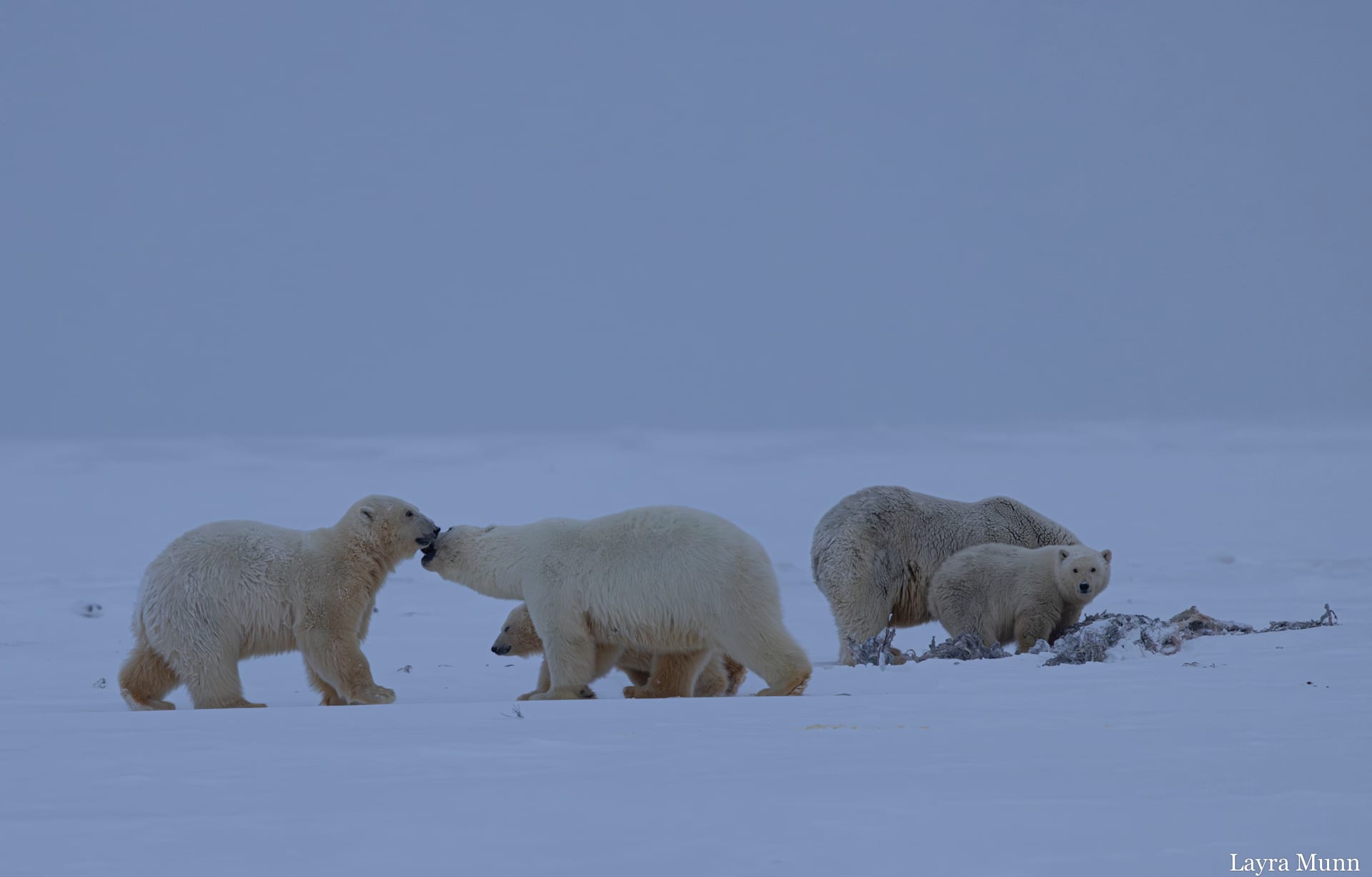
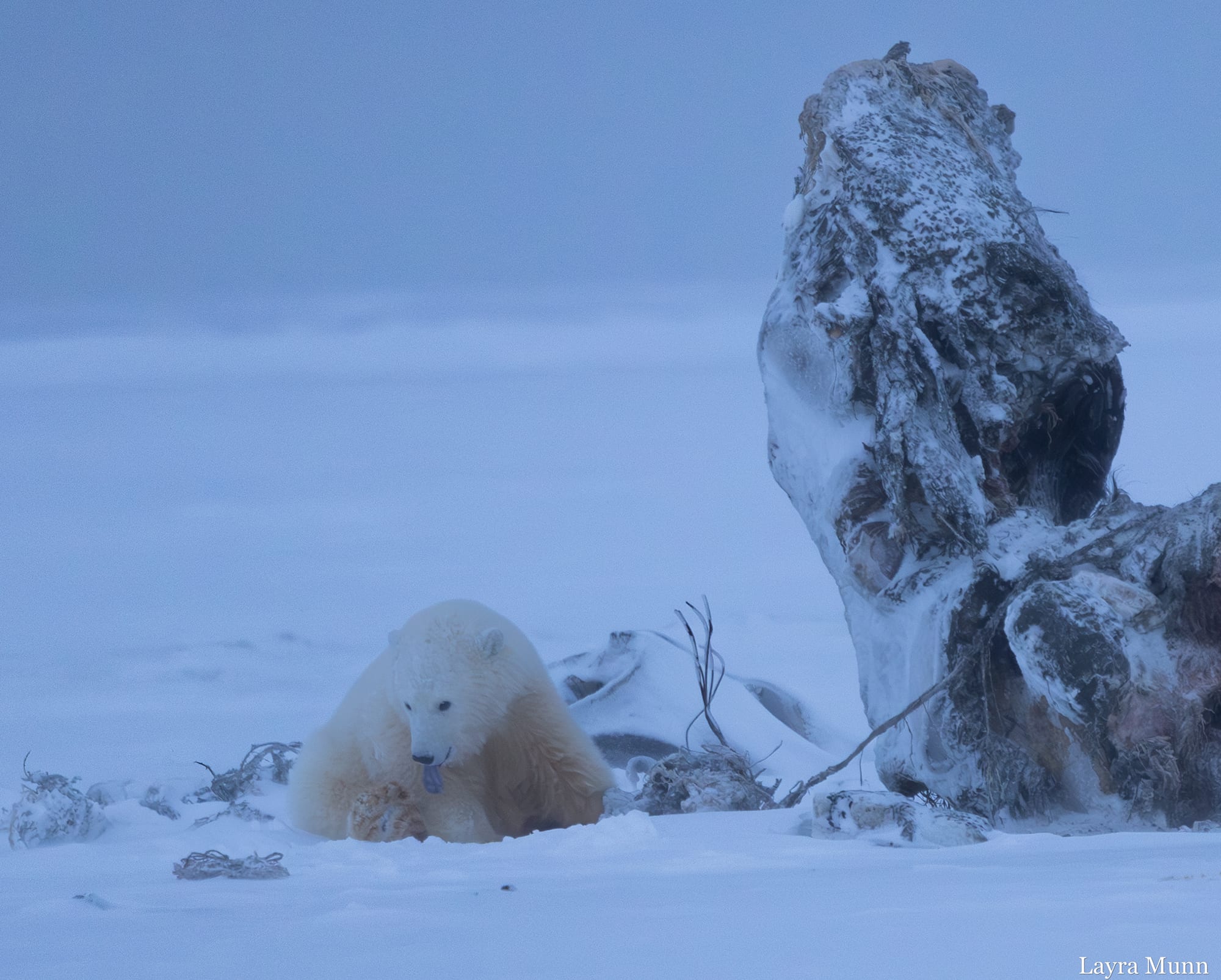
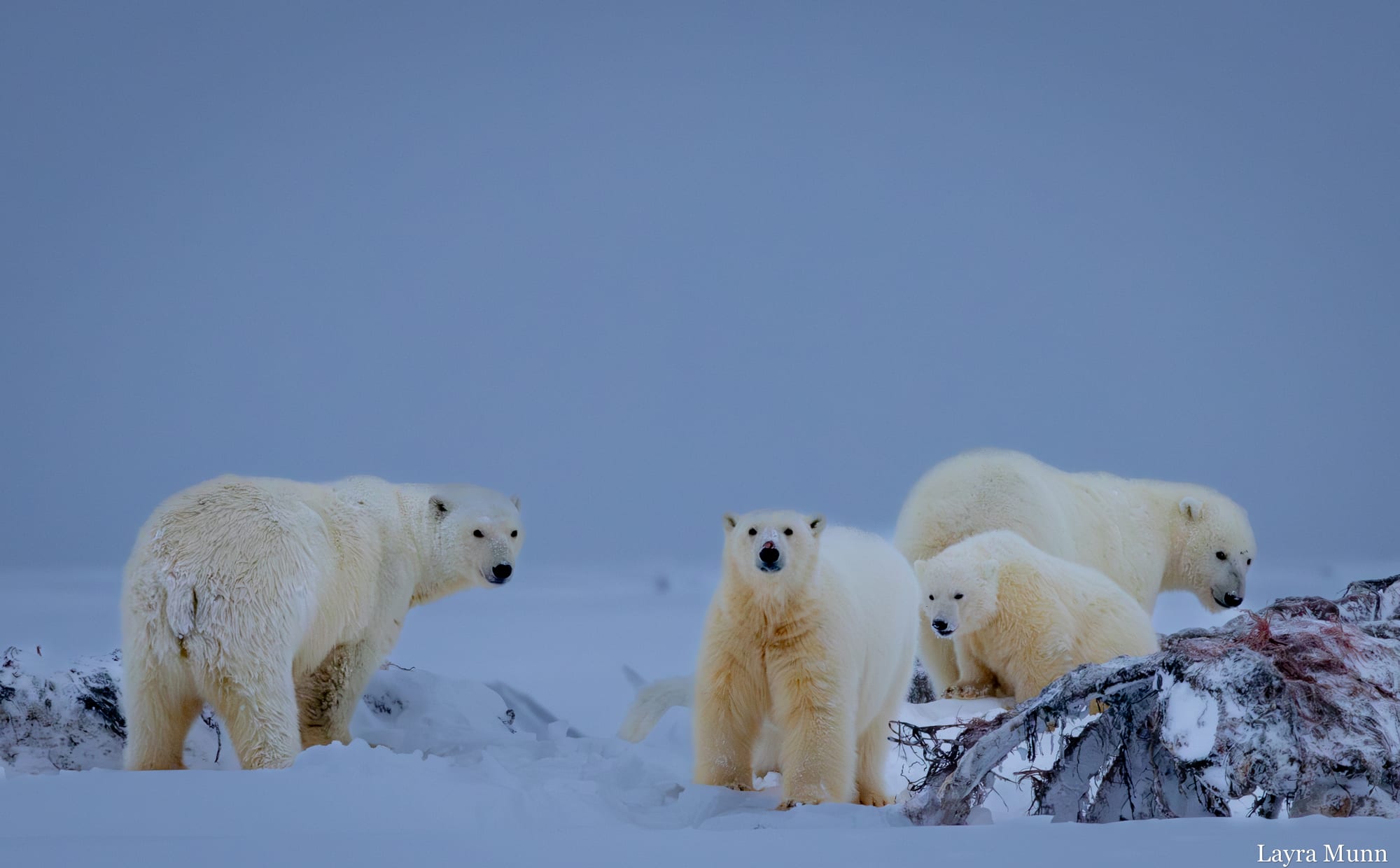
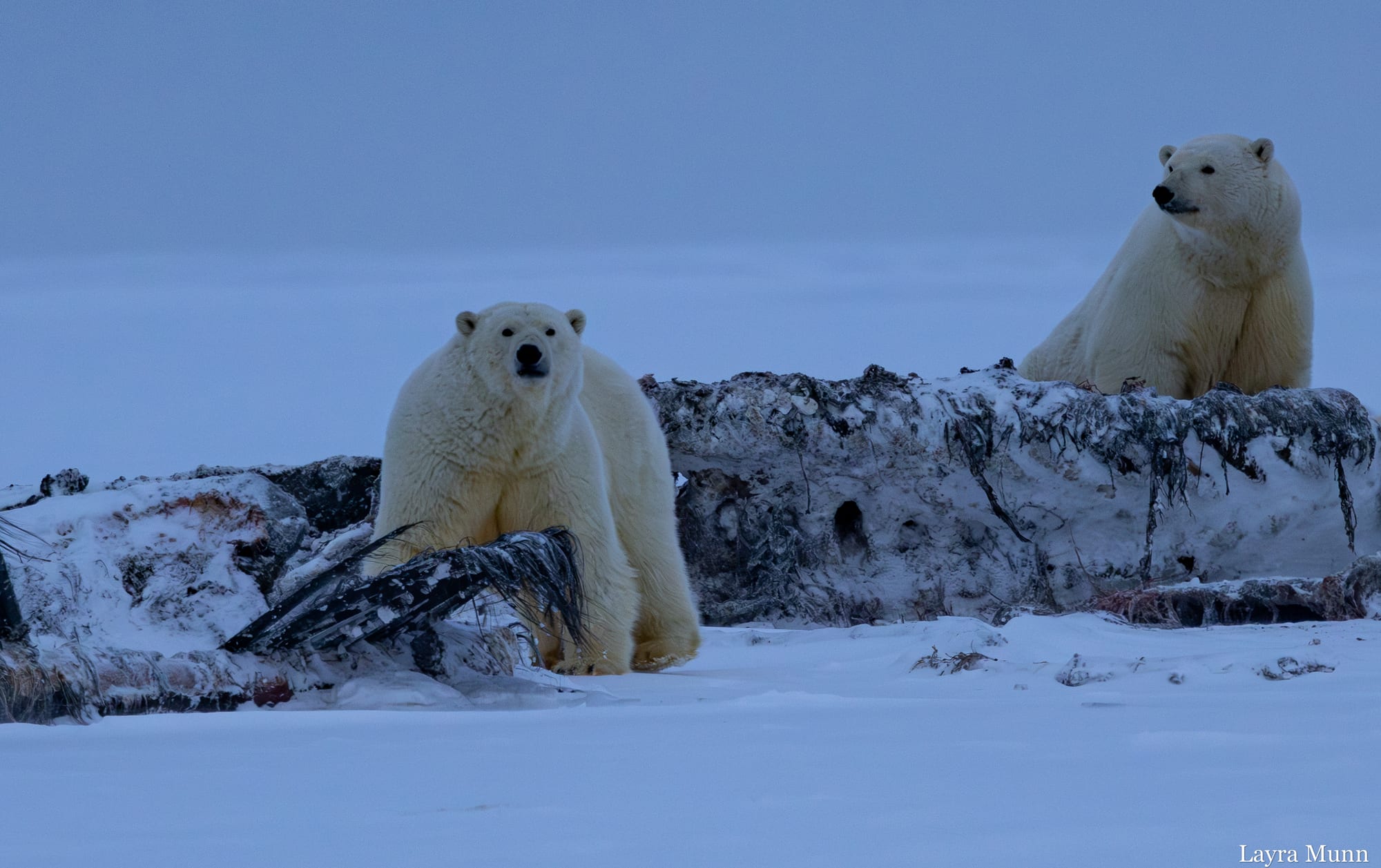
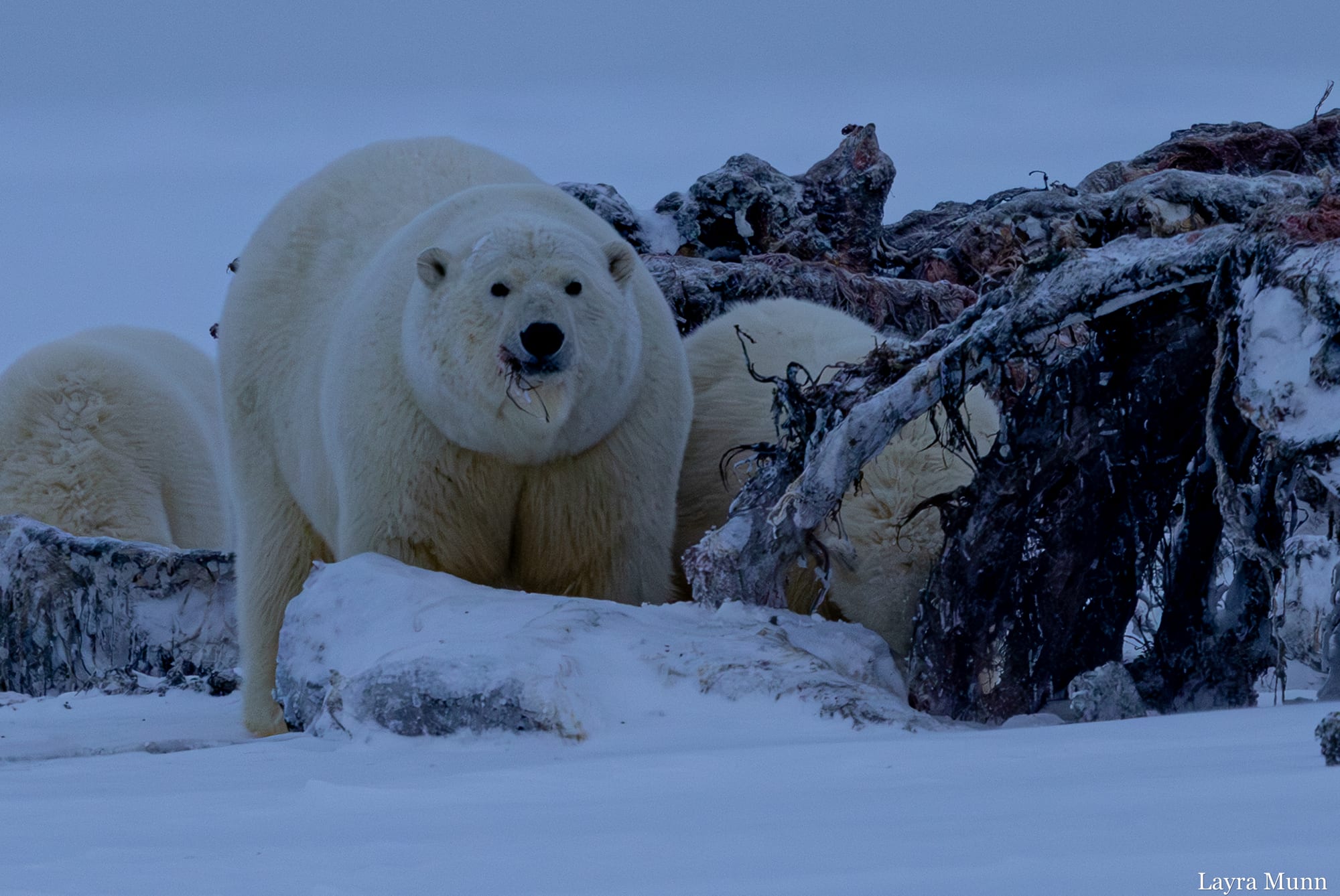
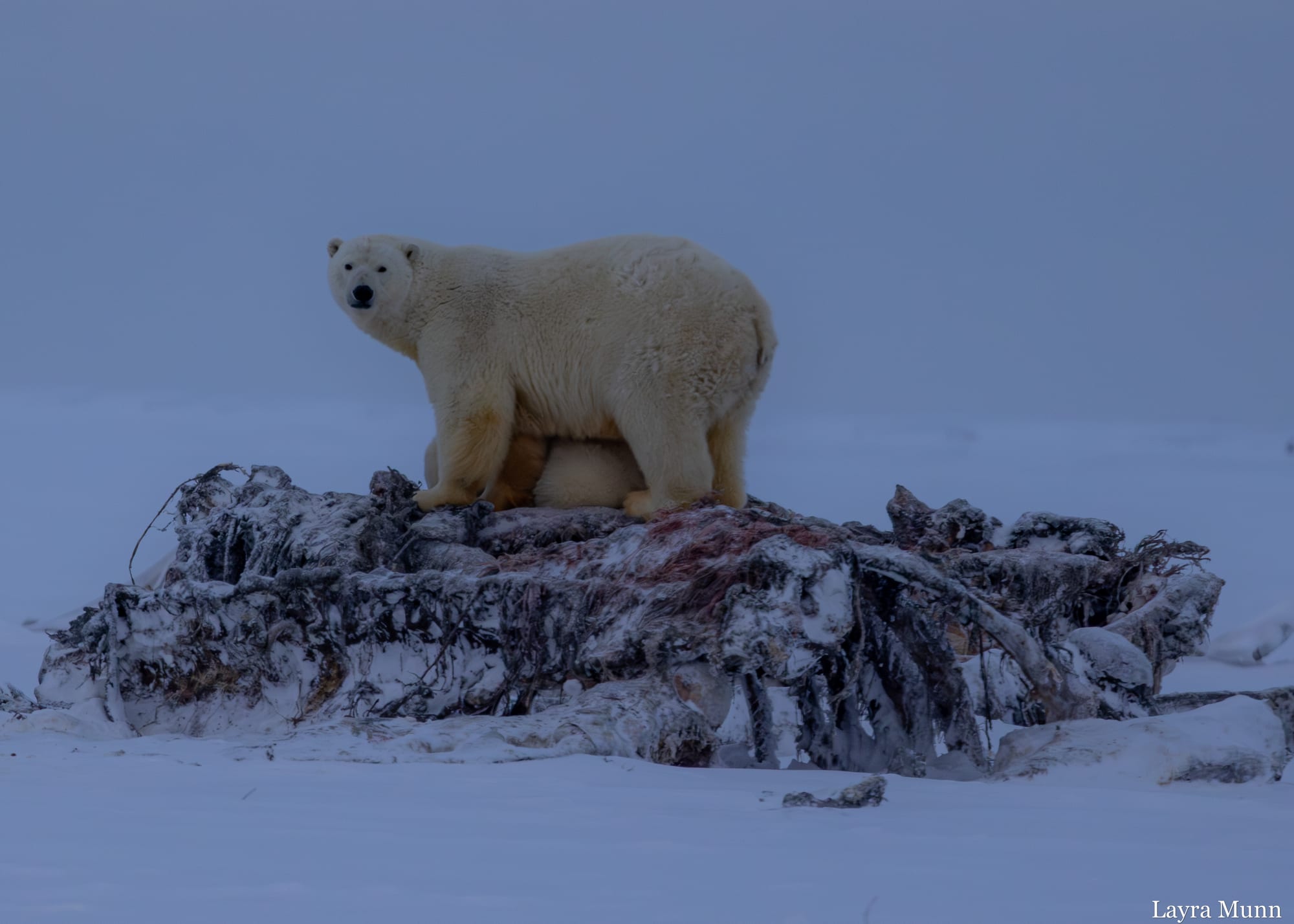
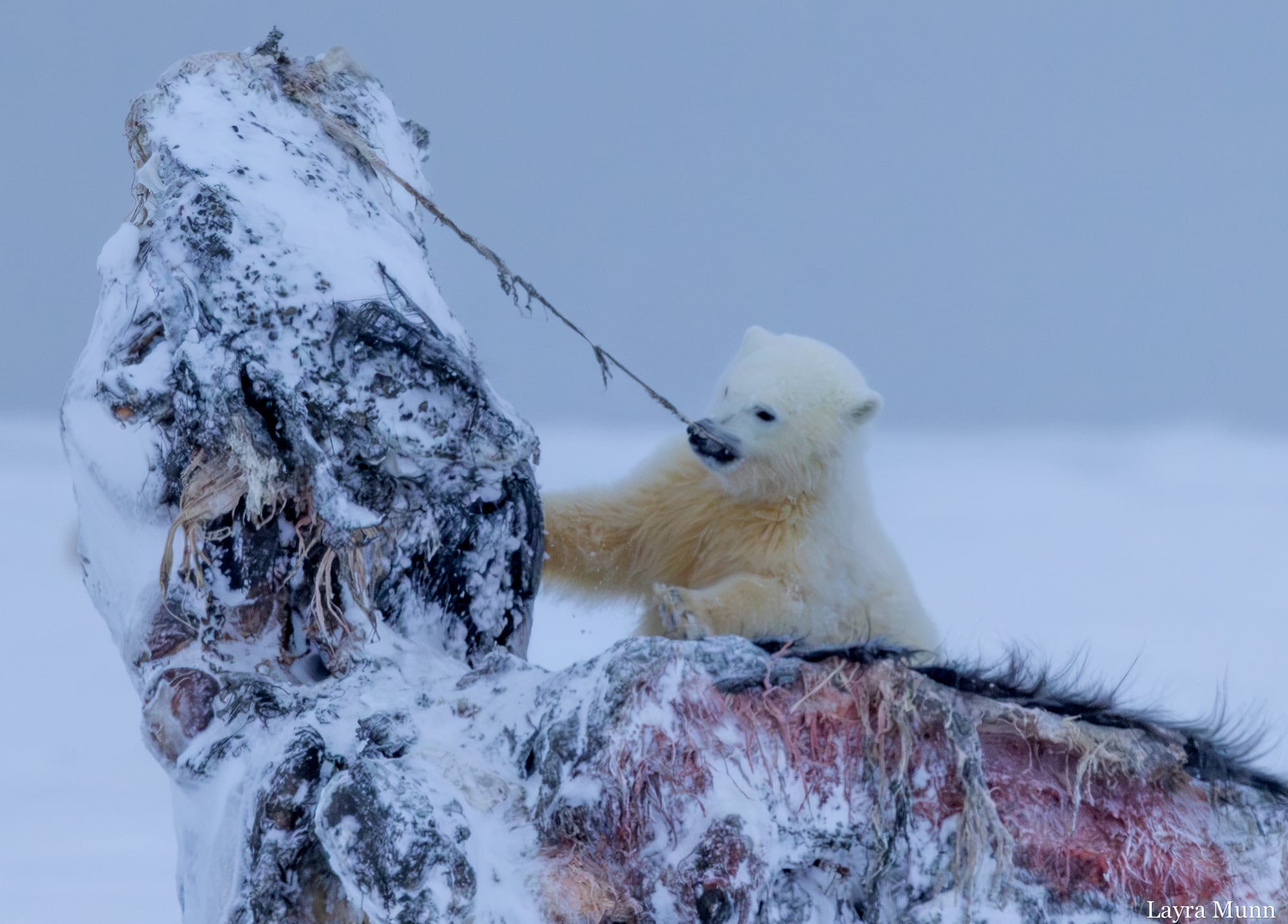
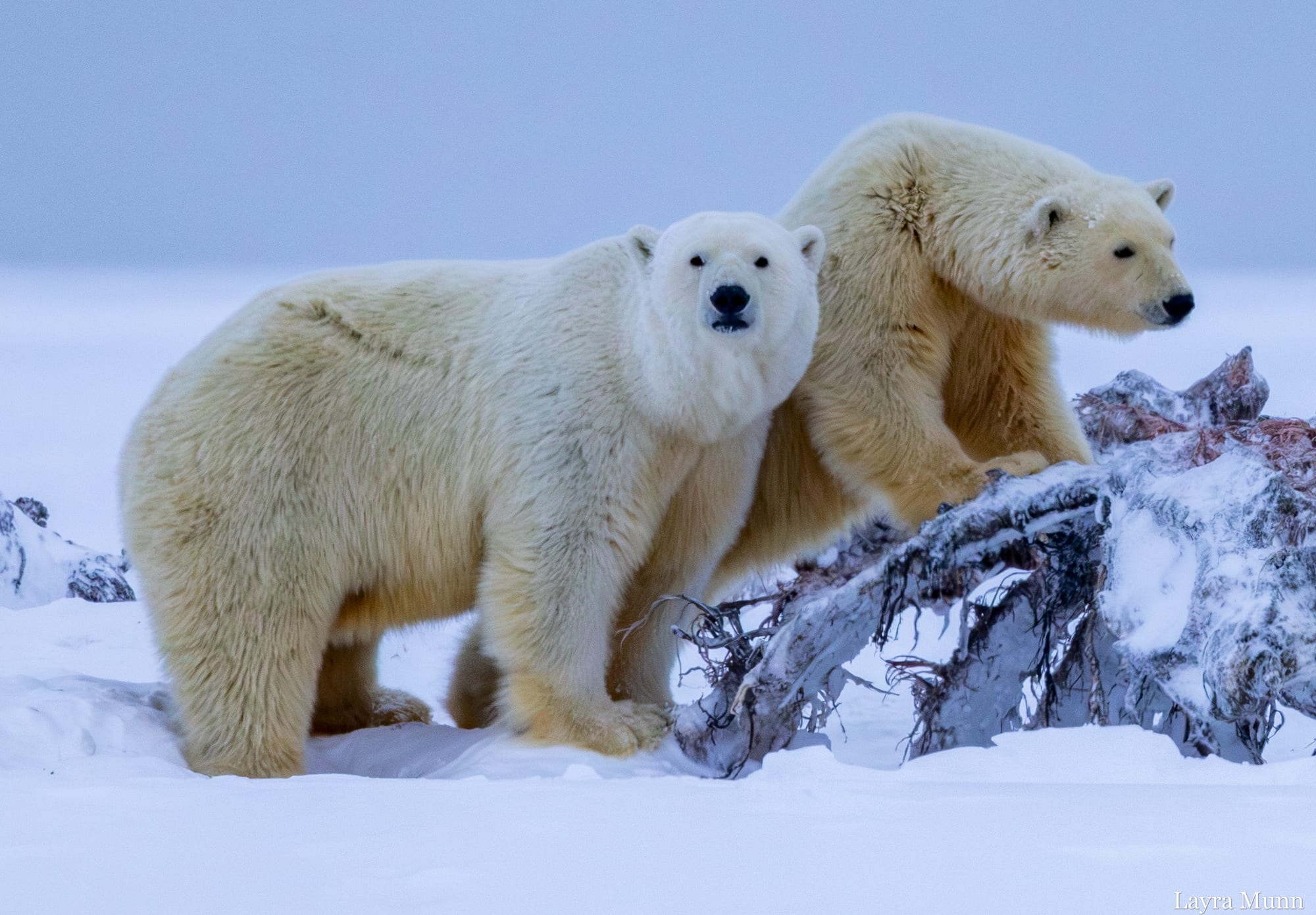
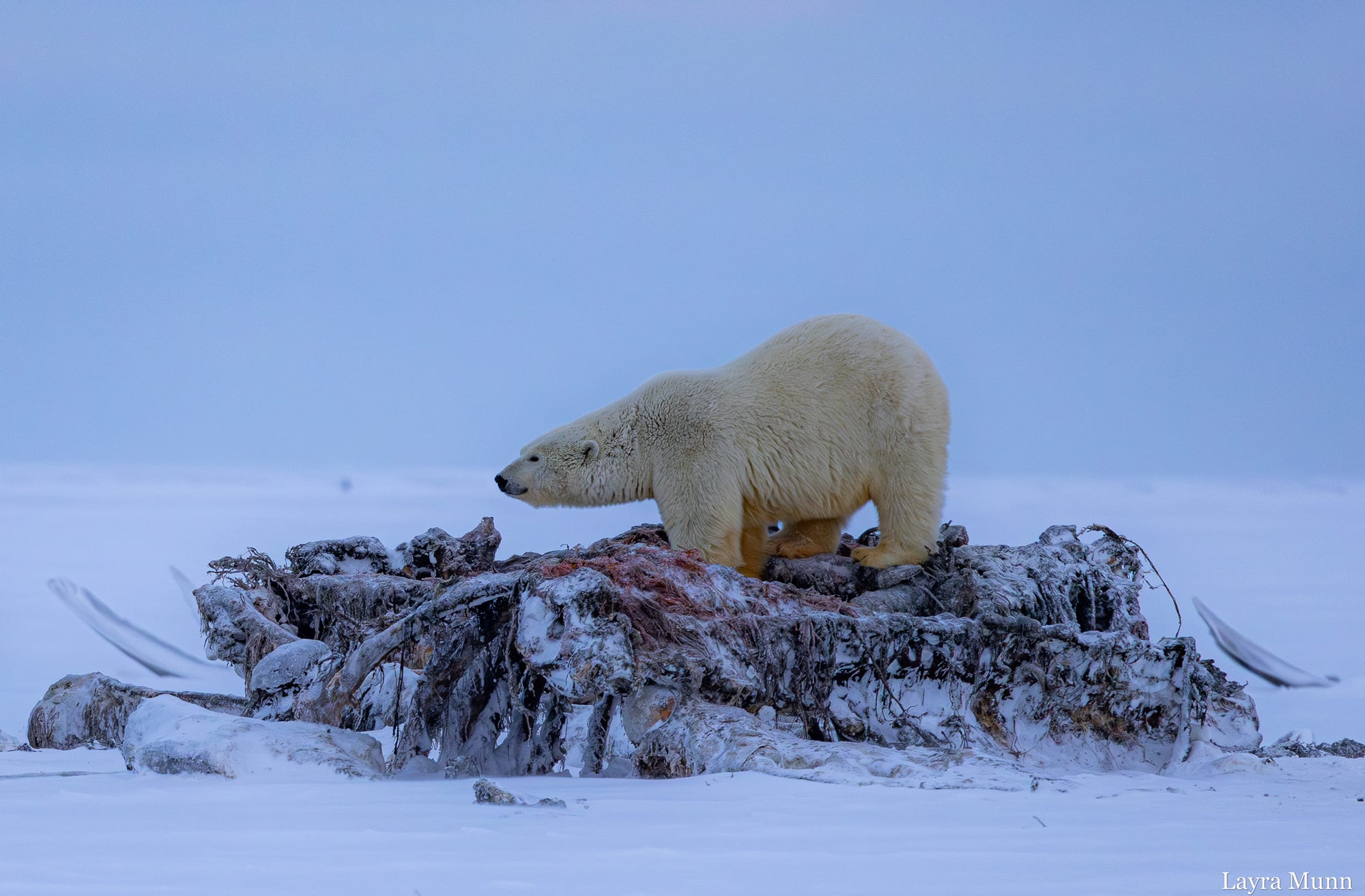
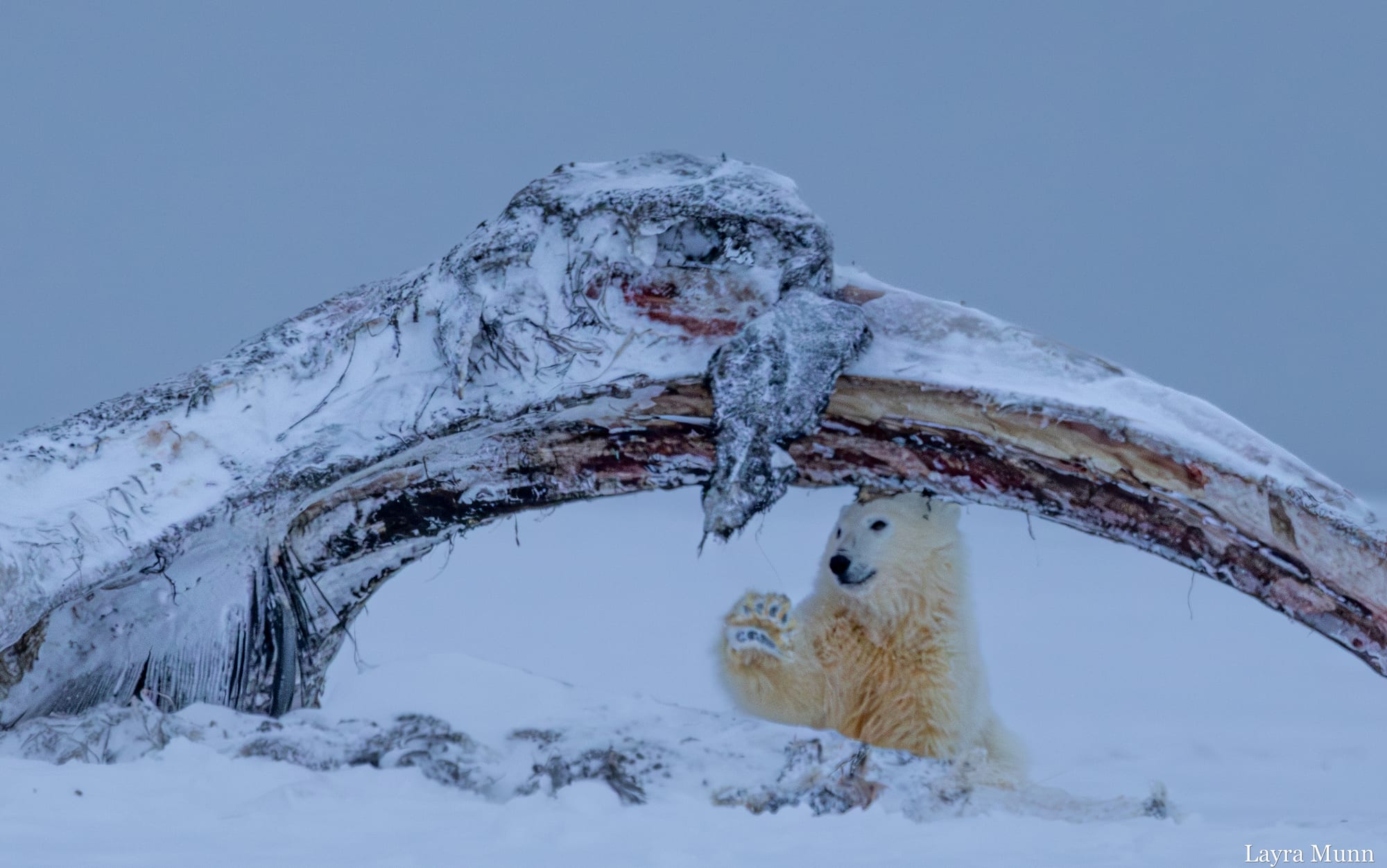
Thus, Kaktovik is legally allowed to hunt three huge Bowhead Whales each September and then butcher the carcasses for year-long consumption. For decades, the small-scale, legal hunt has been in place, and after the villagers carve off most of the meat and blubber from the carcasses, there still is an enormous amount of meat that is excellent food for Polar Bears. As a result, as soon as the villagers conclude removing the meat and blubber that they want, scores of Polar Bears move in and feed on the leftovers for weeks. In mid and late September and through October, one will see 20, 30, even 40 Polar Bears gather at the three carcasses, which are left on the water’s edge about a 10 minute drive from the village.
The bears feast on the extensive leftovers for weeks, with 4-10 bears still visible in early to mid November.
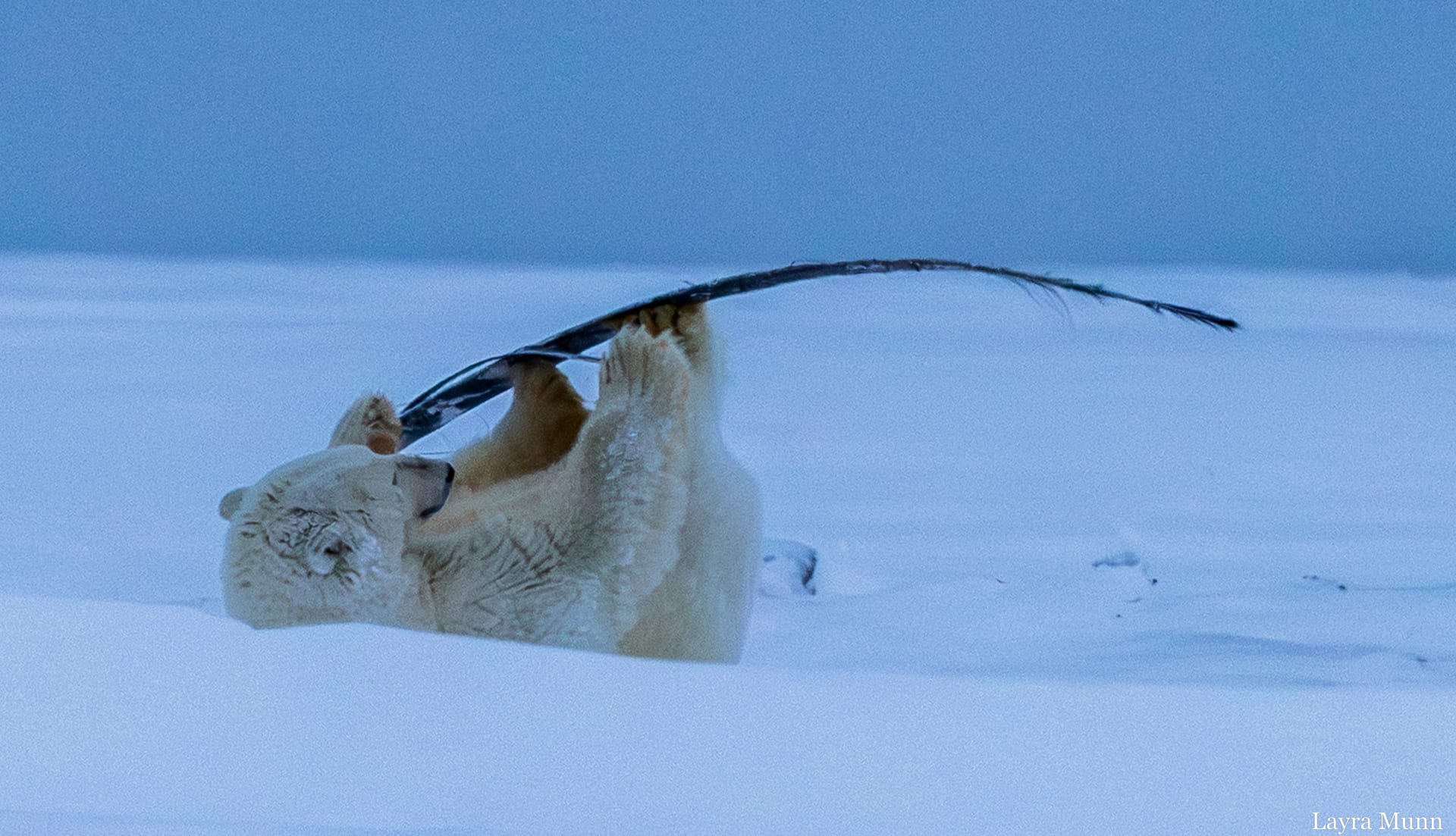
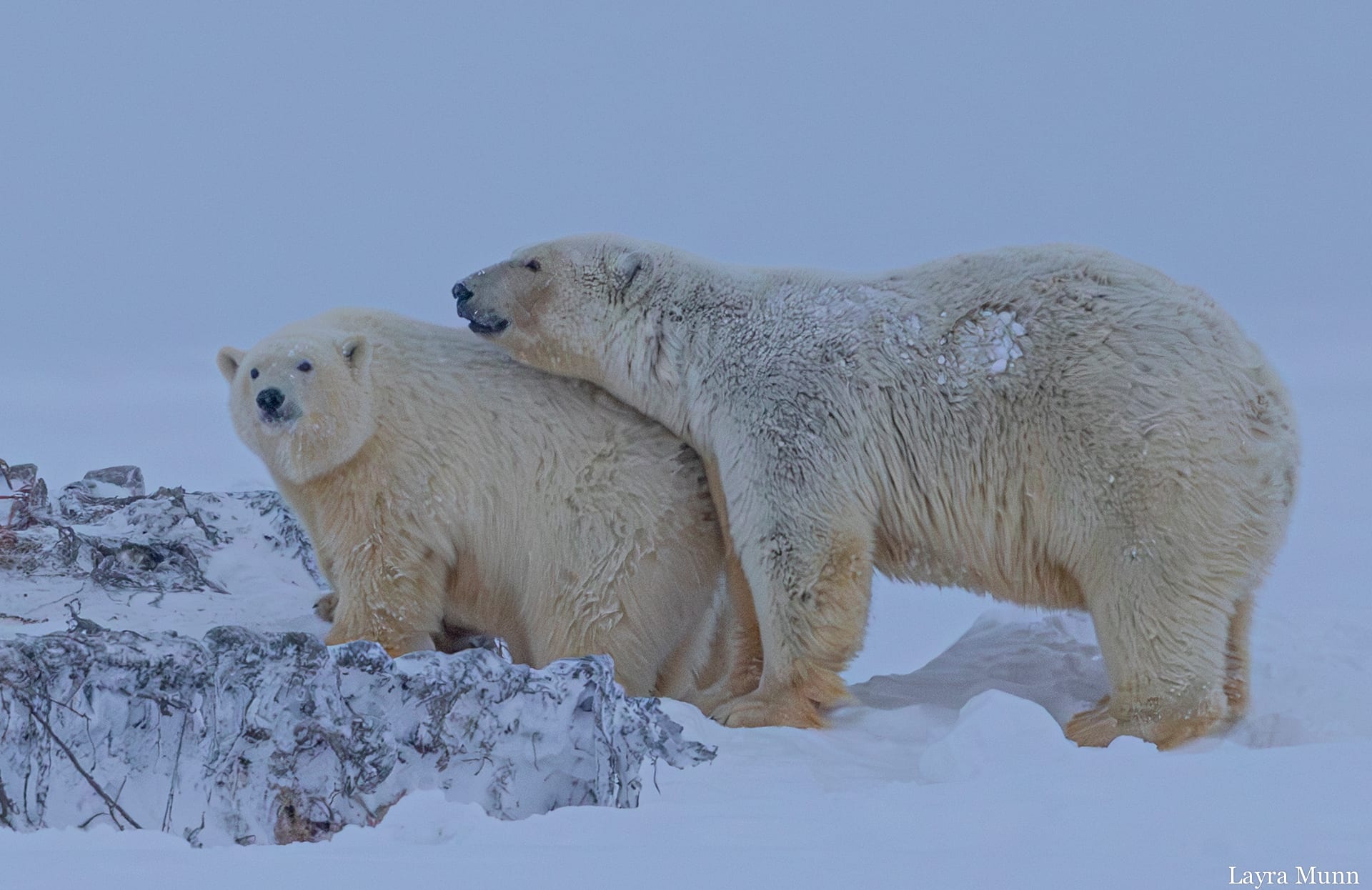
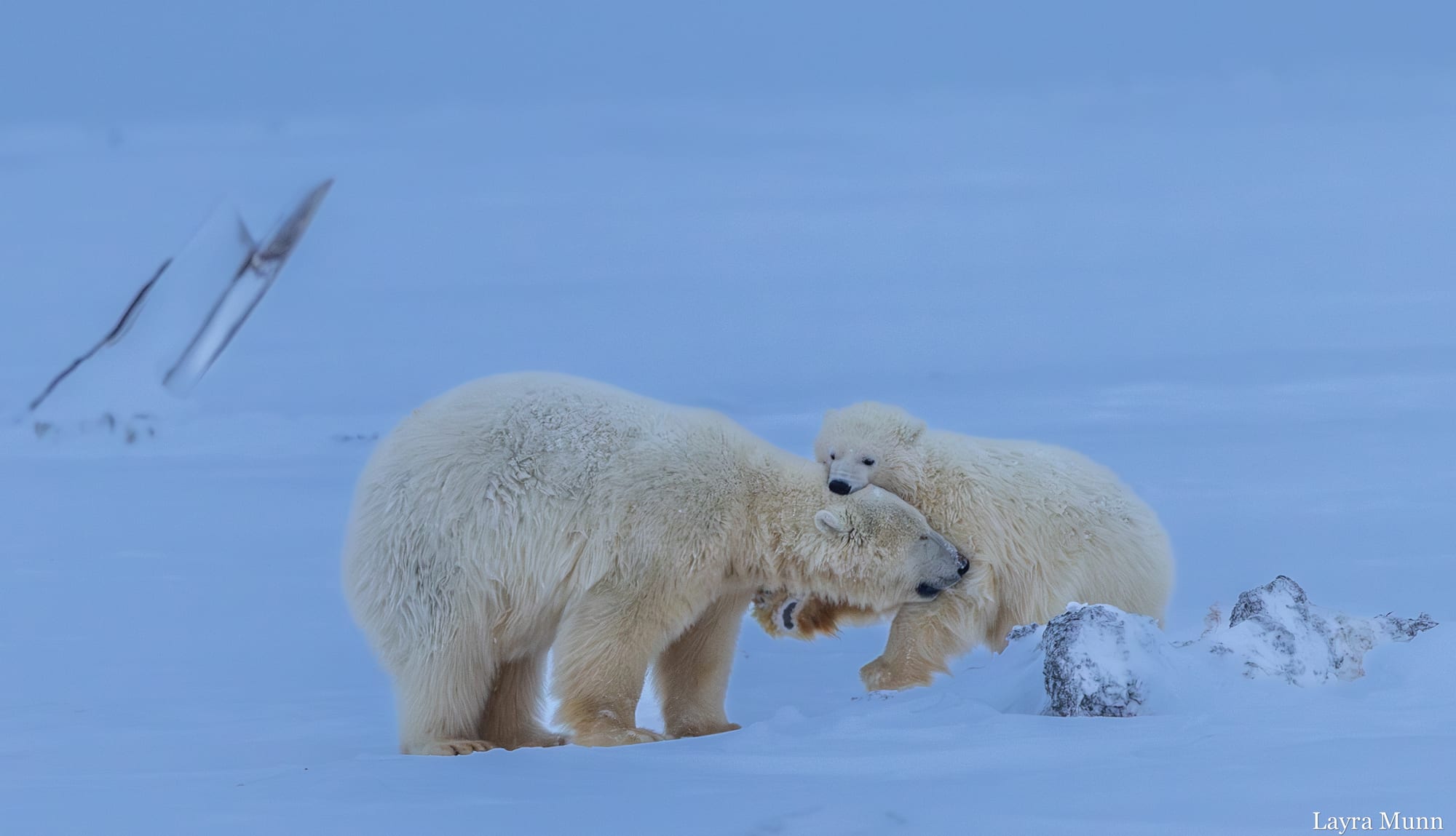
The villagers enjoy driving their 4WD cars and pickup trucks over to what is called “the bone pile” to watch the bears in action. Interestingly, the bears almost never fight at all, as they all seem to realize that the carcasses are too big to protect just for themselves, and peace reigns while dozens or scores of these, the heaviest land predators on Earth (actually, they are tied with the largest Brown Bears for the title of “heaviest land predator on Earth”) all jockey for position in scarfing up the whale leftovers.
A regular SouthWild client for Jaguar tours is one of the world’s leading photo safari tour operators, and he has been to Kaktovik six times between 2014 and 2019. Not everyone knows that in 2020, all Polar Bear tourism in Kaktovik was suspended, and it has never been reopened, though there have been years of talk about how to reopen. This important SouthWild client has visited repeatedly and knows well the Polar Bear options in Churchill, Manitoba, Canada, and the Polar Bear options at Svalbard out in the ocean north of Norway, and he says that without question, the Polar Bear viewing and photography at Kaktovik far surpasses those other famous options. The reason that it surpasses both Churchill and Svalbard is that there are SO many bears at the same time, and they show interesting behavior as they interact almost entirely peacefully at the whale carcasses.
Charles Munn noticed during his eight days of observation of the Polar Bears at the whale carcasses in November 2024 and 2025 that the bears there are notably FAT and in excellent condition compared to the gaunt, slowly-starving Polar Bears of Churchill and Svalbard. The difference in body condition between the well-fed bears of Kaktovik and the skinny, suffering bears of Churchill and Svalbard is very clear. We enjoy seeing happy, well-fed bears.
Munn has some specific, additional ideas about how the Polar Bears of the Kaktovik coastline could be helped in other ways, but first, the NorthWild/SouthWild family of companies needs to work closely with the village and north slope governments to reopen Polar Bear phototourism at Kaktovik in an experimental, sustainable and controlled fashion.
Since September 2025, NorthWild/SouthWild has been operating the small, basic Waldo Arms hotel in Kaktovik. Since January 2026, Waldo Arms has been the only hotel operating in the village, and we have plans to move forward with the village government to reopen Polar Bear viewing in September 2026. We feel that it is important to work closely with the local political leaders to test ideas that we have developed with the natives about how to protect and help the bears while simultaneously reinforcing the village’s Iñupiat traditions and economy. We hope that the results of these tests in sustainable tourism can lead to a model that can be replicated in other parts of the Arctic, as the Polar Bears of the world currently are facing a very grim future.