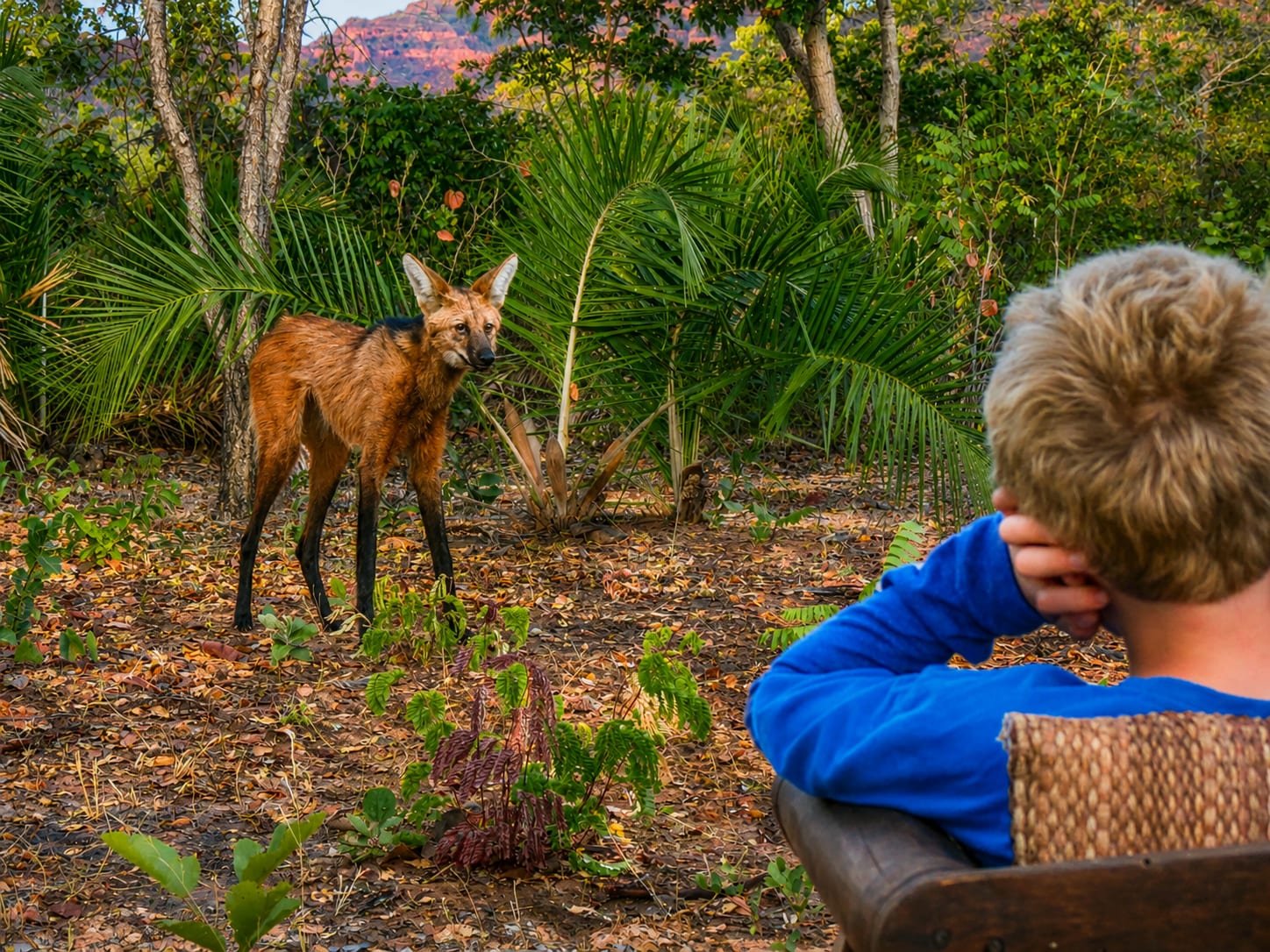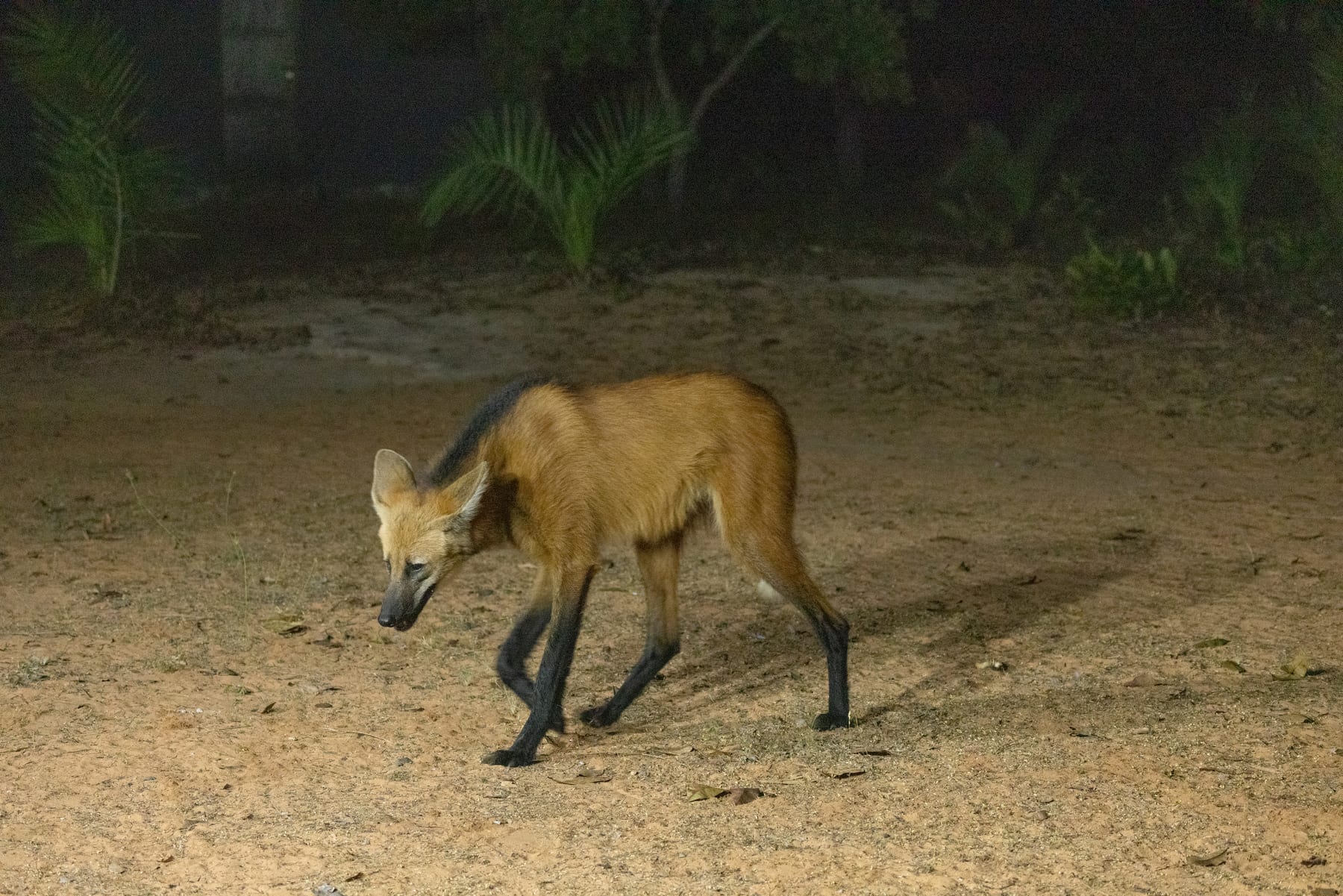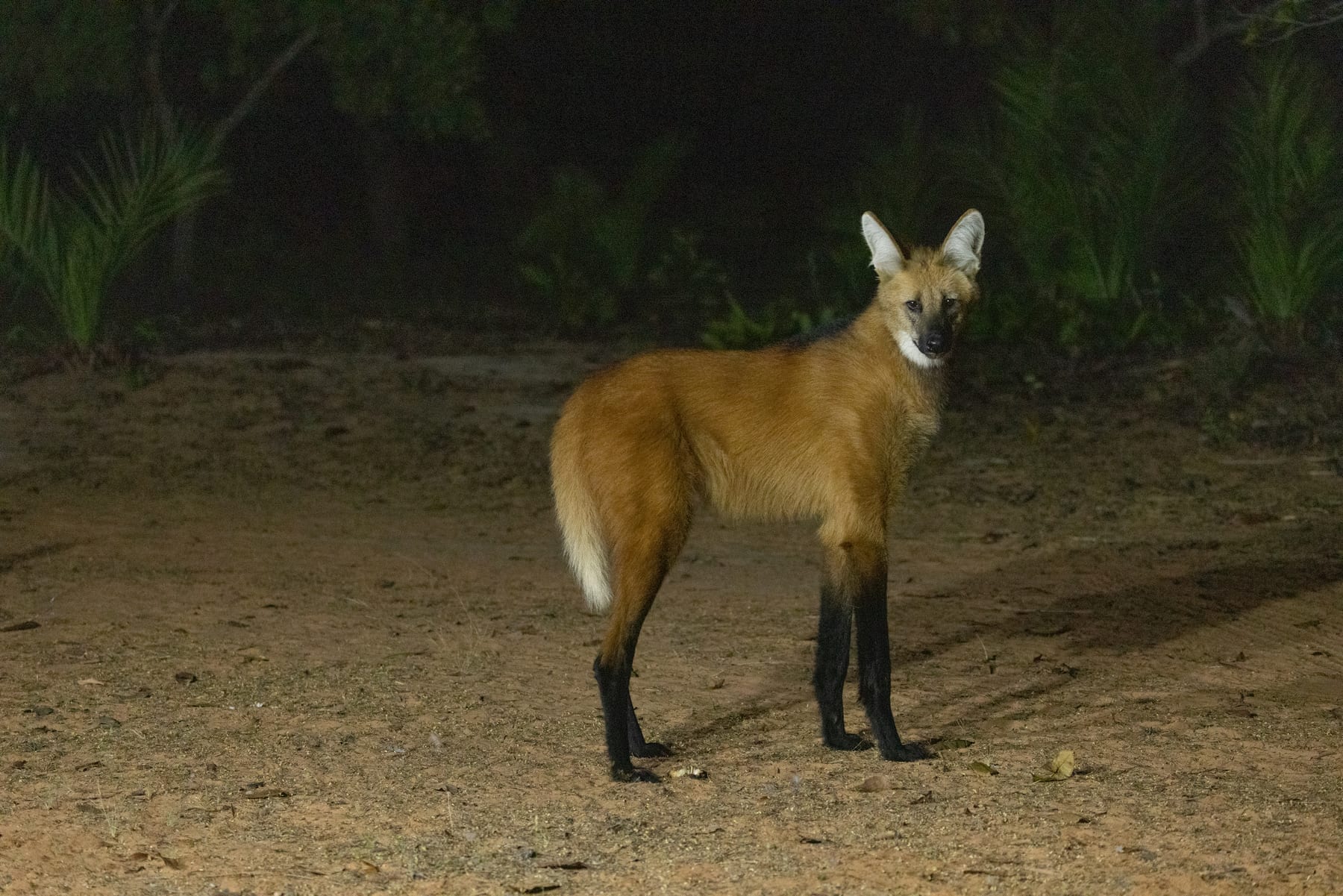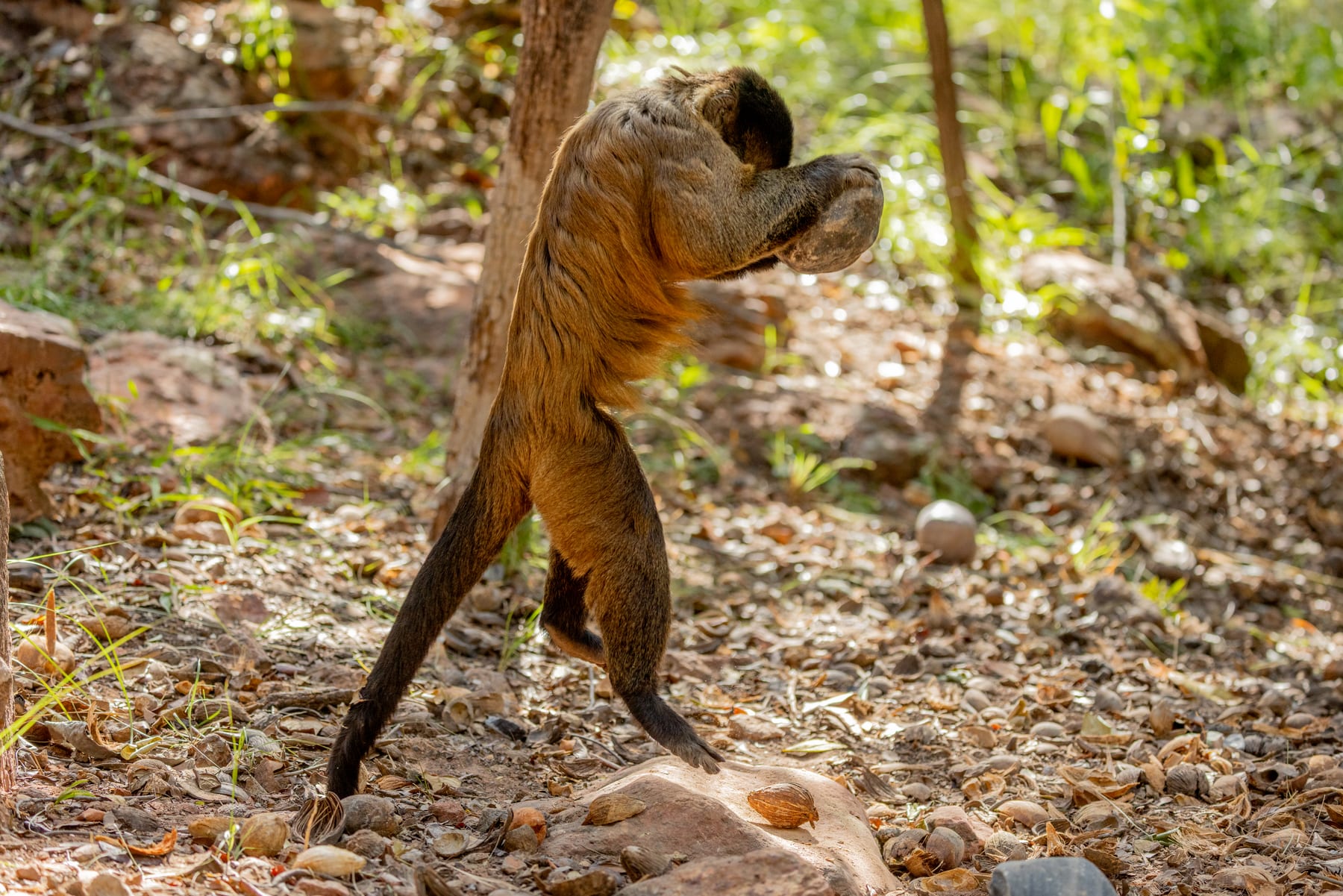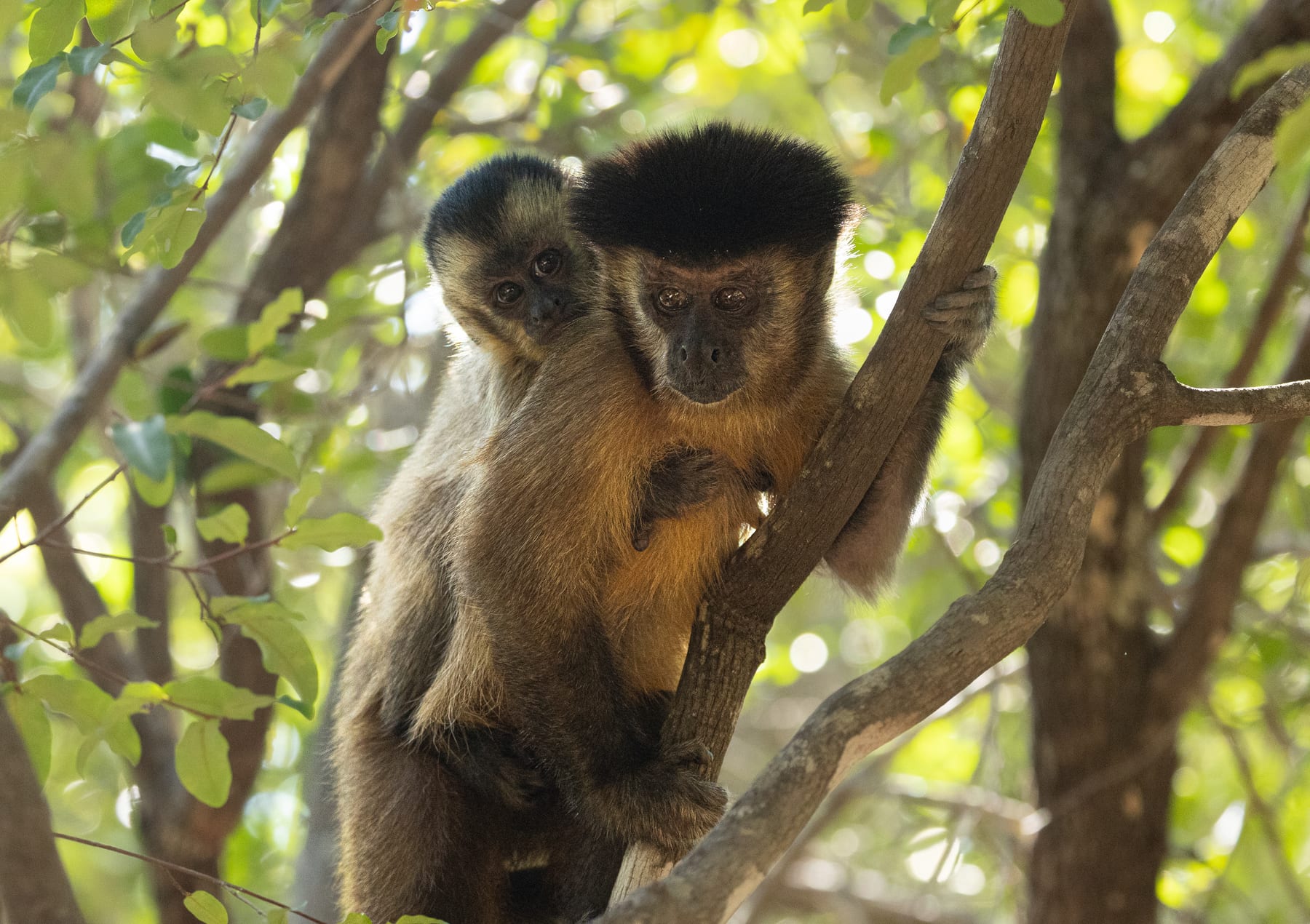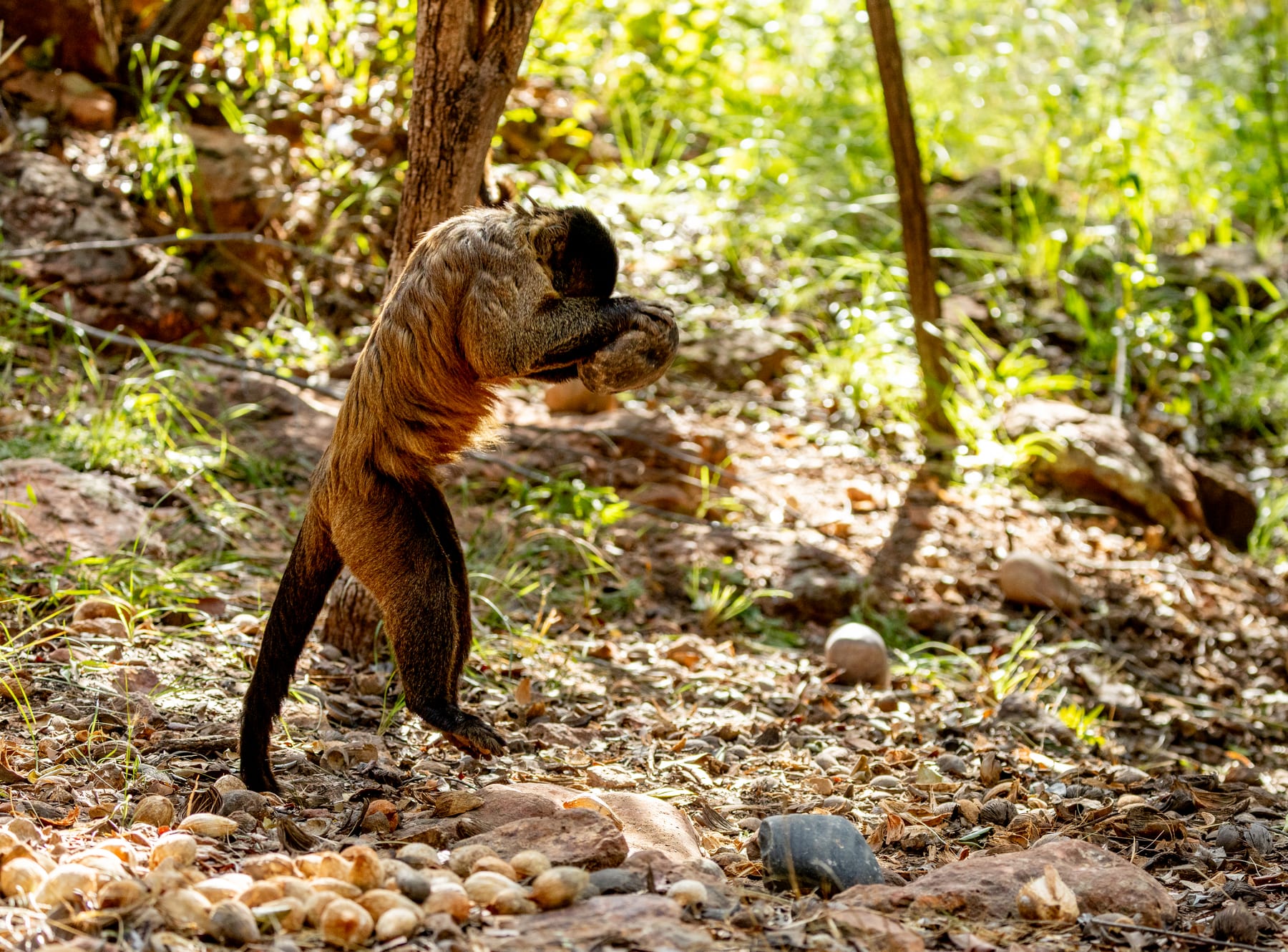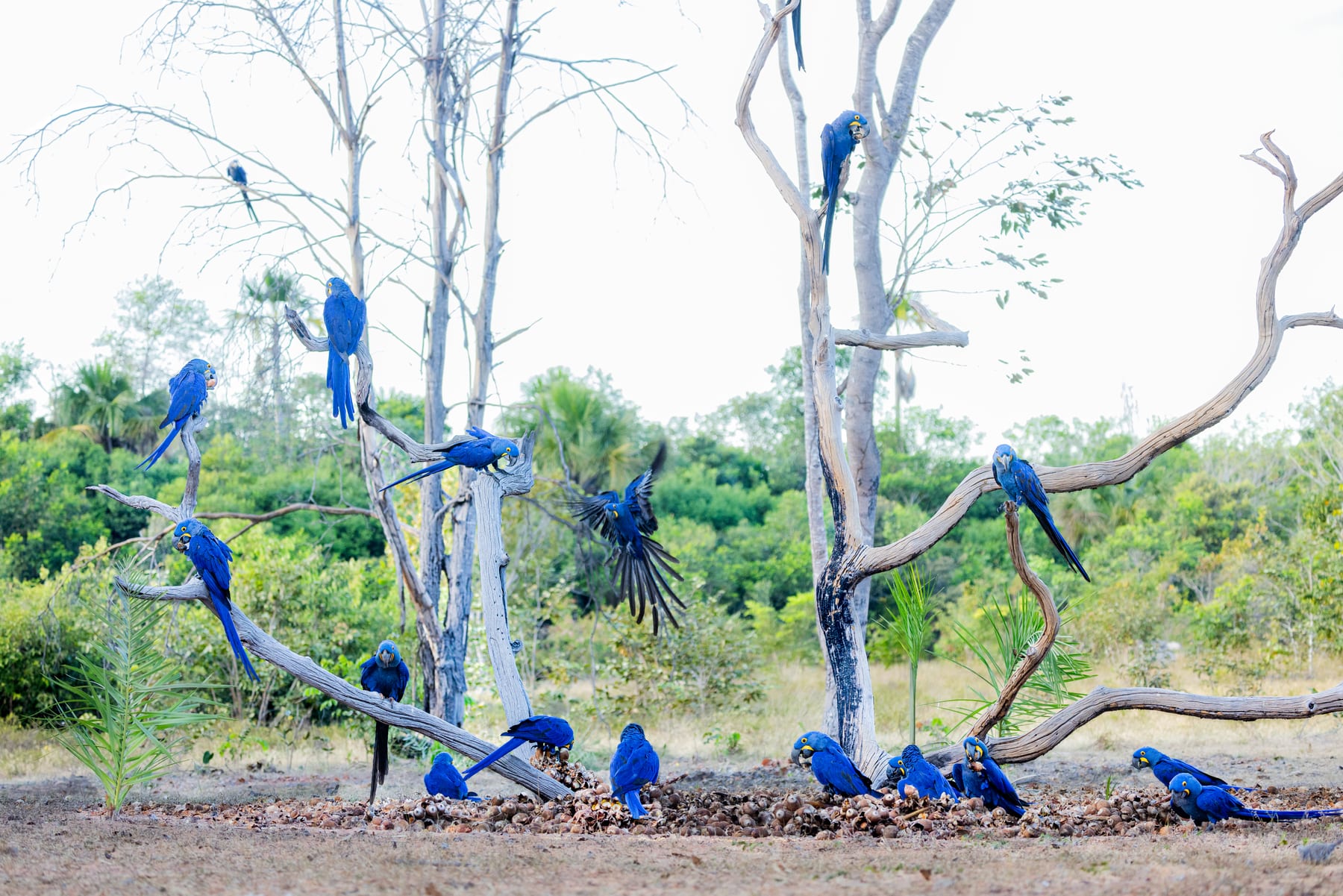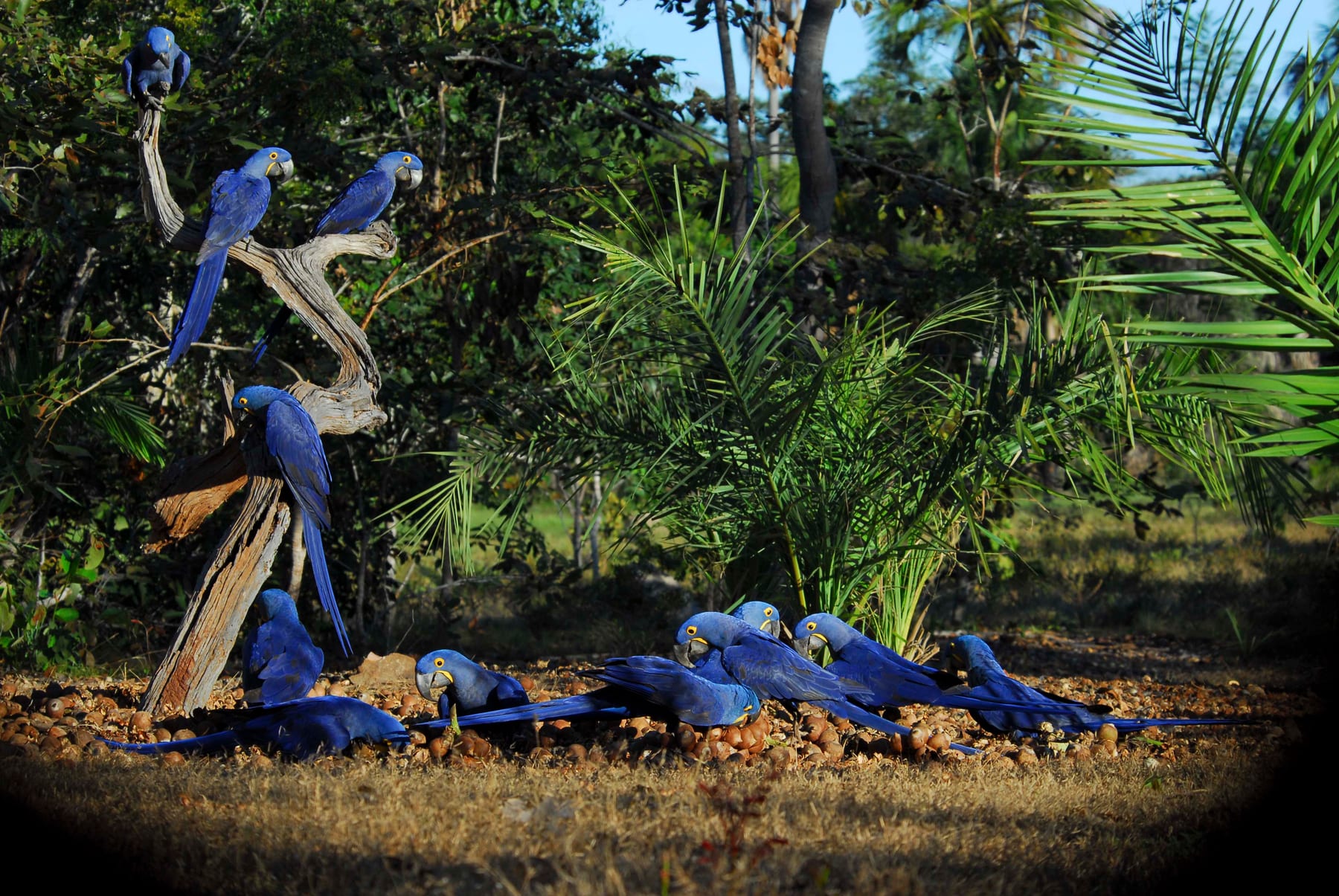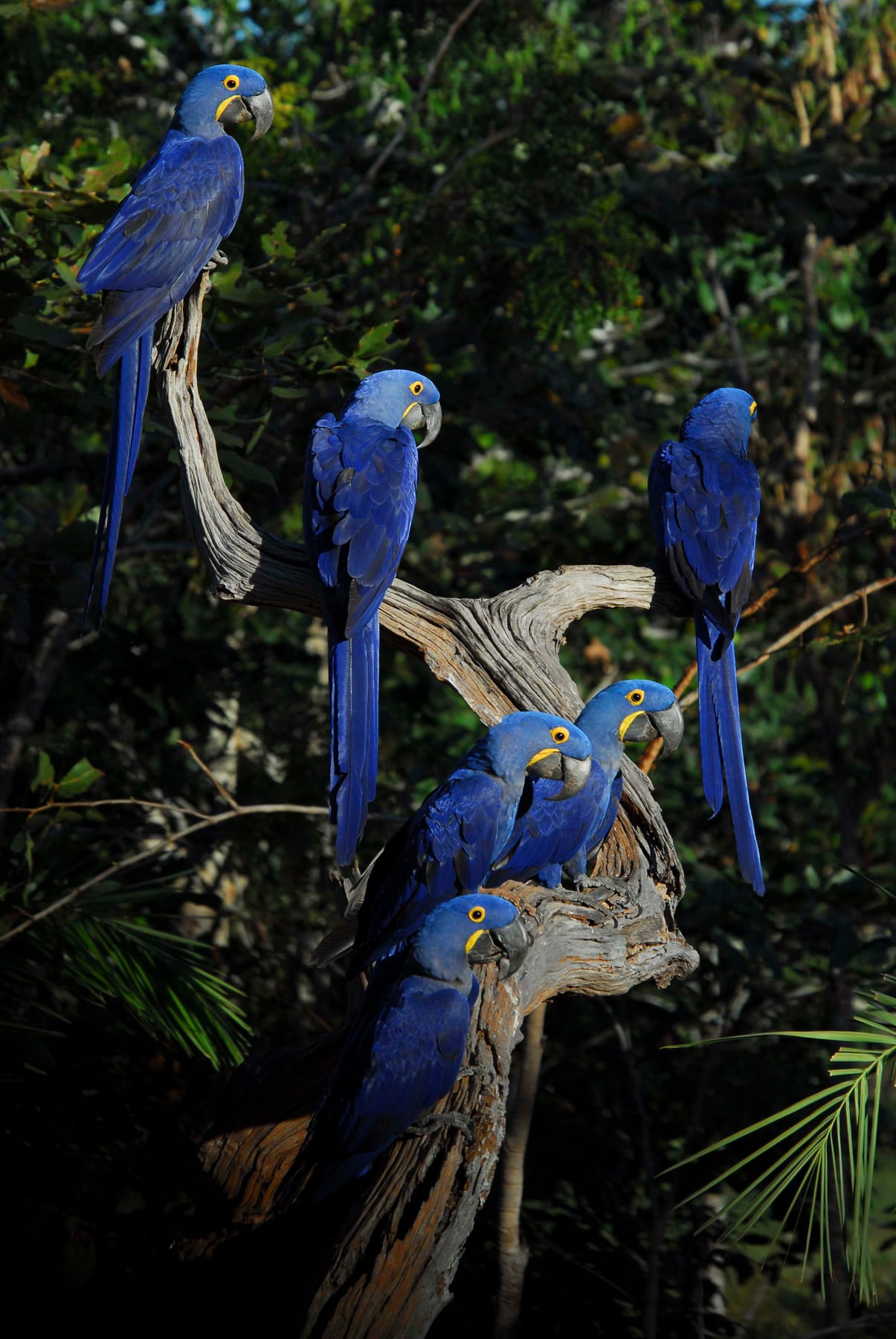
A four-hour drive from Brazil’s Barreiras (“BRA”) airport lies the most wildlife-rich tropical dry forest in the New World. Here, at SouthWild’s two “Wolf Camps”, we offer the world’s only guaranteed, close-up viewing in natural habitat of Maned Wolves, an endangered predator that is the tallest and most elegant wild canid in the world. Two other global exclusives at our Wolf Camps are a flock of 12-25 Hyacinth Macaws foraging on the ground at only 8-15 metres and a troop of 10-15 Bearded Capuchins using their own special hammer rocks to smash rock-hard palm nuts on sandstone anvil rocks.
Wolf Camps: The Richest Wildlife Experience in Neotropical Dry Forests
Humans have destroyed more than 93% of the world’s tropical dry forests, making it a much rarer habitat type than wet tropical rainforest, of which 50% remains. Our two Wolf Camps, each of which has only seven spacious double-occupancy, private bungalows, offer the finest viewing of the rare and beautiful wildlife of the world’s largest remaining tropical dry forest, namely the millions of acres of intact forests at the junction of four states of northeastern Brazil: Piauí, Bahia, Tocantíns, and Maranhão.
SouthWild is familiar with that region thanks to the work of Charles Munn, CEO of SouthWild, who first visited that region in 1987 to survey the wild population of the endangered Hyacinth Macaws for a joint project of the Brazilian government, World Wildlife Fund, Wildlife Conservation Society, and CITES. In 1987, trapping of Hyacinth Macaws was rampant in that region, and in that year Munn met and interviewed the largest Hyacinth Macaw trapper in the world. Luckily, the trapper did not kill Munn, who lived to have the chance in 1994 to flip the master trapper to the good side of the force, namely to give up trapping and to use his great knowledge to conserve and even showcase the very same birds that he had spent the previous 17 years trapping.
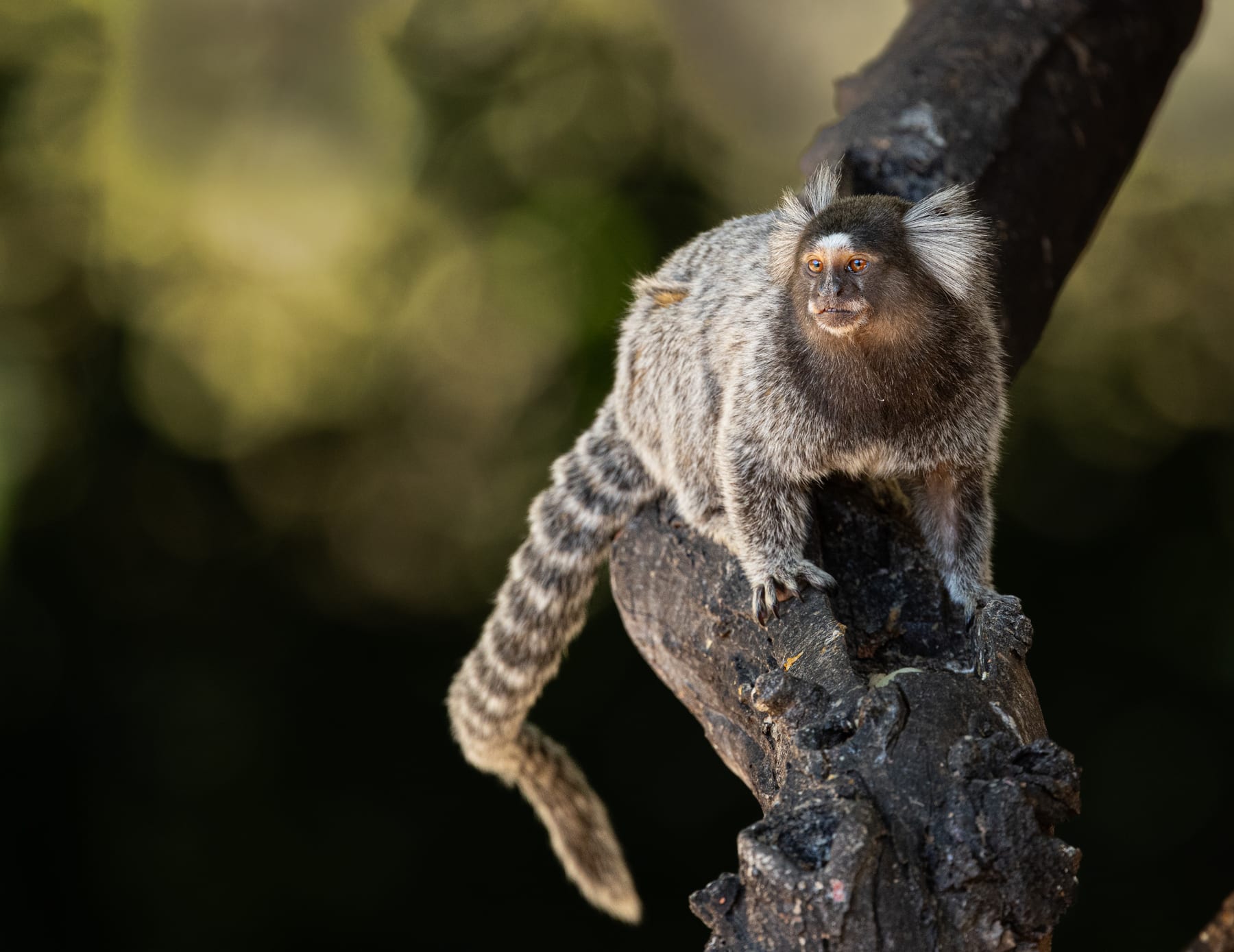
This former trapper had learned so much about wildlife behavior during his decades of capturing wildlife that at Munn’s request, he was able to employ all of his special secrets to make it possible for our guests to marvel at close-up views of the most captivating wildlife of the dry forest: Maned Wolves, Hyacinth Macaws, Bearded Capuchins, King Vultures, Blue-and-Yellow and Red-and-Green Macaws, Helmeted Manakins, Red-legged Seriemas, and Tufted-eared Marmosets. Each species required different, secret techniques that all the university training and advanced degrees in the world could not possibly discover. Only this master trapper, himself the son of a traditional master trapper, had all the unique knowledge needed to reveal such a wealth of wildlife for our guests to enjoy.
Maned Wolves Guaranteed
Our aptly-named Wolf Camps are the only lodges in the world that guarantee viewing in wild habitat of the world’s most elegant, tallest wild canid, the endangered Maned Wolf.
Hyacinth Macaws Guaranteed
Wolf Camps are the only lodges in the world that guarantee viewing of flocks of 15-25 or more of Hyacinth Macaws cracking their favorite wild palm nuts on the ground in perfect natural habitat.
TV Star Monkeys
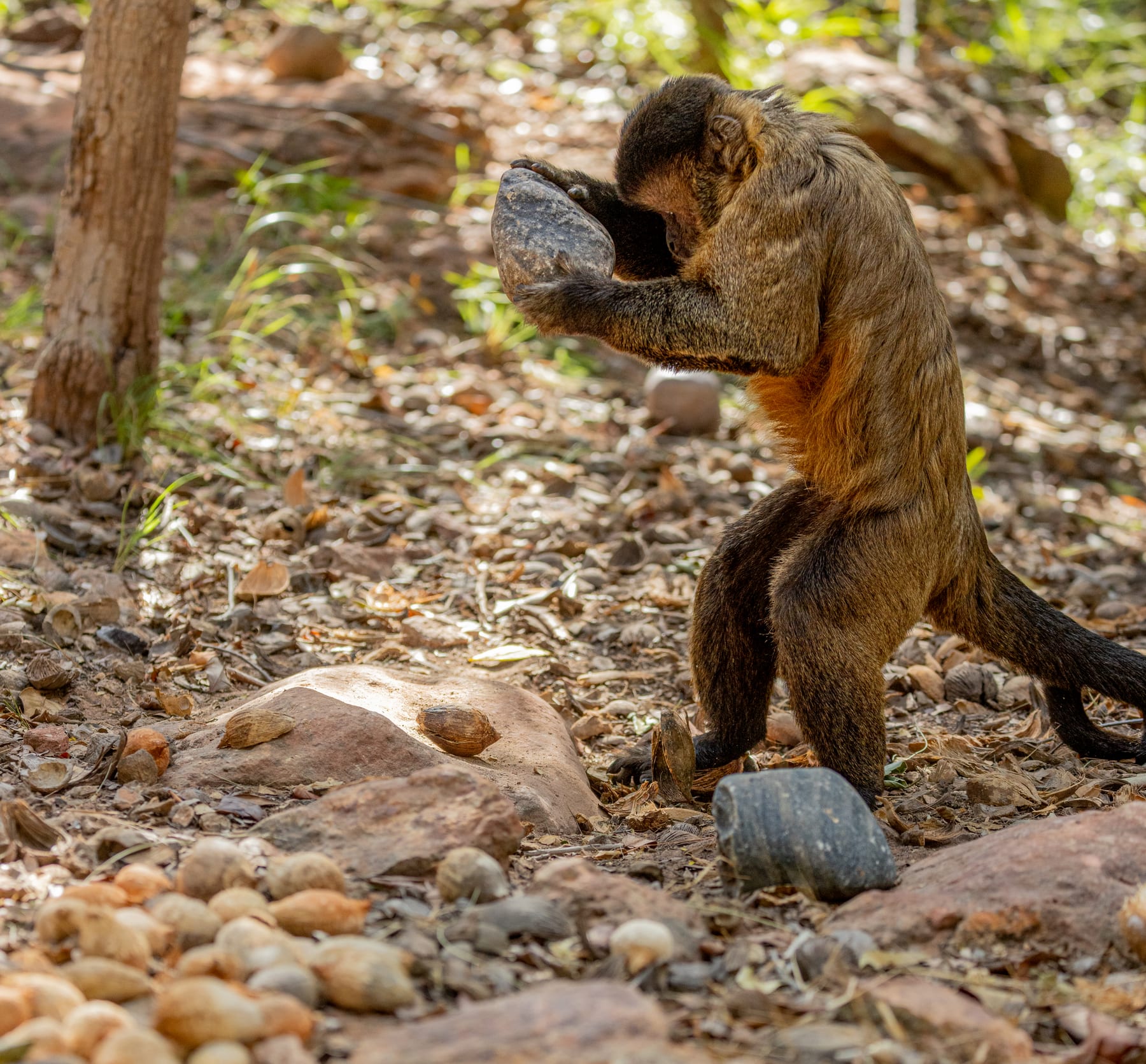
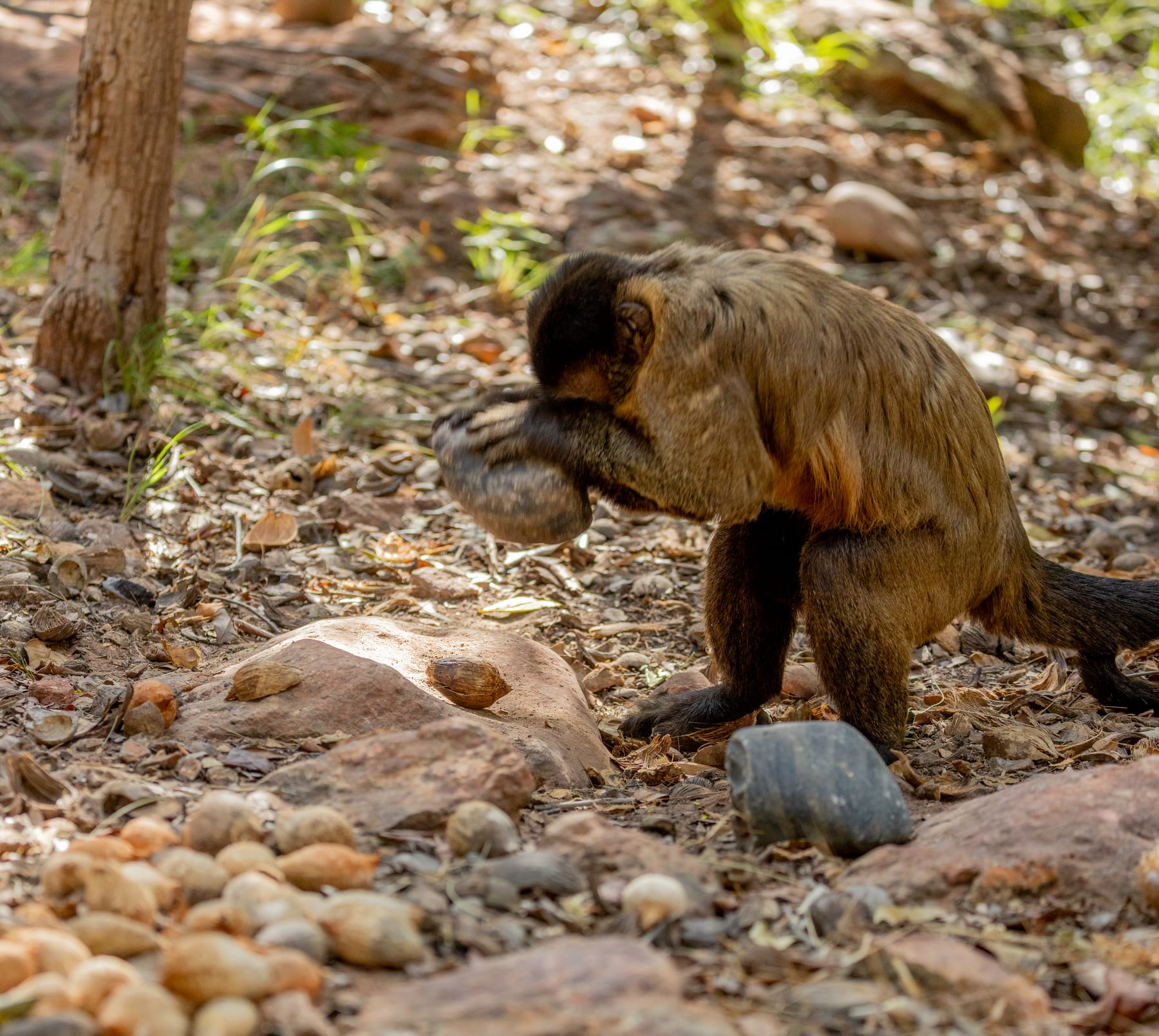
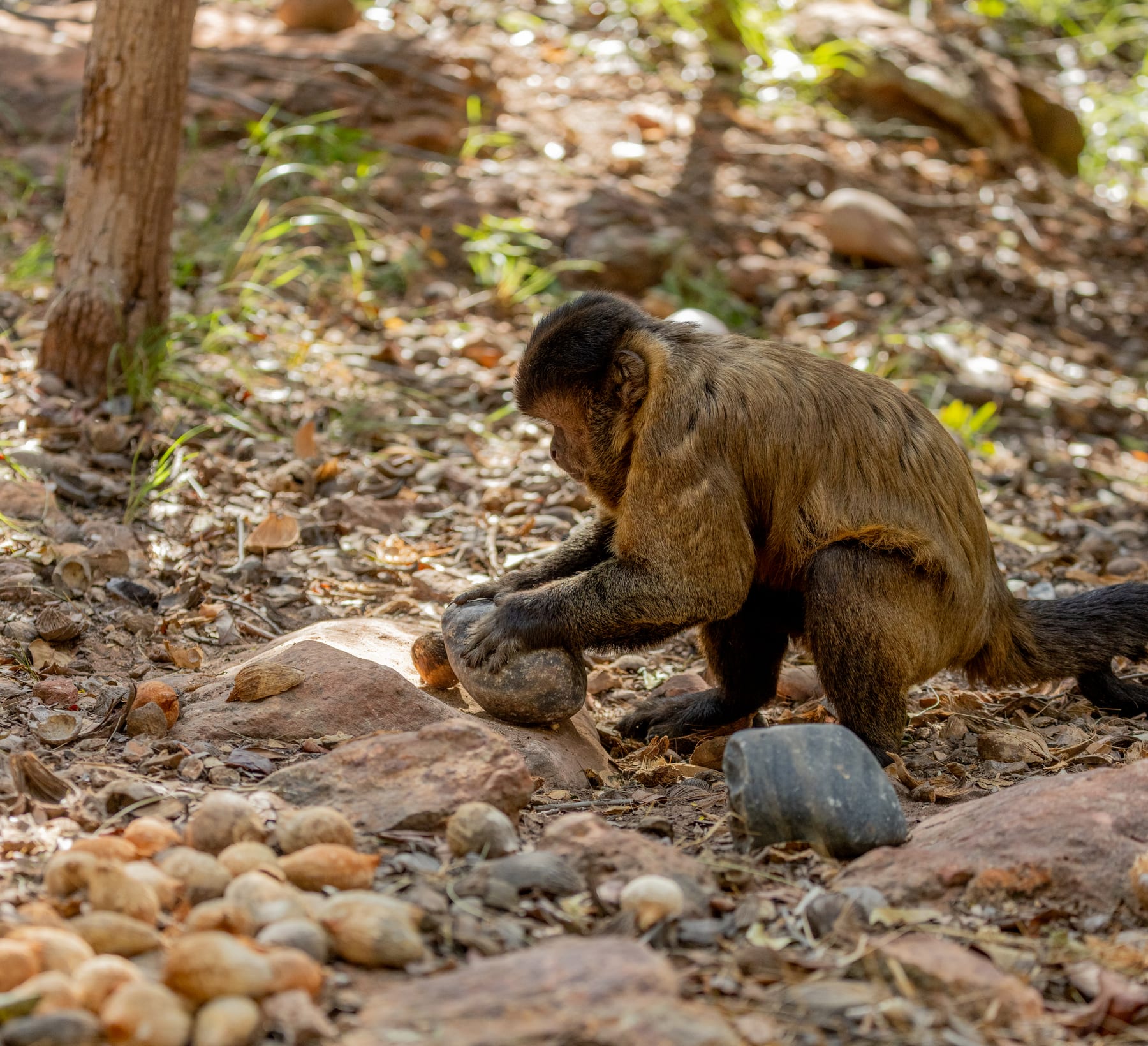
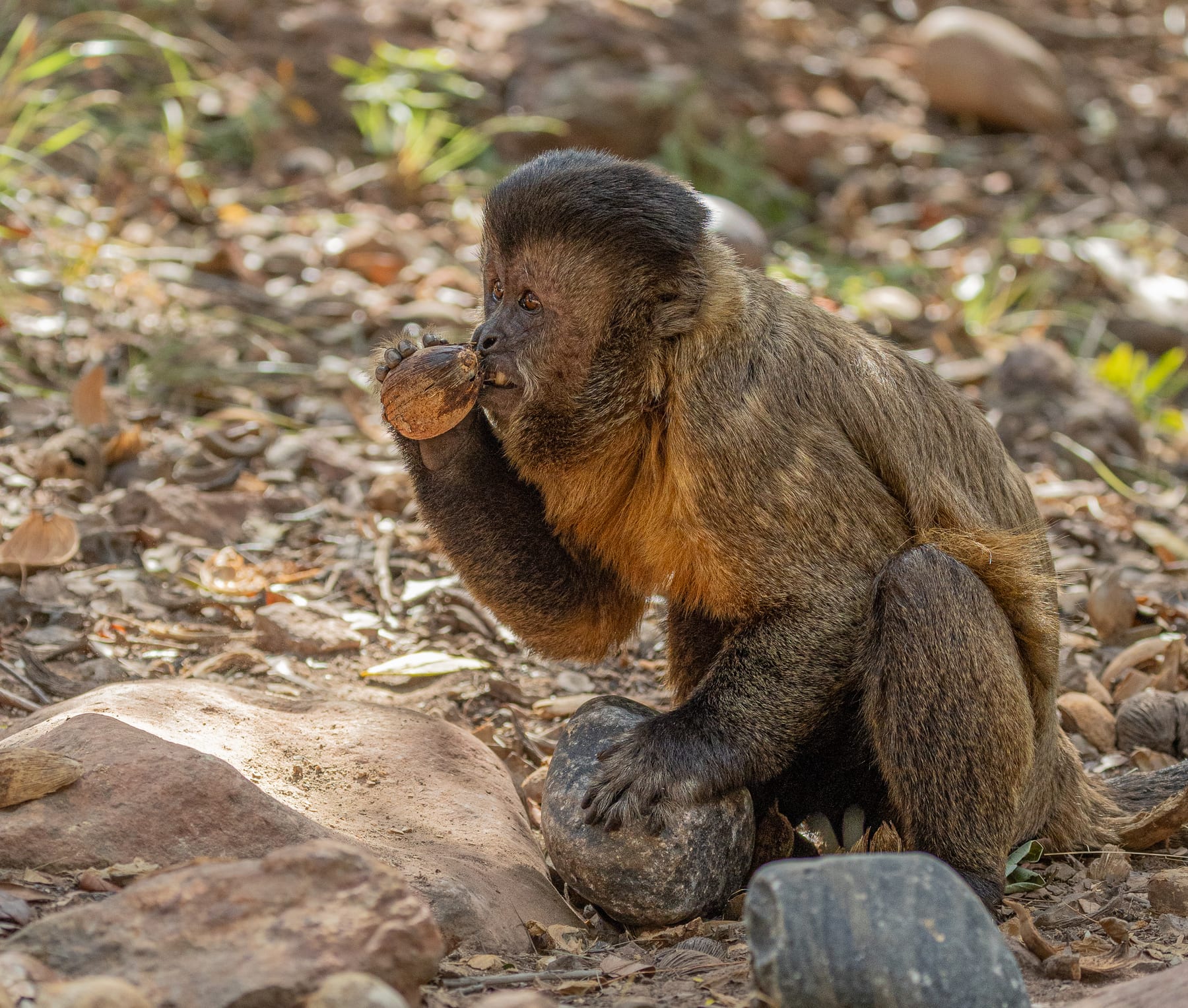
See at close range the world’s most complex tool use of any of the world’s 267 monkey species. As seen on BBC and Nat Geo TV, Bearded Capuchins use special, igneous hammer rocks to crack palm nuts on sandstone anvil rocks.
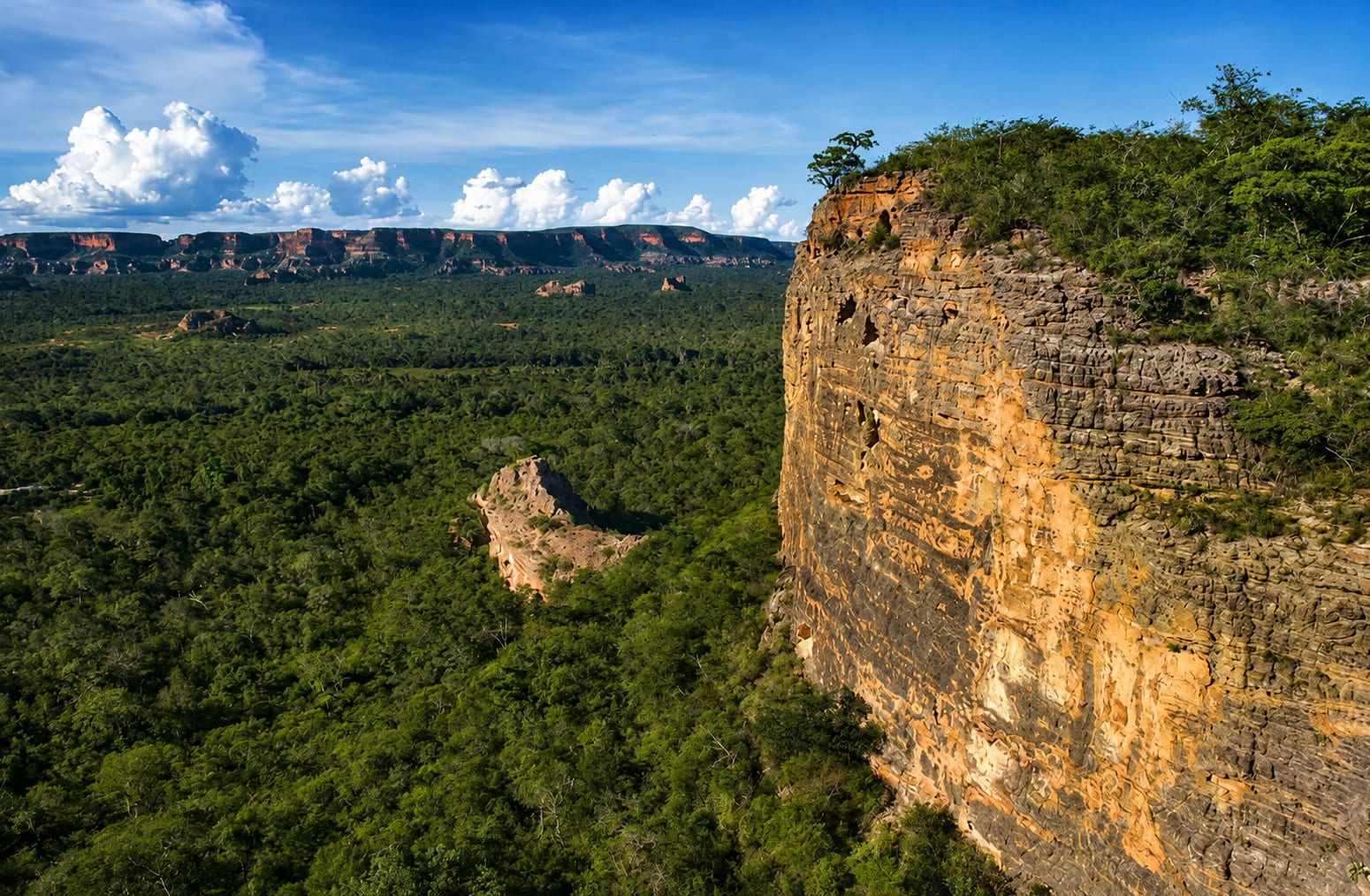
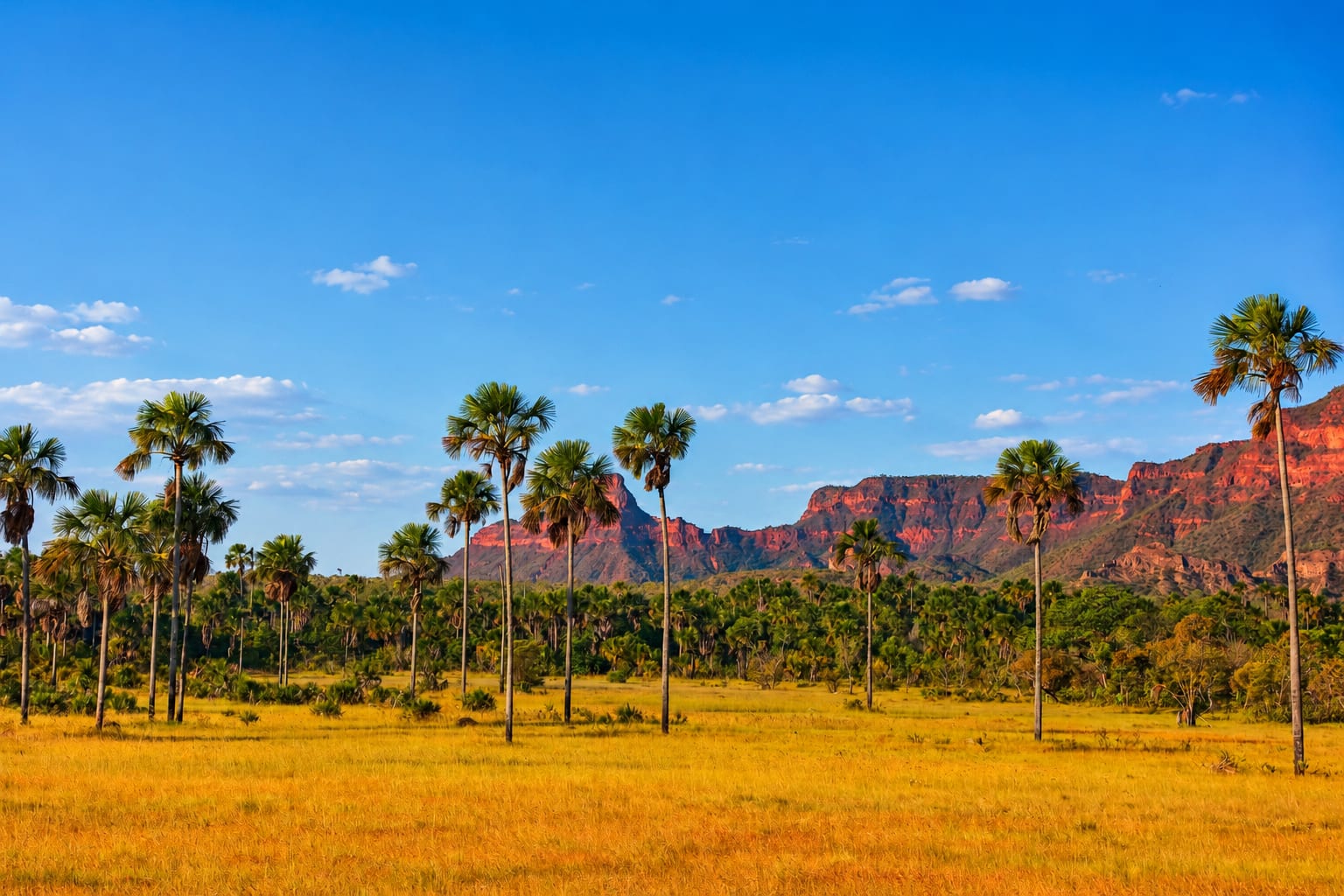
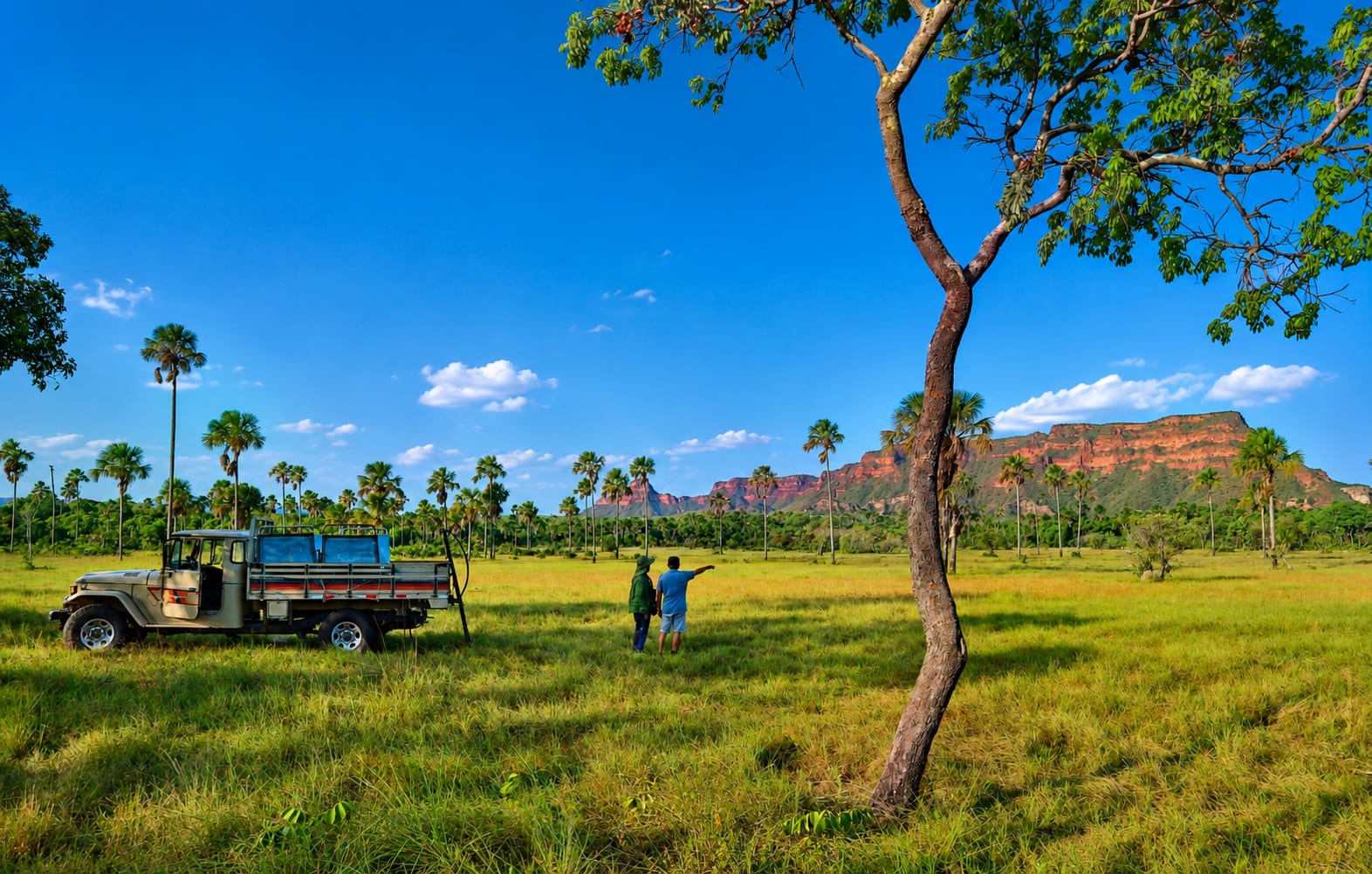
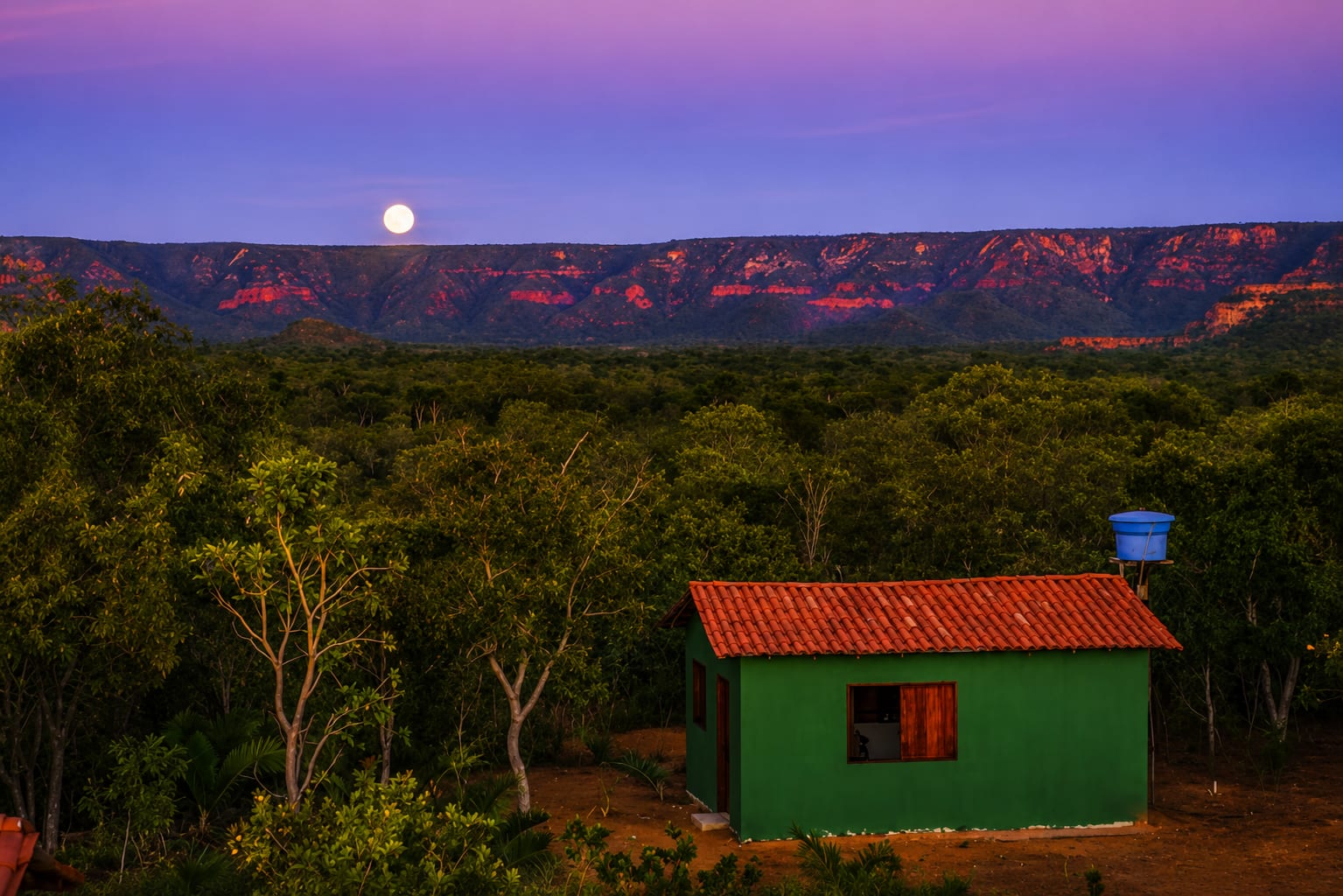
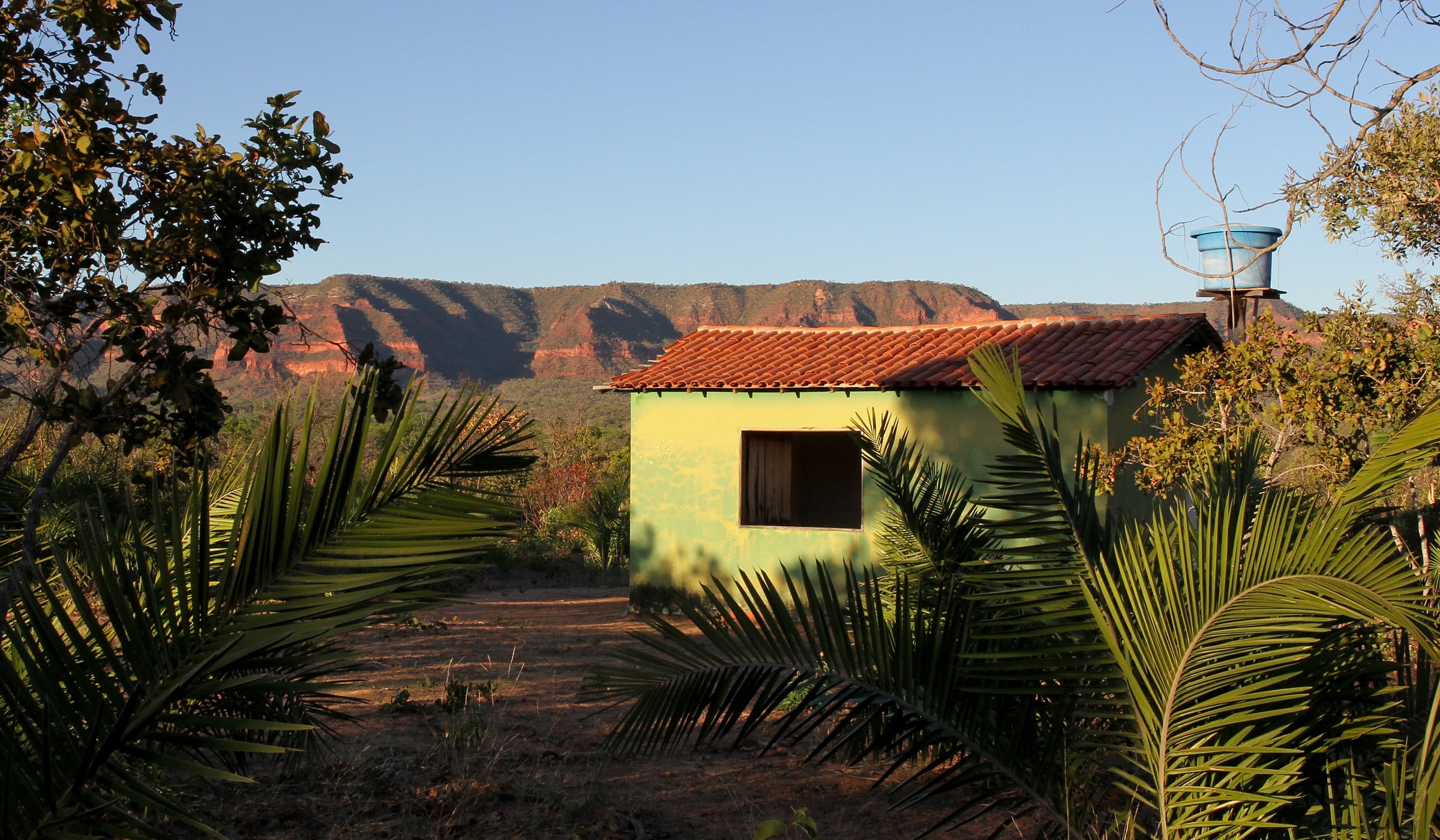
Striking scenery: 1,000-foot-tall Red Rock Cliffs and Palm-lined Valleys
The 1,000-foot-tall (300 metre-tall) Red Rock Cliffs of one of Brazil’s largest national parks frame the palm-lined, savanna valleys, making for photogenic scenery.
Blue-and-Gold and Red-and-Green Macaws, Seriemas, Burrowing Owls, and King Vultures
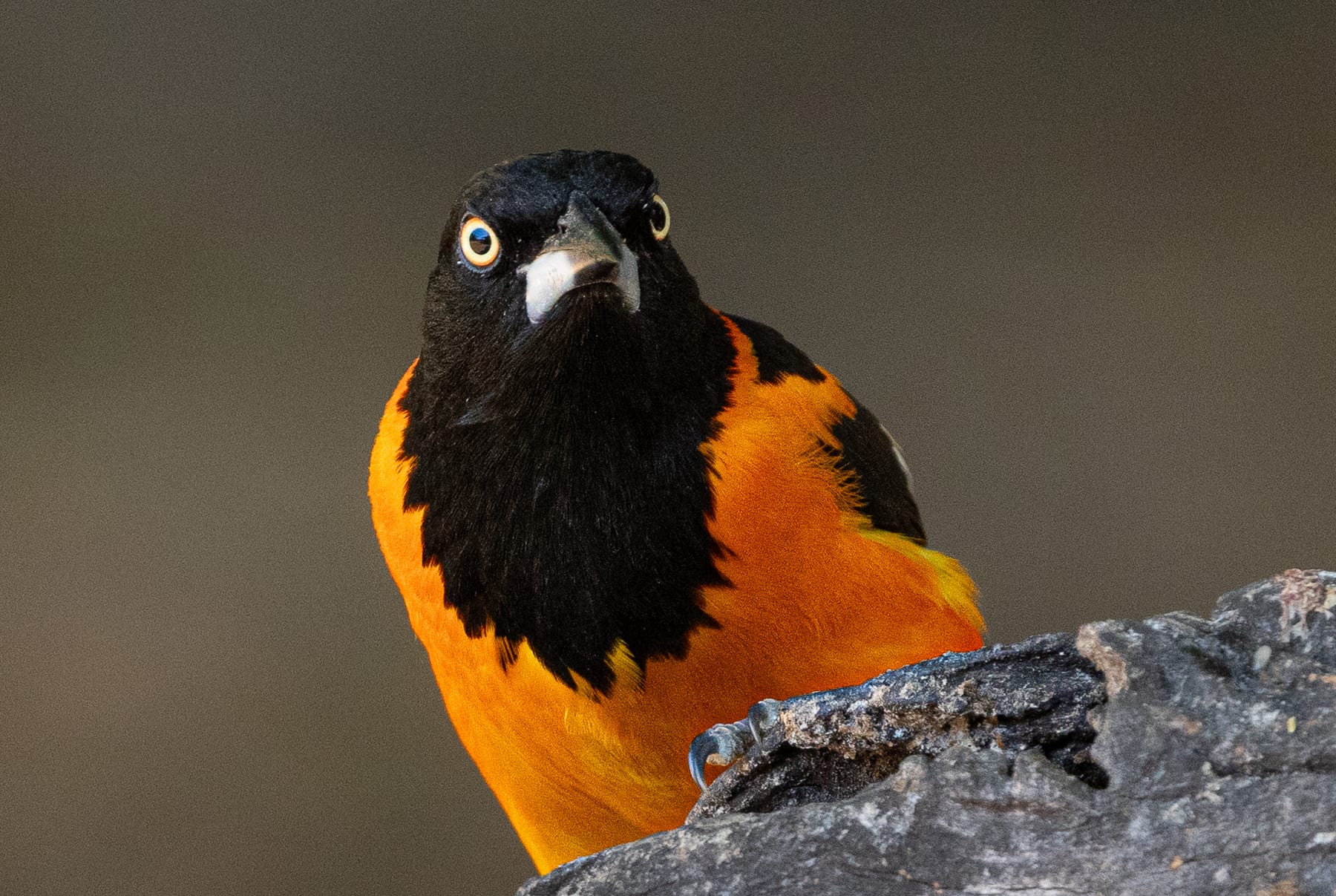
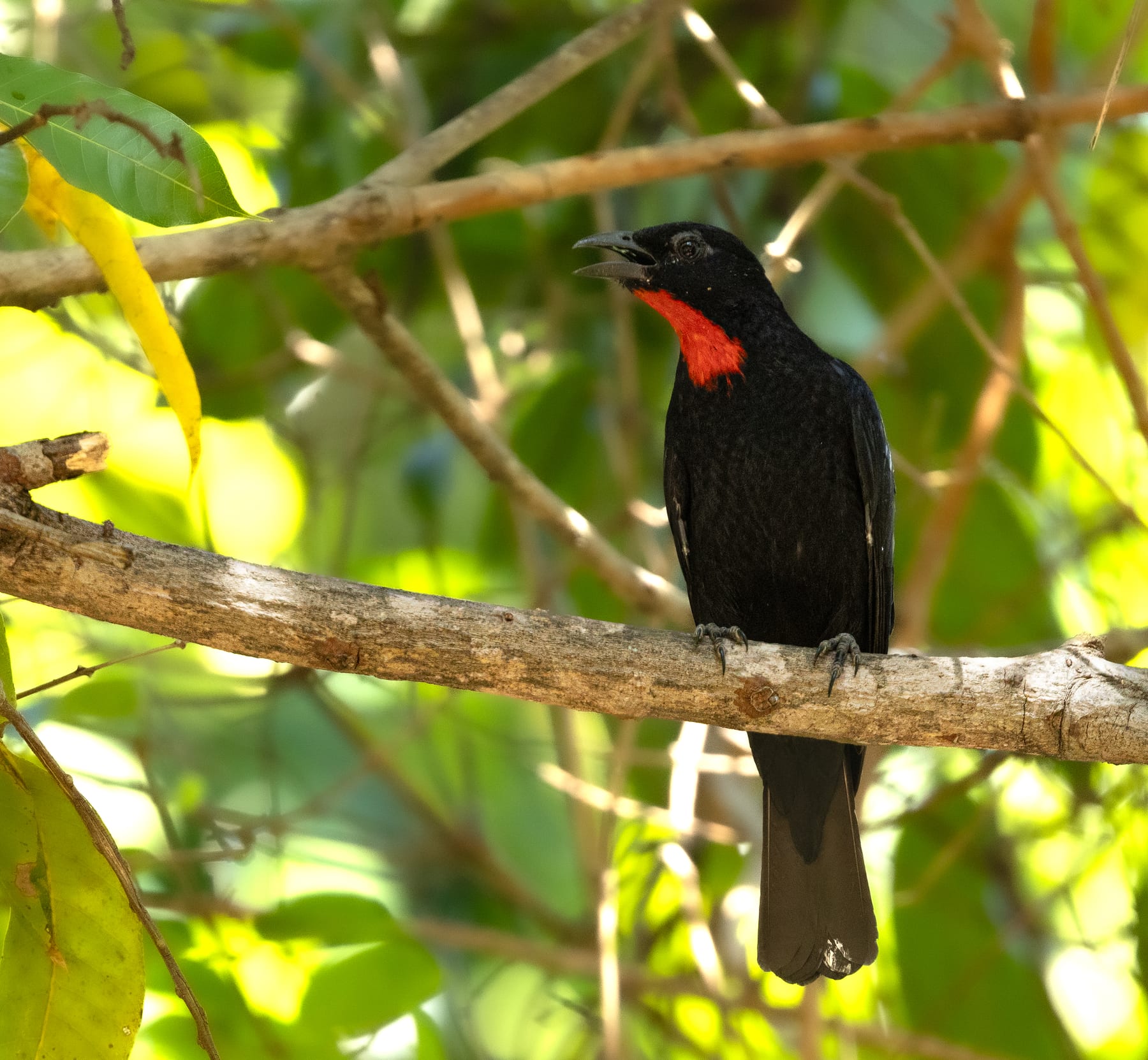
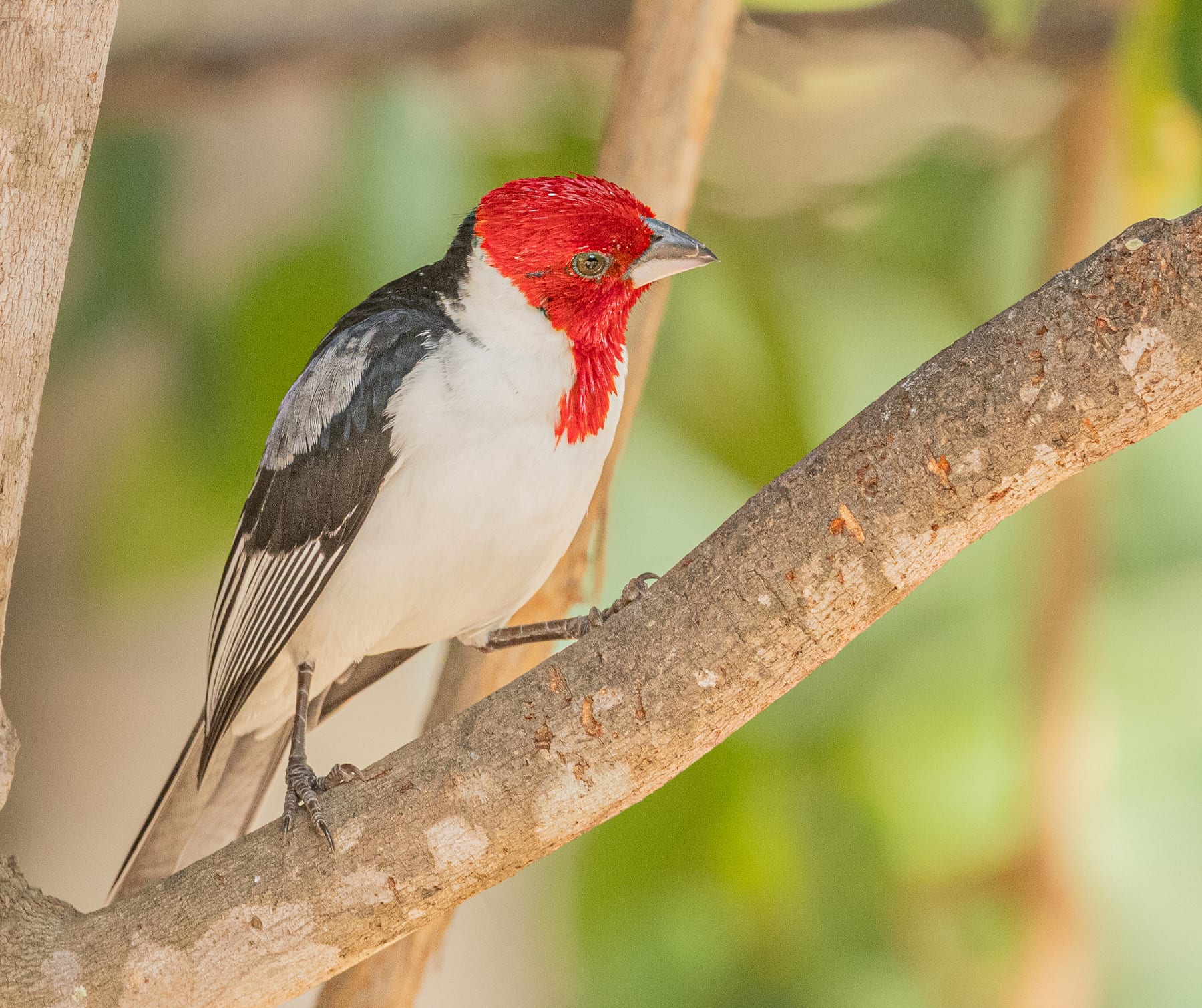
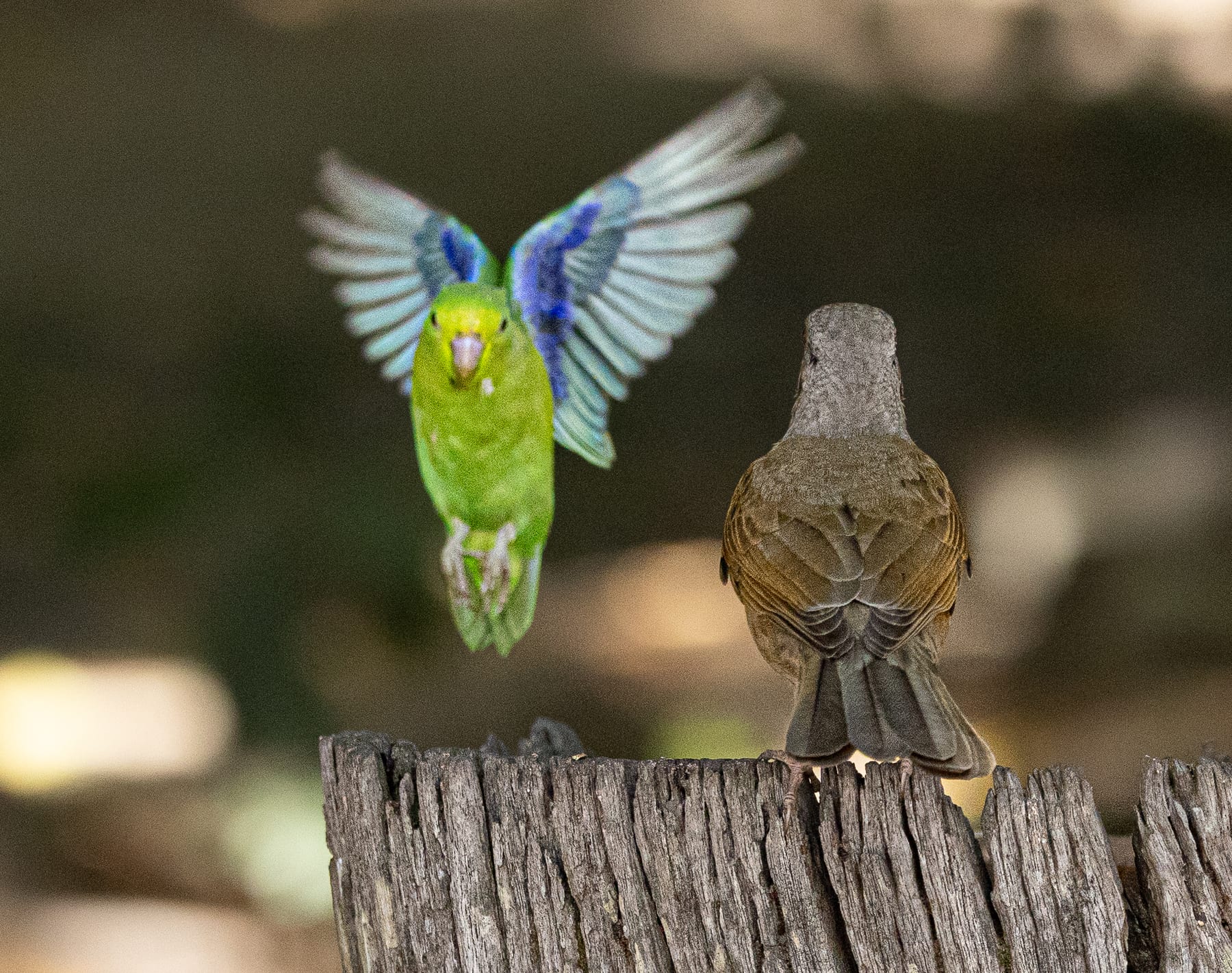
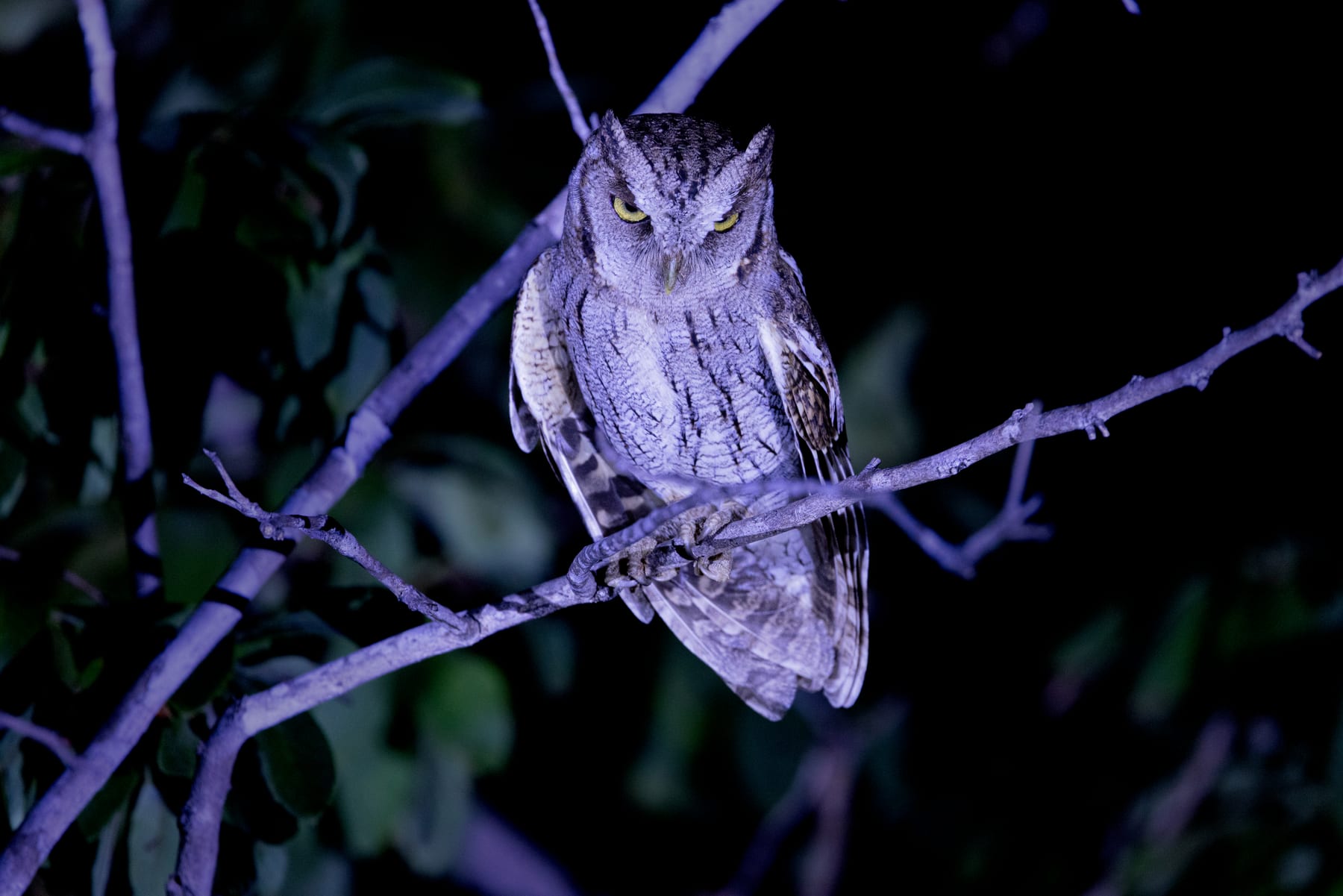
The Wolf Camps feature a series of other very colorful, iconic neotropical birds in specially-selected, wild settings perfect for photography.
Spacious, private bungalows in paradise
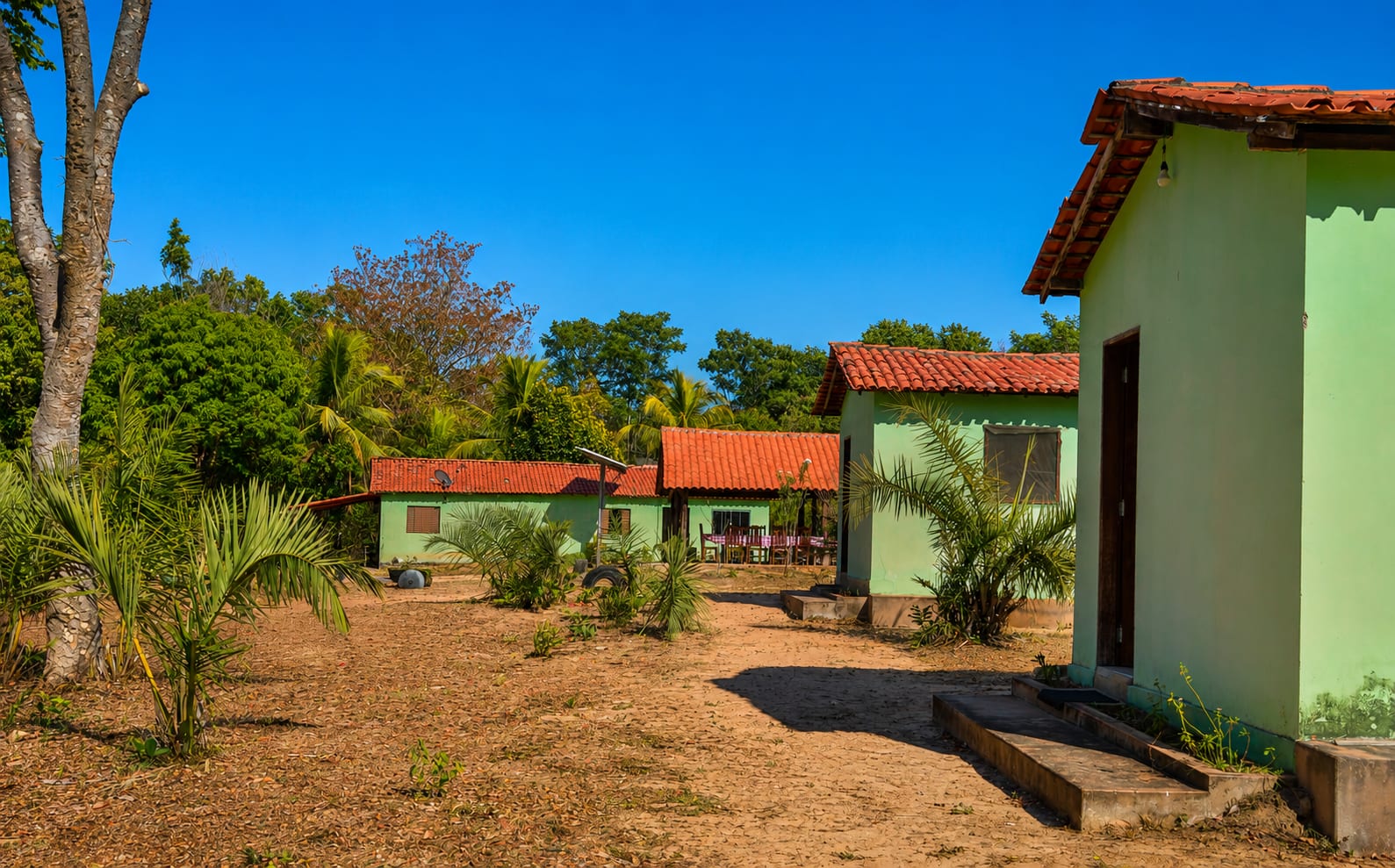
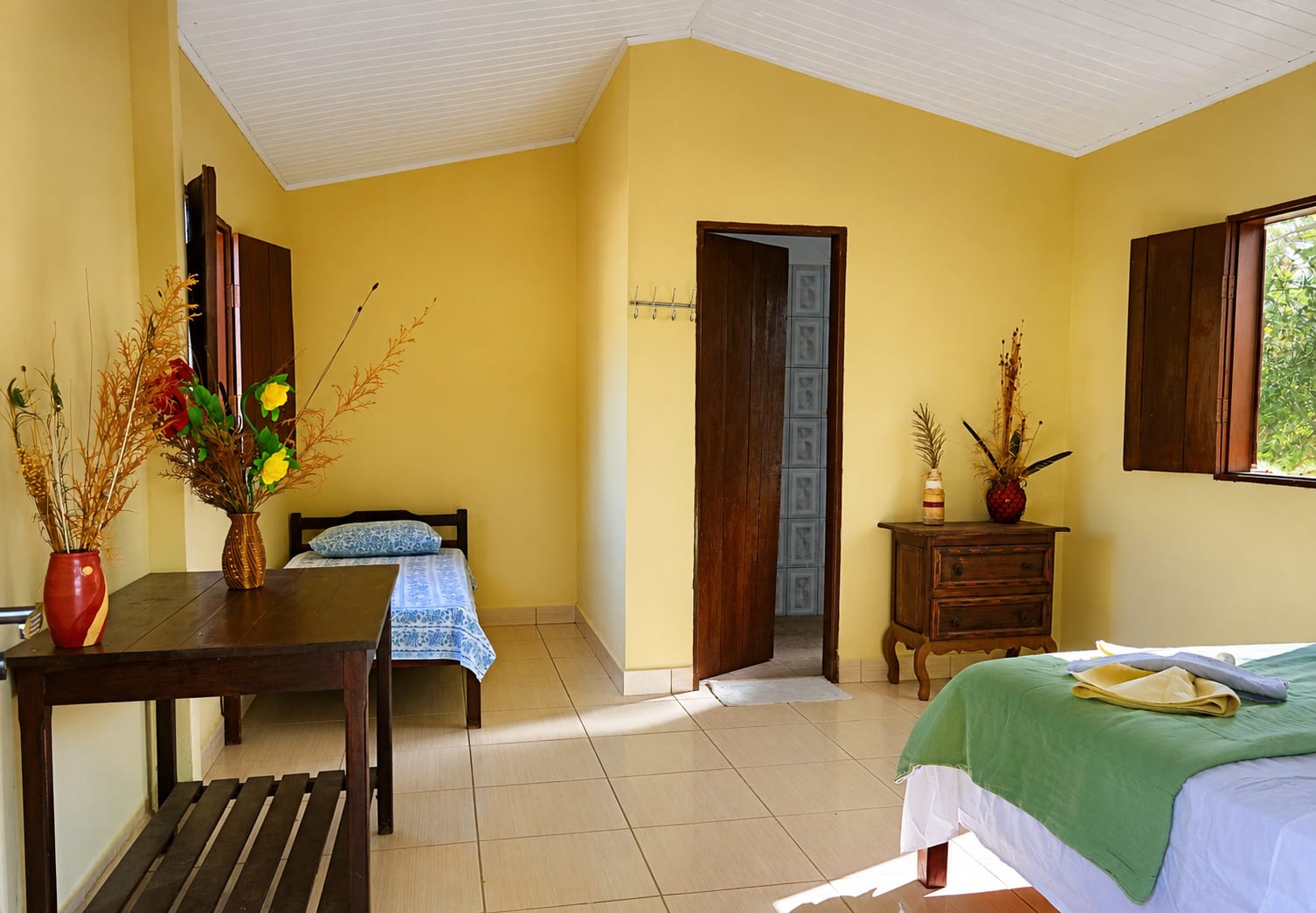
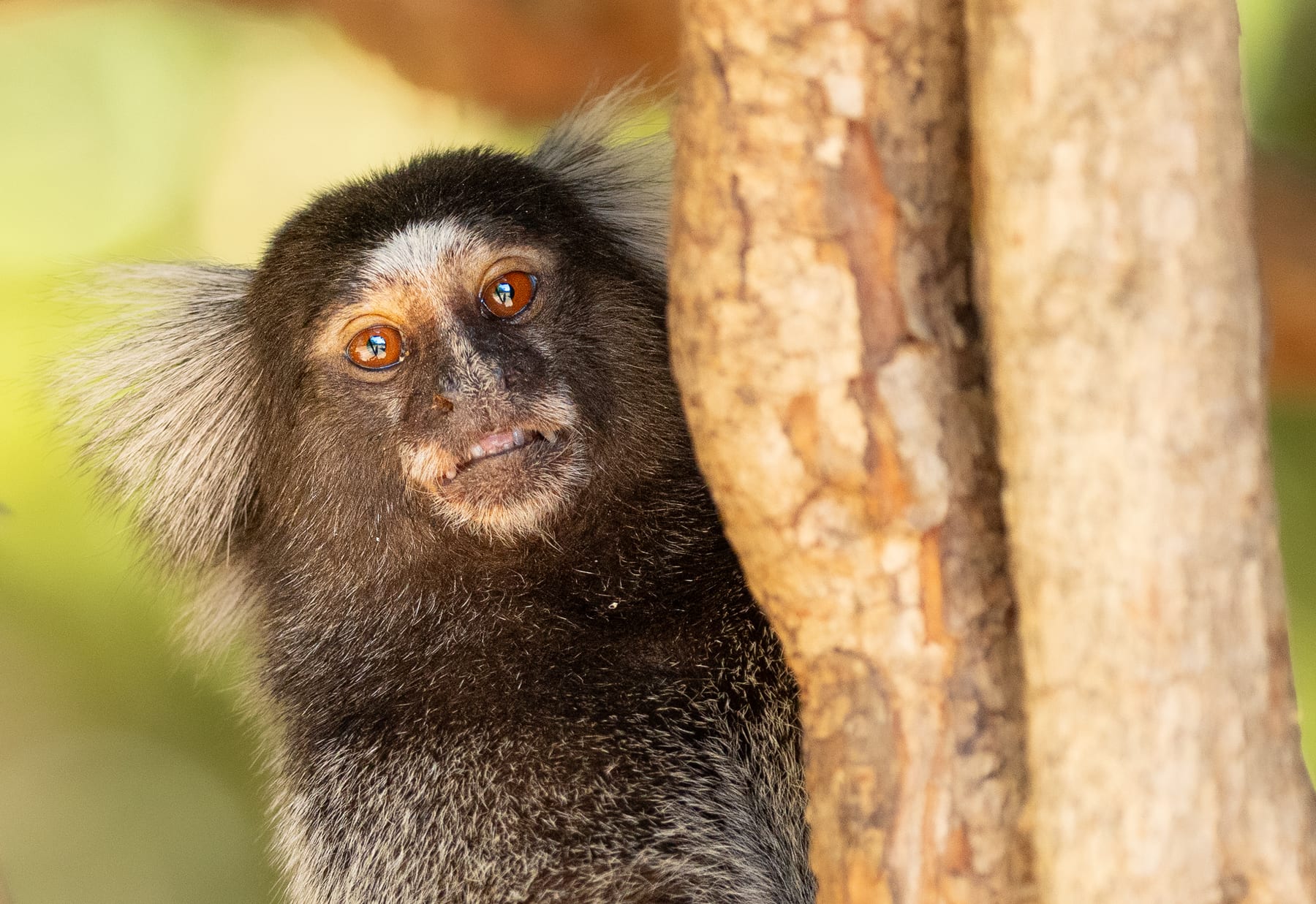
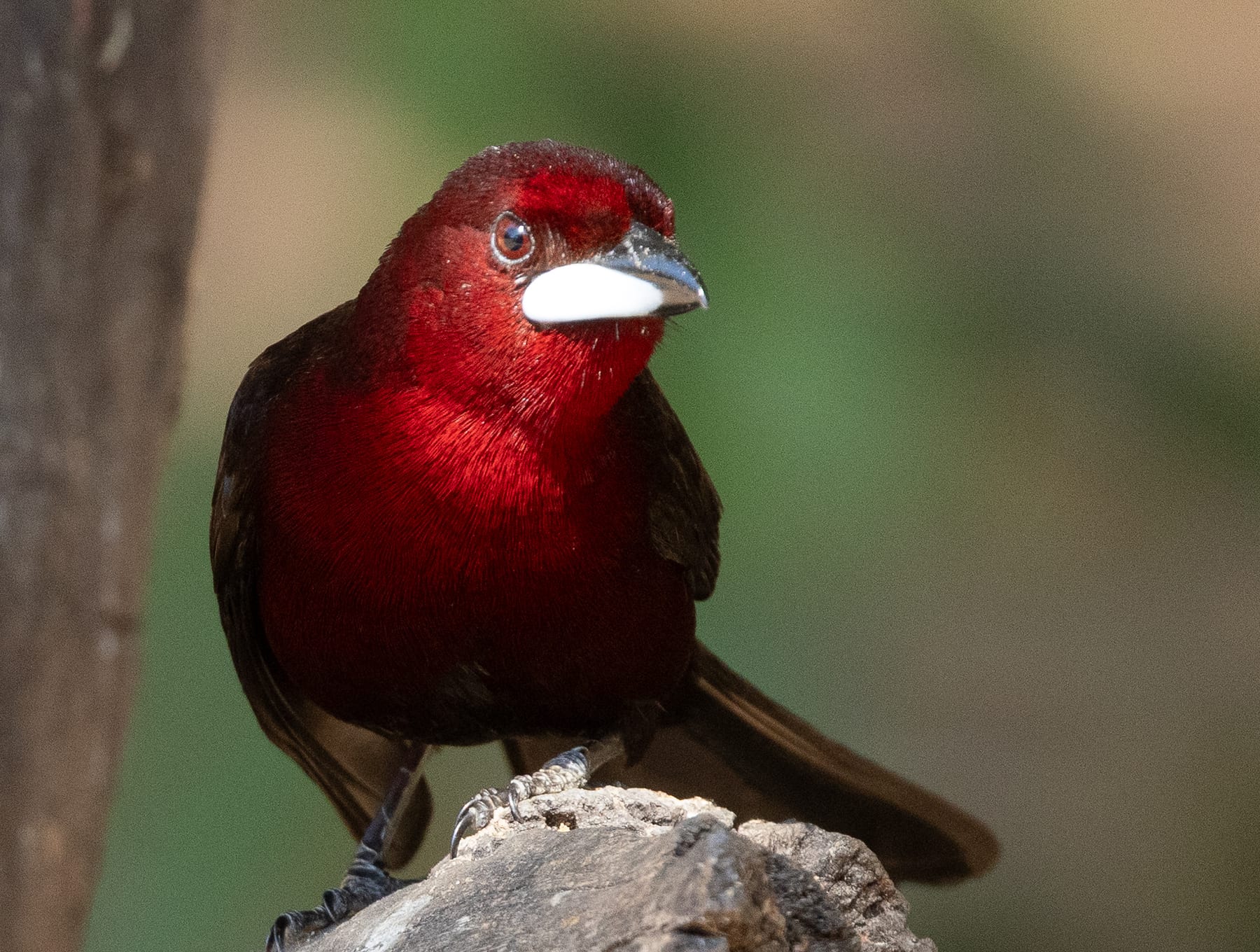
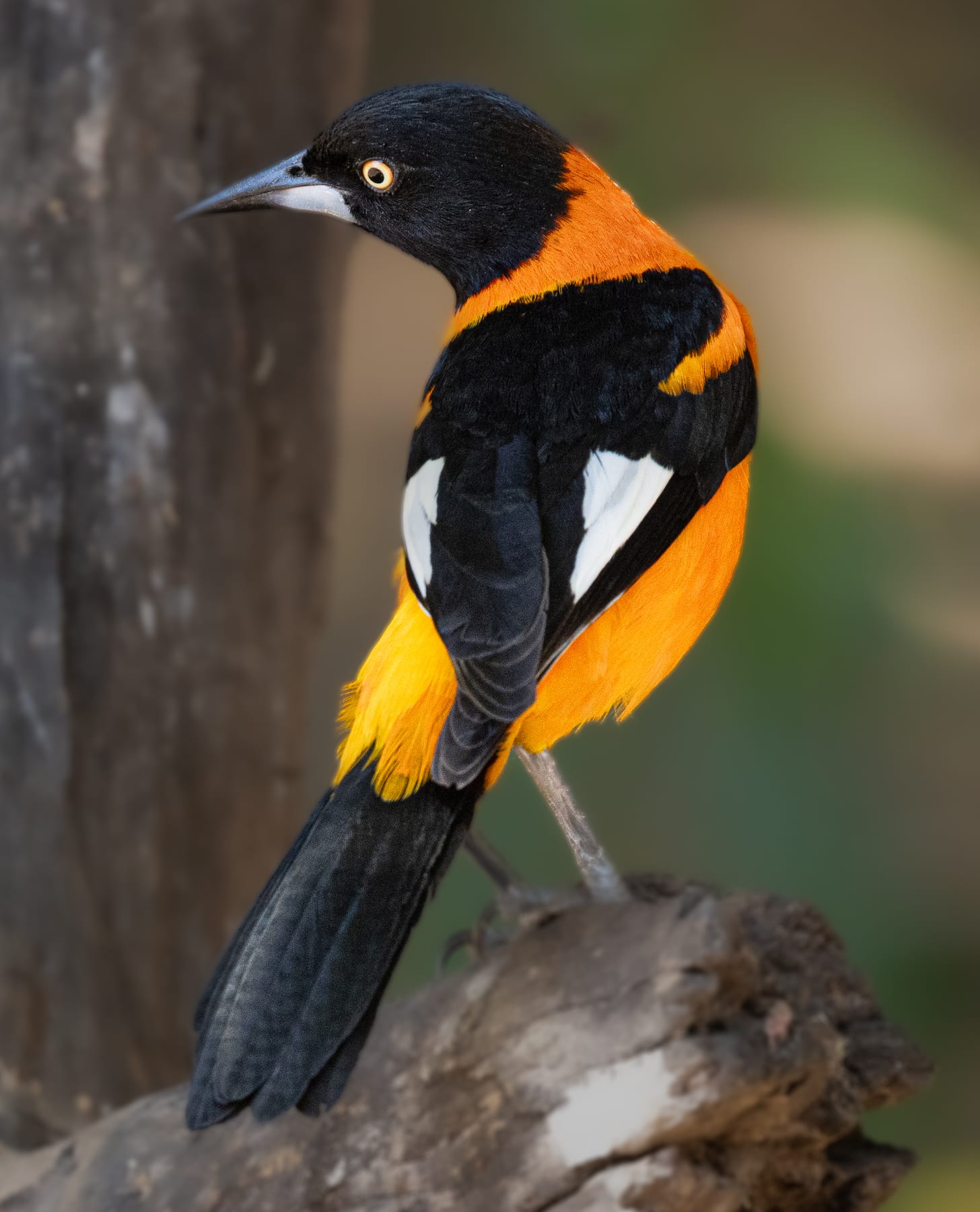
Our 350-square-foot private bungalows with ensuite facilities are set in miraculously-mosquito-free tropical savanna reserves with surprisingly-cool nights perfect for sleeping with one or two blankets. Many fancy songbirds, woodpeckers, hummingbirds, and Tufted-eared Marmosets grace feeders near the lodge.
Accommodations
- Each camp has 7 rooms of 35 sq. m. (380 sq ft) each, ensuite bathrooms with sun-heated showers.
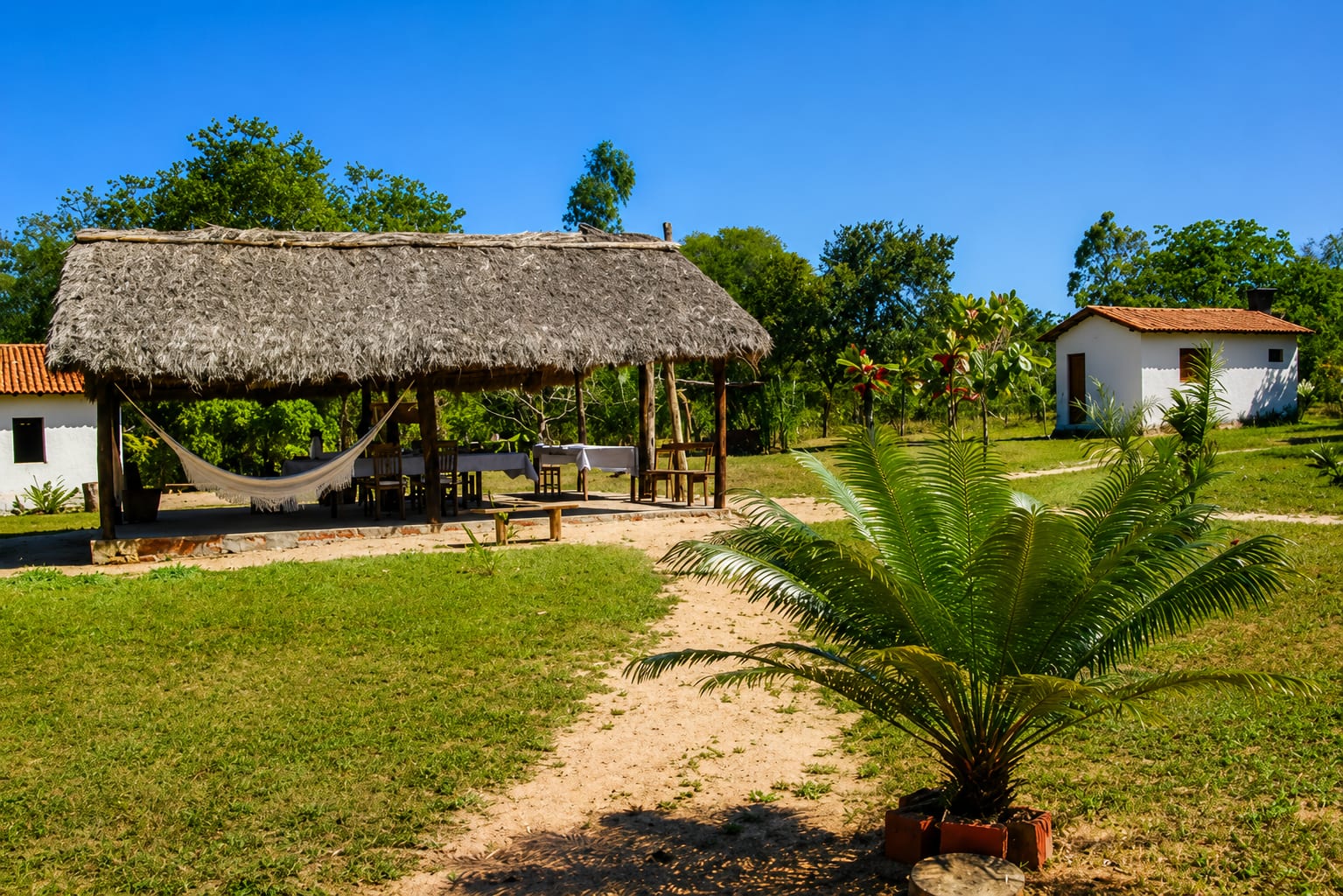
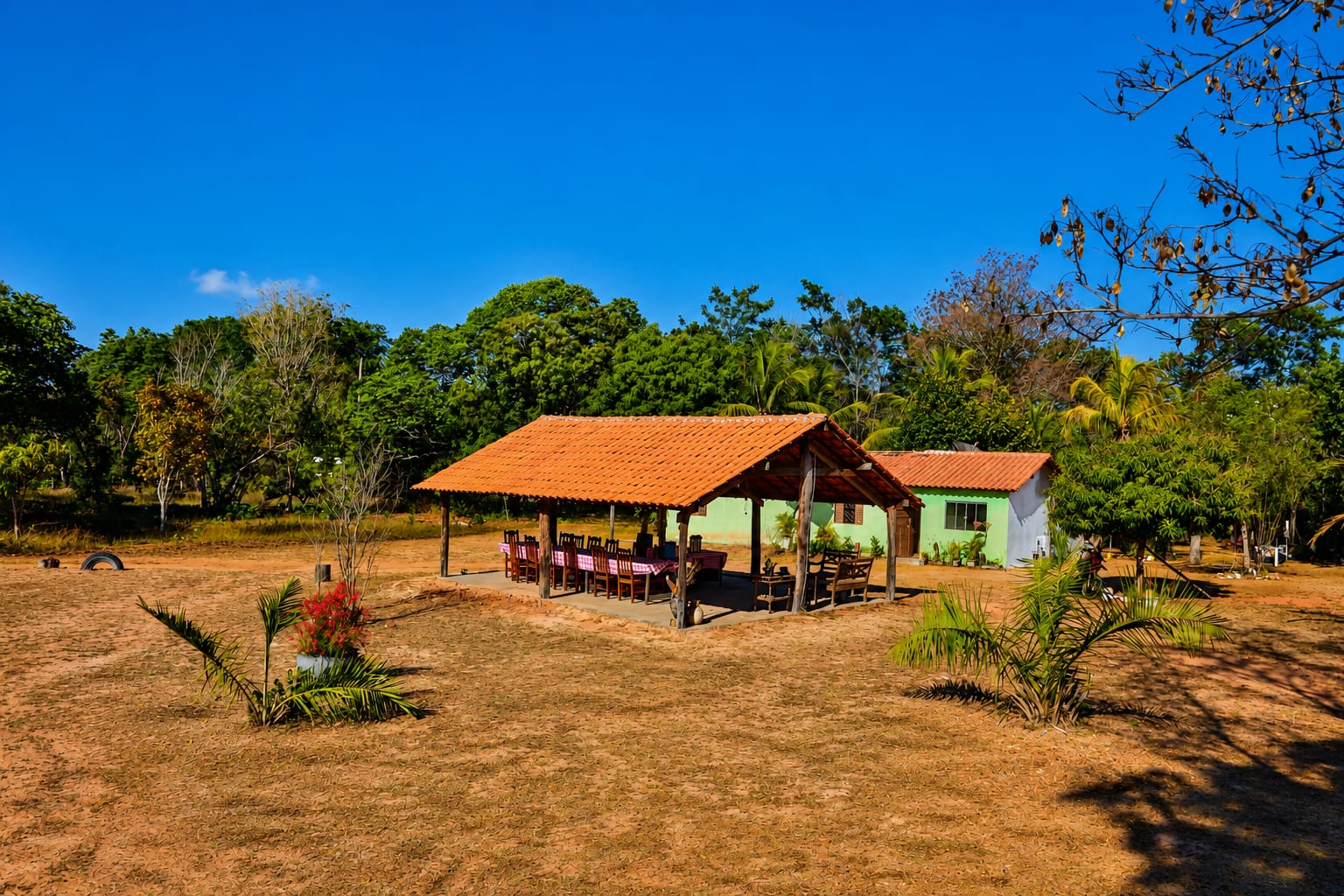
- Huge, open-air, unscreened dining rooms at each camp, with views of the surrounding forest or cliffs at Wolf Valley Camp and Wolf Cliffs Camp, respectively.
- Located in private properties of 2,500 acres and 10,000 acres adjacent to and inside the 1.7-million-acre Parnaíba River Headwaters National Park, Brazil’s second-largest national park outside the Amazon rainforest.
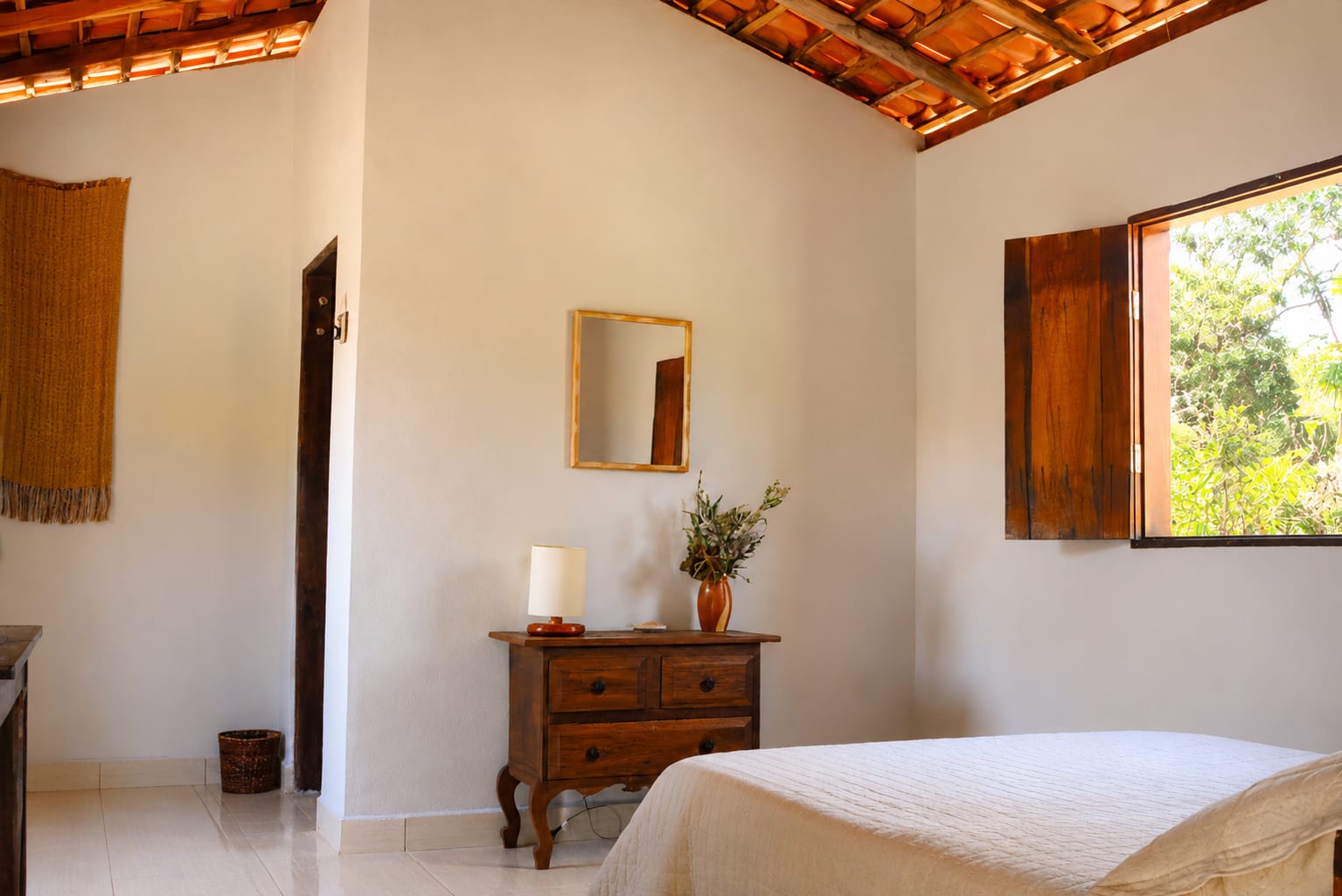
The seven private bungalows at each of the two Wolf Camps each have ensuite facilities and sun-heated showers that are best enjoyed in the afternoon or early evening when the water is warmest. Each bungalow is 380 square feet inside and has enormous windows to gaze out at tropical nature.
Wolf Valley Camp has feeders in natural habitat near the lodge with colorful birds and even delightful Tufted-eared Marmosets.
Wolf Cliffs Camp boasts particularly-spectacular red cliff scenery visible from the camp.
Maned Wolves often visit the edge of the clearing and even walk through the unfenced Wolf Cliffs Camp, much to the delight of the amazed guests. Despite the fact that the Maned Wolf is as tall as a Great Dane, it only weighs 25-28 kilos (55-61 pounds), as it is extremely slim and stands on tall, slender legs. This species of wolf is naturally very shy and hunts alone, with its favorite prey being small and medium-sized rodents and birds.
Although we offer to hang mosquito nets, the spacious guest rooms do not require them, as no matter the month, there are no mosquitoes at Wolf Camps. Additionally, there are no insect-borne maladies in the entire region.
The rooms are so large that it is easy to relax and spread out all your gear there.
When to visit
The best months for visiting the Wolf Camps are May through August. These are the months in which essentially no rain falls and the nighttime temperatures are deliciously-cool thanks to the relatively high elevation of the camps, namely 3,000 feet of elevation.
In September and October, it gets rather hot, and the wildlife is not as easy to see, so we cut off visitation by the end of August. Then in December through April come rains, which can make the offroad driving through the park rather difficult. So we stick to May through August.
The huge, tasty meals are served at the Wolf Camps in the enormous, open-air dining rooms with birds easily seen from the table. The particularly-tasty repertoire of home-cooked meals are prepared by the family of the former animal trapper turned conservationist. The personalized service and the delicious and varied dishes are delightful. Consistently our guests at the Wolf Camps say they enjoyed the wildlife, scenery, and particularly the personalized service even more than their outstanding time with Jaguars in the Pantanal.
Activities
Our Wolf Camps offer a greater variety of exciting wildlife and walks than you will find at any other dry tropical forest in the Americas. We list the activities briefly, and then describe the top four of them in more detail.
- Viewing and photography (“V&P”) of Maned Wolves during the night and often even during the day for 15-30 minutes on most days. Our guests admire the wolves from as close as only 4-20 meters in natural habitat.
- V&P of flocks of 15-25 Hyacinth Macaws on the ground and in low bushes and trees from only 9-25 meters. Sometimes the flocks are larger, in the range of 25-40 birds. Once, we had 105 Hyacinths at one moment all within view simultaneously at our viewing location, but that is not normal.
- V&P of the world-famous Bearded Capuchin Monkeys cracking rock-hard, golf-ball-sized palm nuts using special hammer rocks that these ingenious monkeys brought from who knows where and use on traditional sandstone “anvil rocks”. Our guests view this unique behavior from only 4-15 meters and without the use of a blind (hide). This is the most complex tool use of any of the world’s 267 species of monkeys. SouthWild was the first to discover this unique behavior and publicize it in 2003 in National Geographic Magazine with a dramatic photo by Peter Oxford.
- Charming, hyperenergetic Tufted-eared Marmosets at 2-5 meters at eye level in natural habitat at Wolf Valley Camp.
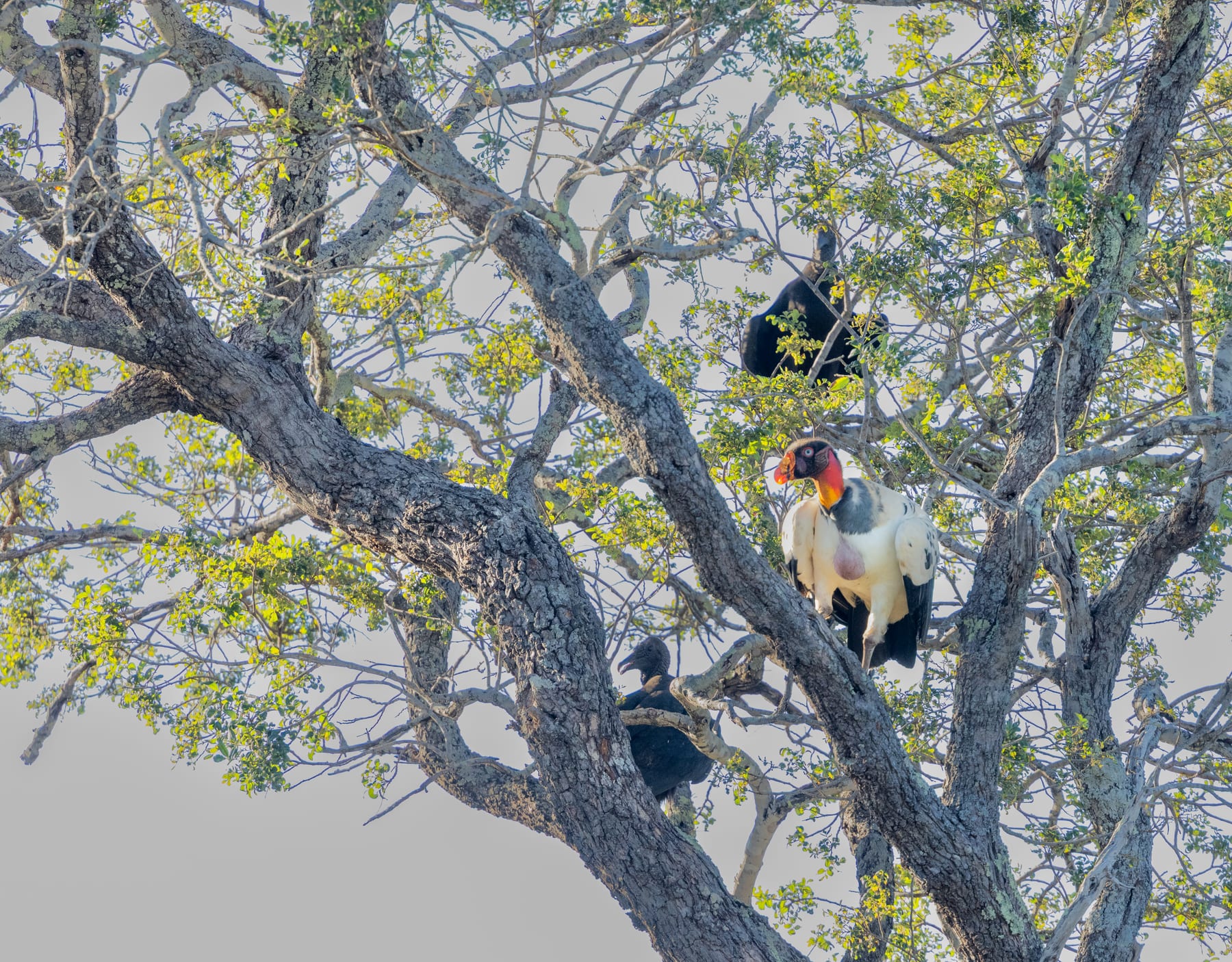
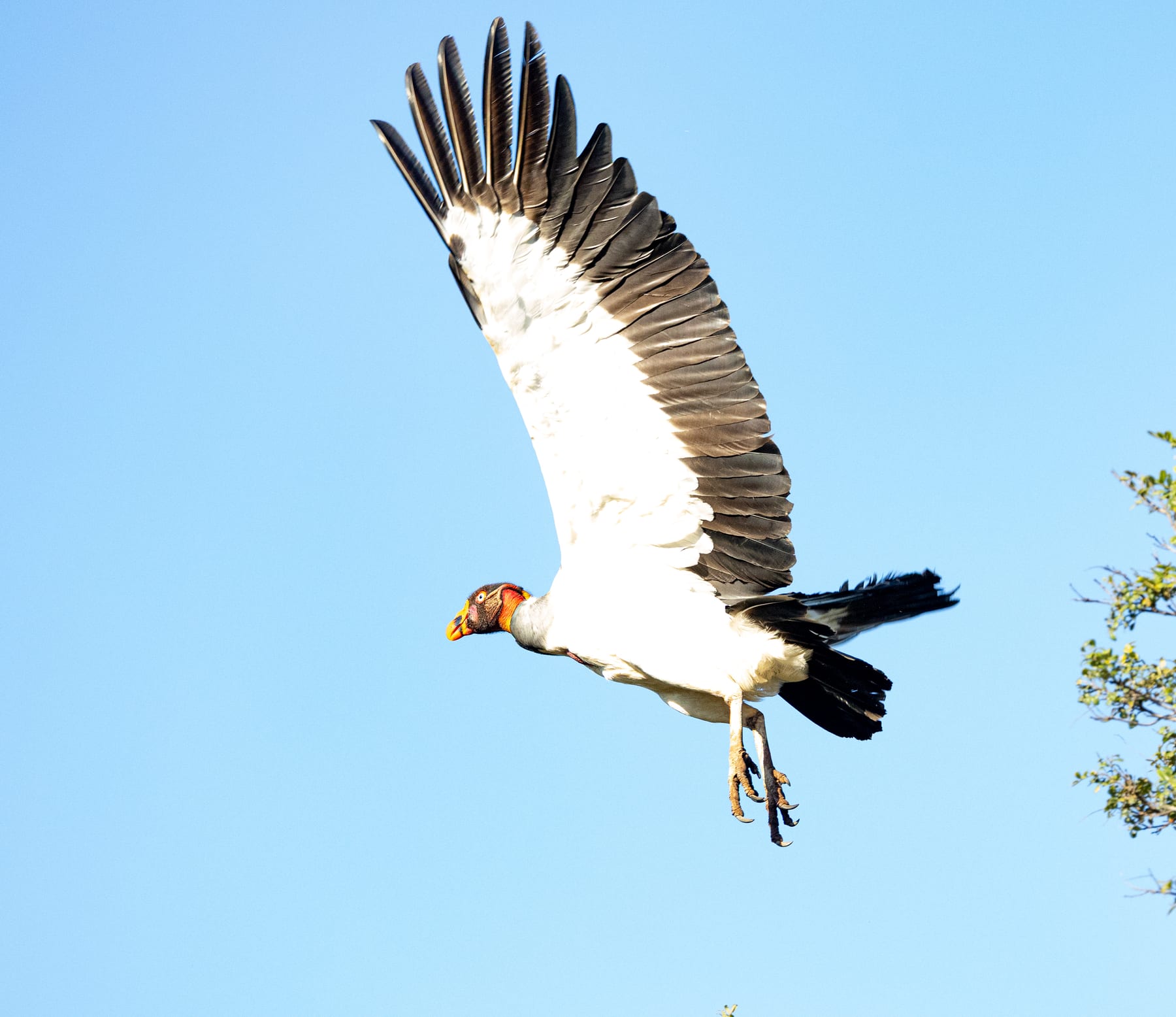
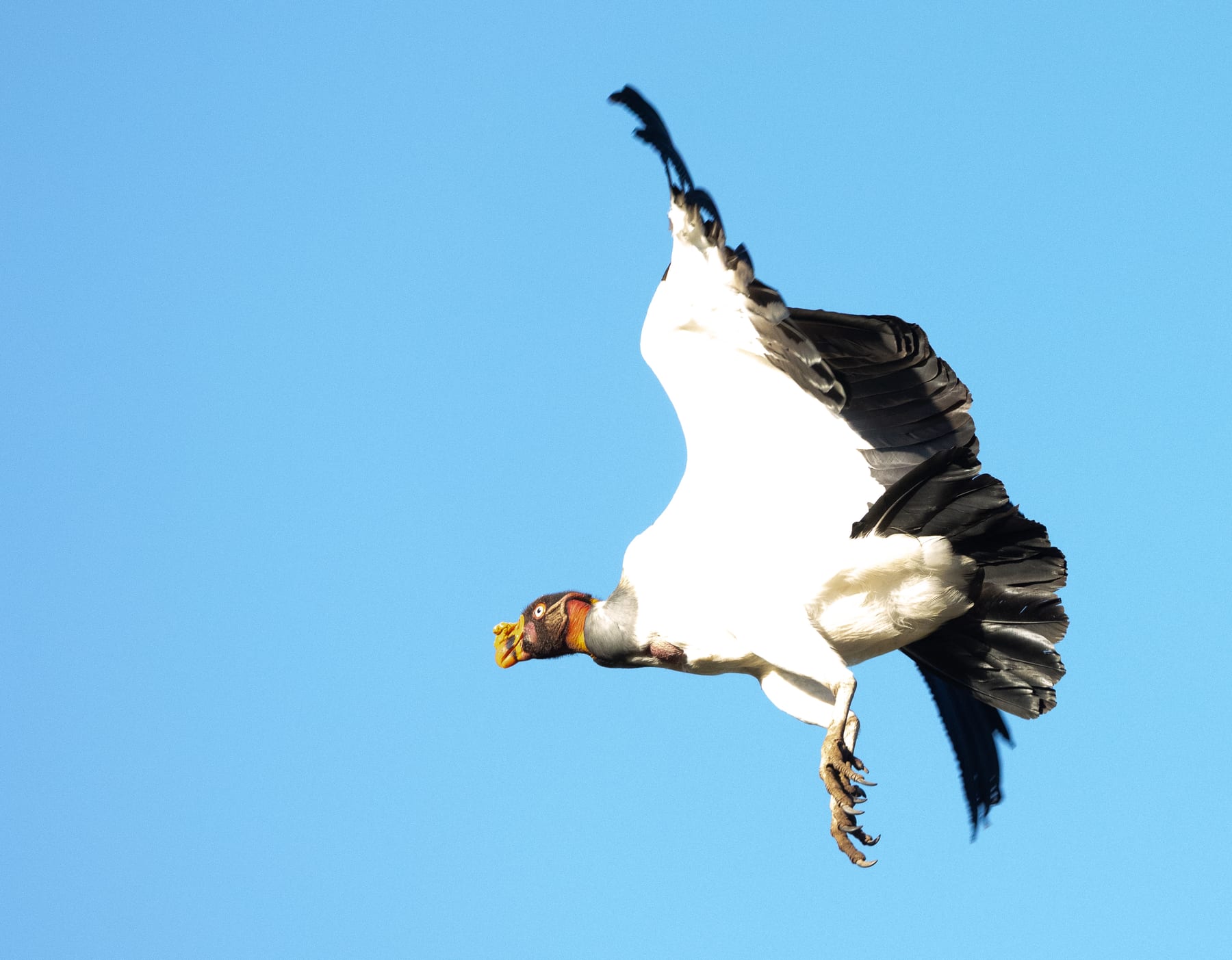
- King Vultures at 25-50 m in natural, dry forest habitat.
- Red-and-Green Macaws, Blue-and-Yellow Macaws, and Sun Parakeets at distances of 20-100 m.
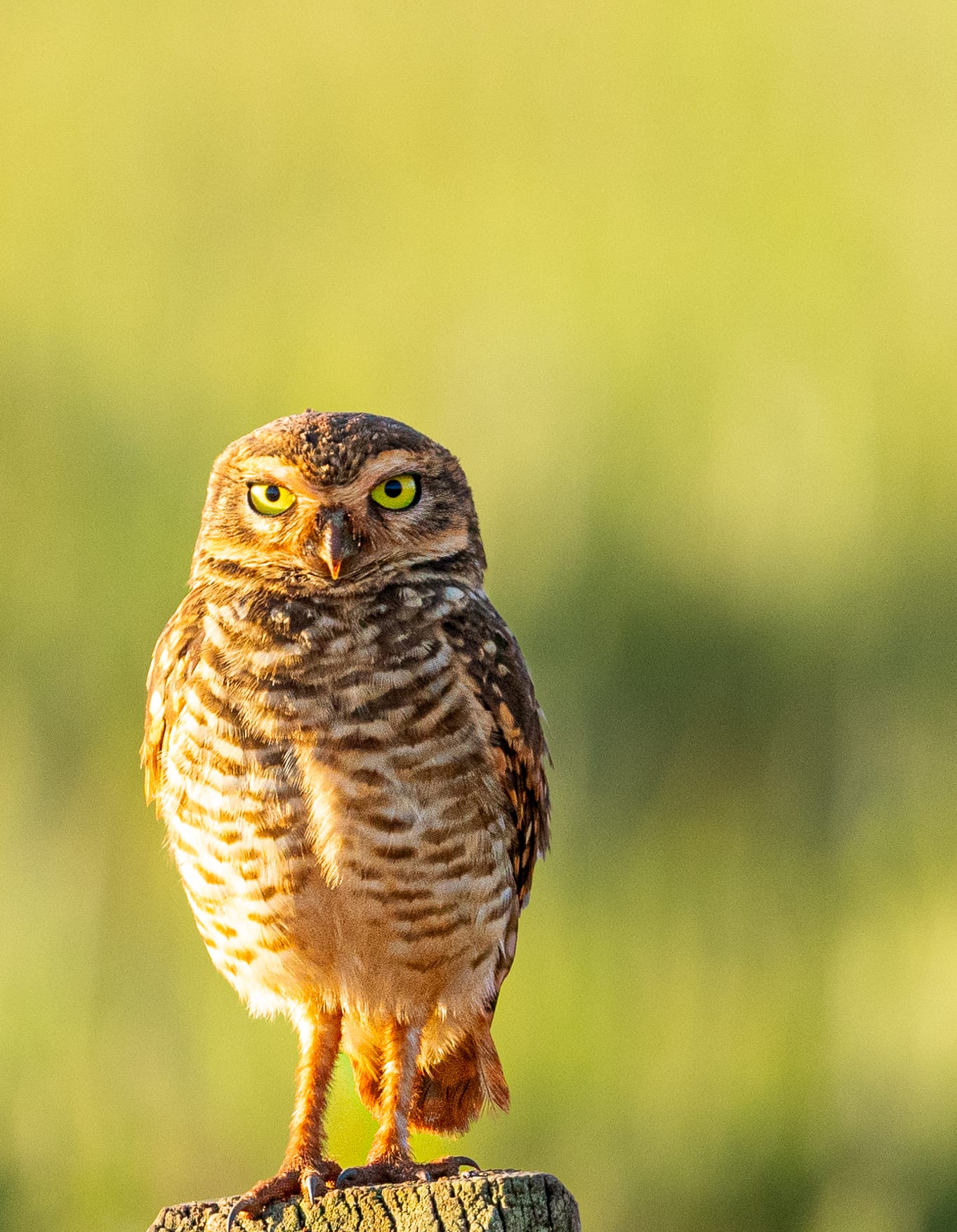
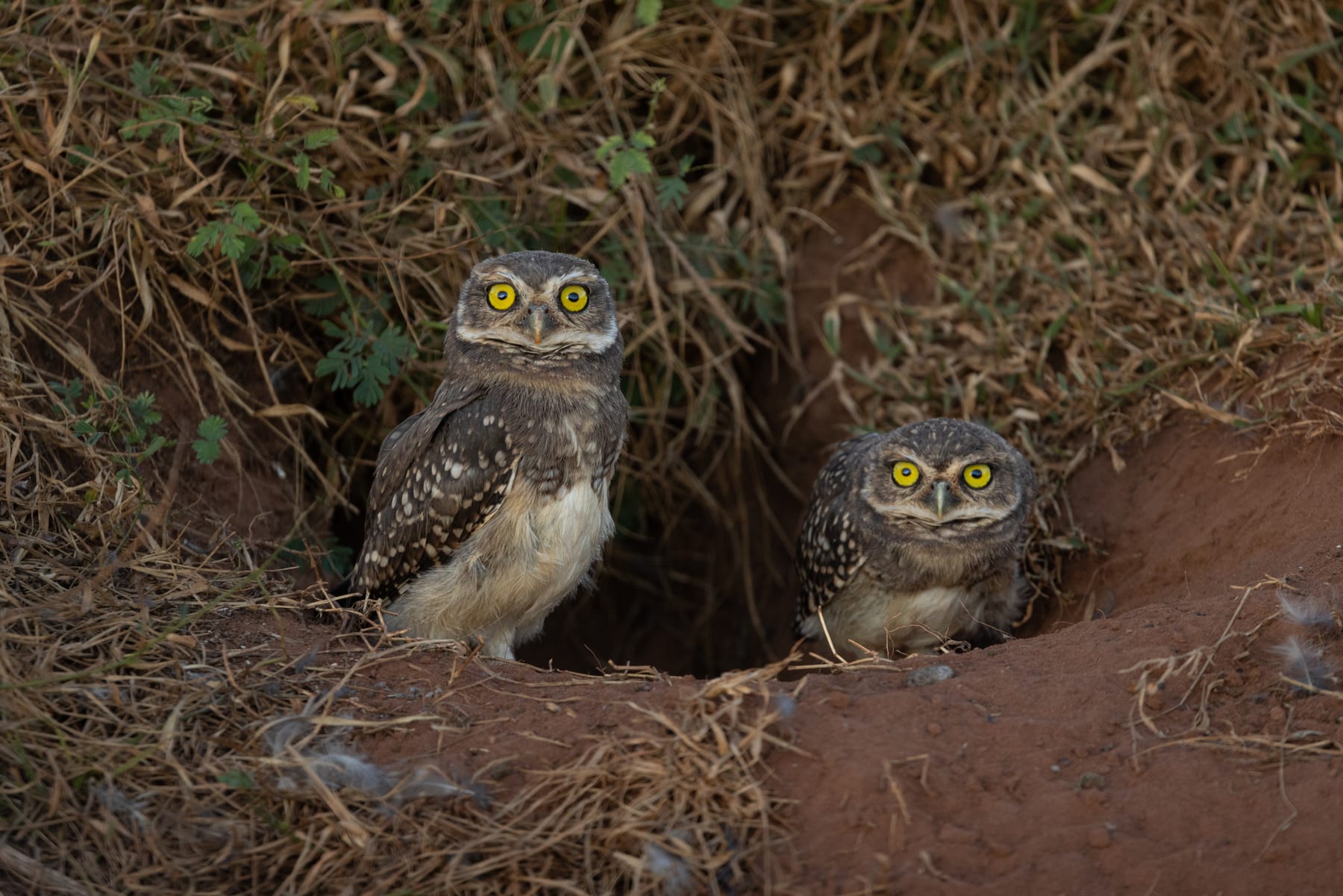
- Burrowing Owls in natural habitat at 9-20 meters.
Details of the top four activities.
Maned Wolves are visible at close range at Wolf Cliffs Camp on most nights from May through August and even sometimes pose right next to the individual guest bungalows. Most visits by the wolf or wolves of the day are in the first hours after sunset or near sunrise. The wolves are not aggressive at all towards humans, but rather, extremely timid and polite, so there is no danger at all. Never in 17 years of guaranteeing Maned Wolves at the Wolf Camps has a wolf threatened any person, and they never will.
Hyacinth Macaws are happy to gather at a natural location that is a five-minute drive from Wolf Valley Camp. They descend to the ground to forage on their traditional palm nuts, which are the same rock-hard nuts that are cracked by the Bearded Capuchins. These most powerful of all macaws take approximately six minutes to crack and slice in two each of these immensely-hard nuts. Inside, they find energy-rich nut meat that looks and tastes just like coconut meat.
In 2006, our researcher spent two months photographing the macaws that came to the foraging spot near Wolf Valley Camp and documented 167 different, individually-identifiable Hyacinth Macaws. The birds were distinguished by 600-mm lens photographs of their beaks, each of which had unique cracks, lines and other minor imperfections that allowed positive ID.
It requires patience to photograph these cobalt-blue macaws at their foraging spot, as they often take an hour to gather the confidence to descend to the ground for the nuts.
The famous nut-cracking Bearded Capuchin Monkeys of Wolf Valley Camp are in fact a 25-minute drive away, in a rocky dry forest nook. We leave Wolf Valley Camp after breakfast to drive to the spot and then walk 200 meters or so to find the monkeys. The capuchins are perfectly prepared to display their nut-cracking skills only a few meters from our portable stools. It is amazing to watch these most intelligent of all monkeys choose their special hammer rocks like tools in their tool kit and to do full-body lifts of the heavy rocks and bring them with all their strength to crack the extremely hard, golf-ball-sized palm nuts.
It is especially fascinating to watch young monkeys observing older group members cracking nuts with these hammer rocks. The young monkeys take 3-4 years of observation and practice to gain the strength to use hammer rocks to crack nuts successfully.
See the Facebook page “facebook.com/ethocebus/” for details of the 23 years of scientific research on these famous, tool-using monkeys, who demonstrate the most complex tool use of any of the world’s 267 species of monkeys. In the early 2000’s, the former animal trappers of Wolf Camps first showed these amazing, tool-using monkeys to Charles Munn, who then placed the first note about this in the international press, specifically in National Geographic Magazine. Since then, these monkeys have appeared countless times worldwide in TV documentaries by BBC and Nat Geo.
The combination of stunning scenery, private, up-close viewing and photography of spectacular, rare wildlife, lack of biting insects, delicious, personalized meal services, and wonderfully-cool sleeping without any need for air conditioning makes the Wolf Camps unique in the world.