Where SouthWild’s Story Began
Long before Jaguars became the symbol of SouthWild, our story began high in the rainforest canopy of the Peruvian Amazon. It was there that the principles guiding our work today were first born.
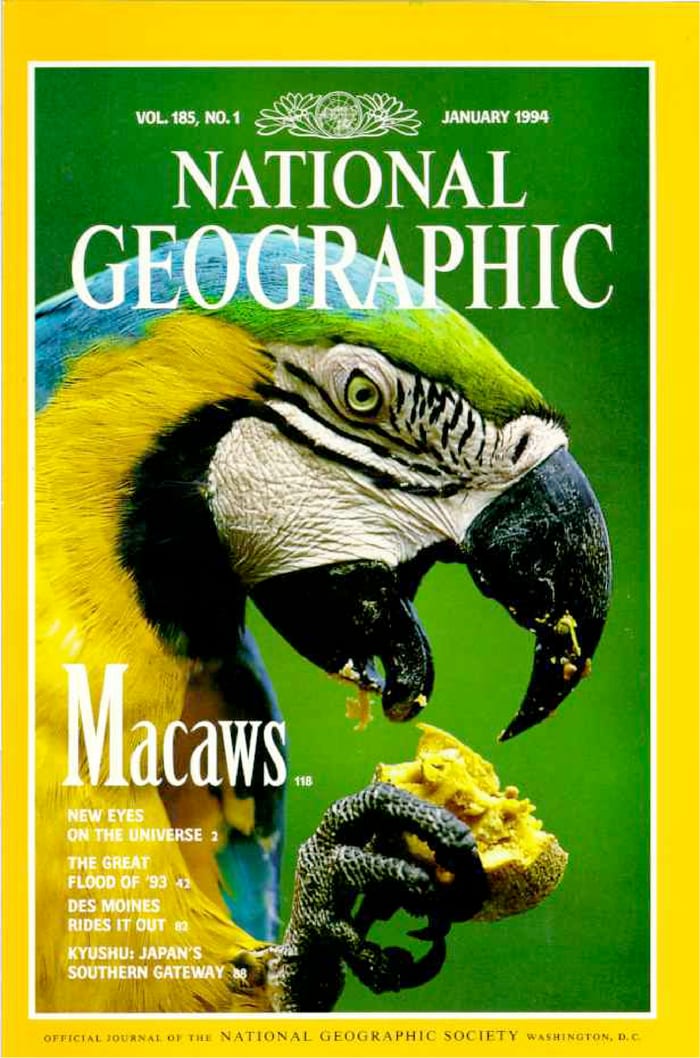
In 1983 in southeastern Peru, Dr. Charles A. Munn III launched one of the world’s first long-term scientific studies of wild macaws. At the time, remarkably little was known about these magnificent birds. Their breeding biology, social structure, movements, diet, and even the purpose of their spectacular daily gatherings at clay licks remained largely a mystery.
What began as a scientific expedition soon evolved into something much larger.
It became the foundation of a new conservation philosophy that continues to define SouthWild today:
Wildlife is worth more alive than dead.
The World’s Greatest Macaw Spectacle
The Amazon rainforest of southeastern Peru is home to the greatest concentration of Macaws found anywhere on Earth.
On most mornings, hundreds of Red-and-Green Macaws (Ara chloropterus), Scarlet Macaws (Ara macao), Blue-and-Yellow Macaws (Ara ararauna), follow hundreds of smaller parrot species in descending to riverbank clay faces known in Peru as “ccollpas”, the Quechua Indian word for these clay licks.
The sky fills with brilliant reds, blues, yellows, and greens as birds circle overhead before cautiously landing to consume mineral-rich clay.
When in 1983, Dr. Charles Munn first encountered this extraordinary phenomenon, almost nothing had been published about it. Many scientists believed that there was only a single macaw clay lick.
Years of exploration across the Amazon completely changed that understanding.
His team documented a hundred macaw and parrot clay licks throughout the southern half of the Peruvian Amazon, an area that is the size of California. This work revealed one of the world’s most extraordinary wildlife spectacles and placed Tambopata and Manu on the international conservation map.
Understanding the Secret of the Clay Licks
One of the central questions driving the project was deceptively simple:
Why do macaws eat clay?
For years, researchers followed individual birds, analyzed secondary compounds in their seed diets, studied seasonal movements, and investigated the chemistry of the soils they consumed.
Their work demonstrated that sodium-rich clay plays an important role in neutralizing naturally occurring plant toxins found in many rainforest seeds.
This research fundamentally changed scientific understanding of parrot ecology and remains one of the defining discoveries in Neotropical ornithology.
Climbing Into the Rainforest Canopy
Studying Macaws required far more than observing birds from the forest floor.
Many nests occur more than 20 or 30 meters (66 or 100 feet) above the ground, inside ancient hollow trees.
To reach them, Dr. Munn developed specialized climbing techniques using ropes, harnesses, and custom equipment that allowed researchers to safely access nest cavities while they were suspended high above the rainforest.
Over the years, the team completed thousands of canopy climbs while monitoring approximately 140 nests.
These observations produced some of the first detailed information on:
- Breeding biology
- Chick development
- Parental care
- Nest competition
- Survival rates
- Reproductive success
- Longevity
Many aspects of macaw biology that are considered standard knowledge today were first documented during this pioneering work.
Solving a Housing Crisis
One of the project’s most important discoveries was unexpected.
The greatest limitation on macaw reproduction was often not food, but housing.
Large macaws require enormous tree cavities that take centuries to form naturally. Such nesting sites had become increasingly scarce.
In response, Dr. Munn and his colleagues pioneered the development of artificial nest cavities designed specifically for large macaws.
Early experiments evolved into durable artificial nests that dramatically increased breeding opportunities and chick survival.
Today, artificial nest programs inspired by these original designs are used throughout Latin America for numerous threatened parrot species.
Identifying Every Individual
Long before camera trap databases and artificial intelligence became common conservation tools, the Munn’s Wildlife Conservation Society Macaw Project introduced an innovative method for recognizing individual birds.
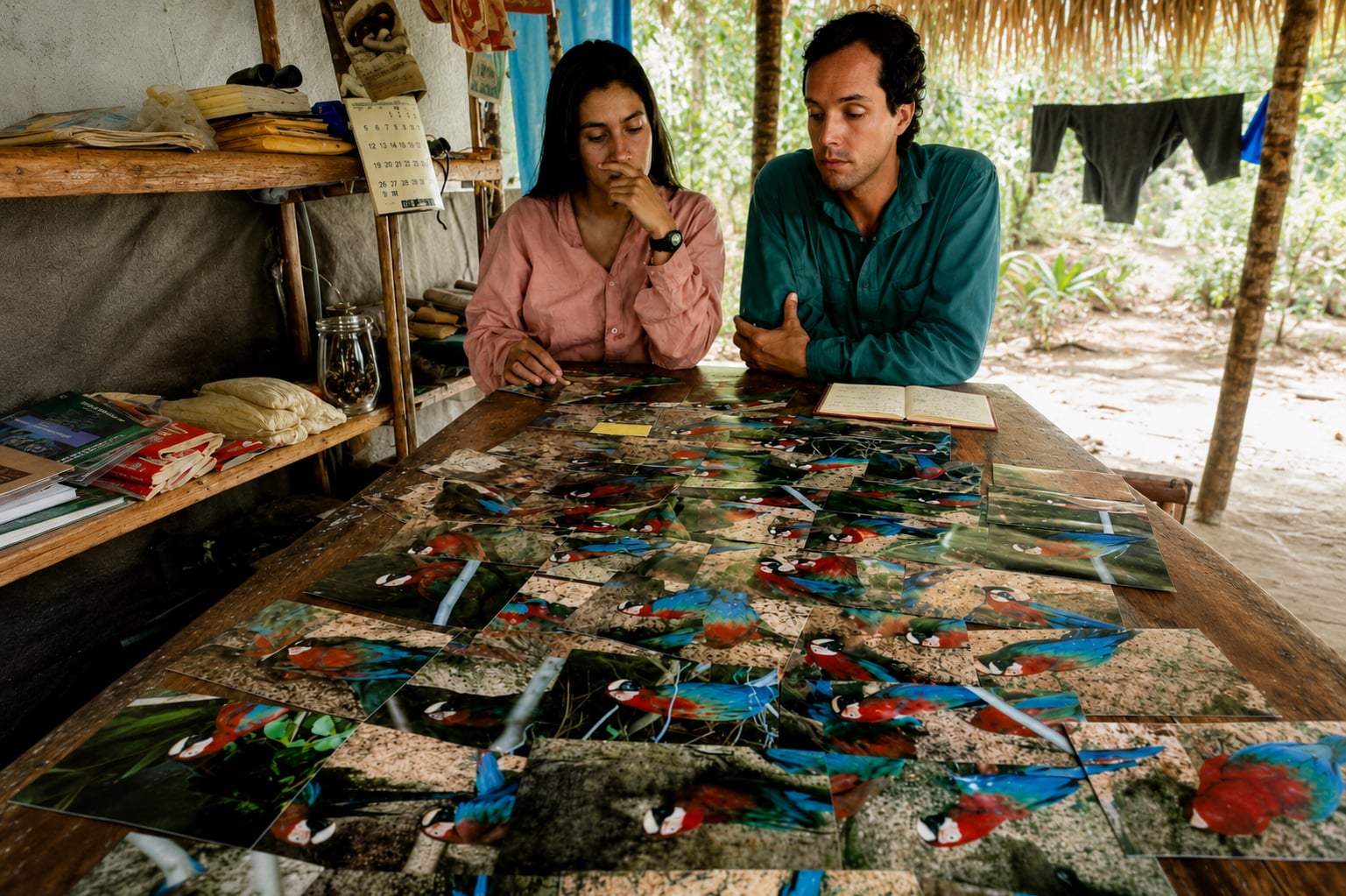
Dr. Charles Munn and Ms. Mariana Valqui discovered that the feather lines that crisscross the otherwise-bare faces of Red-and-Green Macaws are unique to each individual, much like human fingerprints.
Using tens of thousands of photographs collected over decades, they were able to identify individual birds, documenting total numbers of Red-and-Green Macaws using a large clay lick in Manu (about 500 birds), percentage of birds born that same year (7%), how often individual birds visited the lick (every 2-3 days), and how far birds came from to visit the lick (a maximum of 10 km).
This became one of the first individual identification programs for free-ranging parrots anywhere in the world.
The WCS Macaw Identification Project became the blueprint for every long-term individual identification program later developed by SouthWild.
Decades later, this same philosophy would inspire SouthWild’s Jaguar Dossier, replacing facial feather patterns with the unique rosette patterns of Jaguars, before expanding to the identification of King Penguins on Tierra del Fuego and Spectacled Bears in Ecuador.
Science That Changed Conservation
The project’s discoveries extended well beyond scientific journals.
Research produced by Dr. Munn and his collaborators contributed to growing international concern over the commercial trade in wild-caught parrots.
The biological evidence generated during these studies helped support stronger protections against the international importation of wild tropical birds, demonstrating how rigorous science can directly influence conservation policy.
Additionally, Munn created teams in Peru and Bolivia that led to the creation of six million hectares (15 million acres) of new protected areas in the Amazon forest of those two countries, and seven of the largest clay licks for macaws were protected by the creation of these reserves.
Working With Local Communities
From the very beginning, conservation was never viewed as something imposed upon local people.
Instead, it became a partnership.
The project worked closely with indigenous Machiguenga communities and local residents, combining generations of traditional ecological knowledge with modern scientific research.
Community members showed Munn and his team the secret locations of macaw licks and macaw nests, and explained seasonal macaw food choices through the seasons.
In return, the project supported education, communications, healthcare logistics, employment, and sustainable economic opportunities centered on wildlife conservation.
These collaborations demonstrated that successful conservation depends on local people becoming long-term partners and beneficiaries.
The Birth of Conservation Tourism
Perhaps the project’s greatest legacy lies beyond science.
During years spent observing Macaws, Dr. Munn recognized a simple but revolutionary economic reality:
A living macaw viewed by thousands of visitors over its lifetime is worth far more than one captured for the wildlife trade.
This realization helped establish one of the earliest successful models of conservation-based ecotourism in the Amazon.
It was one of the earliest demonstrations that wildlife conservation could become economically sustainable. Instead of extracting natural resources, local communities could generate long-term income simply by protecting extraordinary wildlife and sharing it with visitors from around the world.
Wild Macaws became ambassadors for rainforest protection.
Visitors traveled from around the world to witness the extraordinary clay lick spectacles.
Tourism generated income for local communities.
Standing forests acquired lasting economic value.
Wildlife became an asset worth protecting.
This philosophy later became the foundation upon which SouthWild was built.
Helping Protect Tambopata
As international attention grew, so did support for protecting the surrounding rainforest.
Research conducted by Dr. Munn and his colleagues played an important role in demonstrating the exceptional biological importance of the Tambopata region.
These scientific findings, combined with the growing economic success of nature tourism, helped build momentum for the protection of vast areas of southeastern Peru.
Today, Tambopata protects millions of acres of rainforest and is recognized as one of the most biologically diverse regions on Earth. The scientific discoveries made during those early years helped demonstrate why this extraordinary landscape deserved permanent protection.
Today, Tambopata is also recognized as one of the world’s finest destinations for observing wild macaws and countless other rainforest species.
A Legacy That Continues
More than four decades after the project began, its influence continues to grow.
Many of the scientific methods pioneered during those early years have become standard practice in wildlife research.
The principles first developed while studying macaws now guide SouthWild’s work across the Americas, from Jaguars in the Pantanal and Spectacled Bears in the Andes to King Penguins on Tierra del Fuego and many other conservation initiatives.
Every expedition we lead reflects the same conviction that inspired those first mornings beside a remote Amazonian clay lick:
Science creates knowledge. Knowledge inspires conservation. Conservation creates lasting value for wildlife, ecosystems, and local communities.
Everything SouthWild has accomplished since, from Jaguarland in Brazil to King Penguin identification on Tierra del Fuego and Spectacled Bear conservation in Ecuador, can trace its origins back to those first mornings among the Macaws of Manu and Tambopata.
The WCS Macaw Conservation Project was not simply the beginning of a research program. It was the beginning of a conservation philosophy that continues to shape SouthWild more than four decades later.