
The Place That Changed Jaguar Conservation Forever
Some places are famous because they are beautiful.
Others become legendary because they change the way we understand nature.
Jaguarland is one of those places.
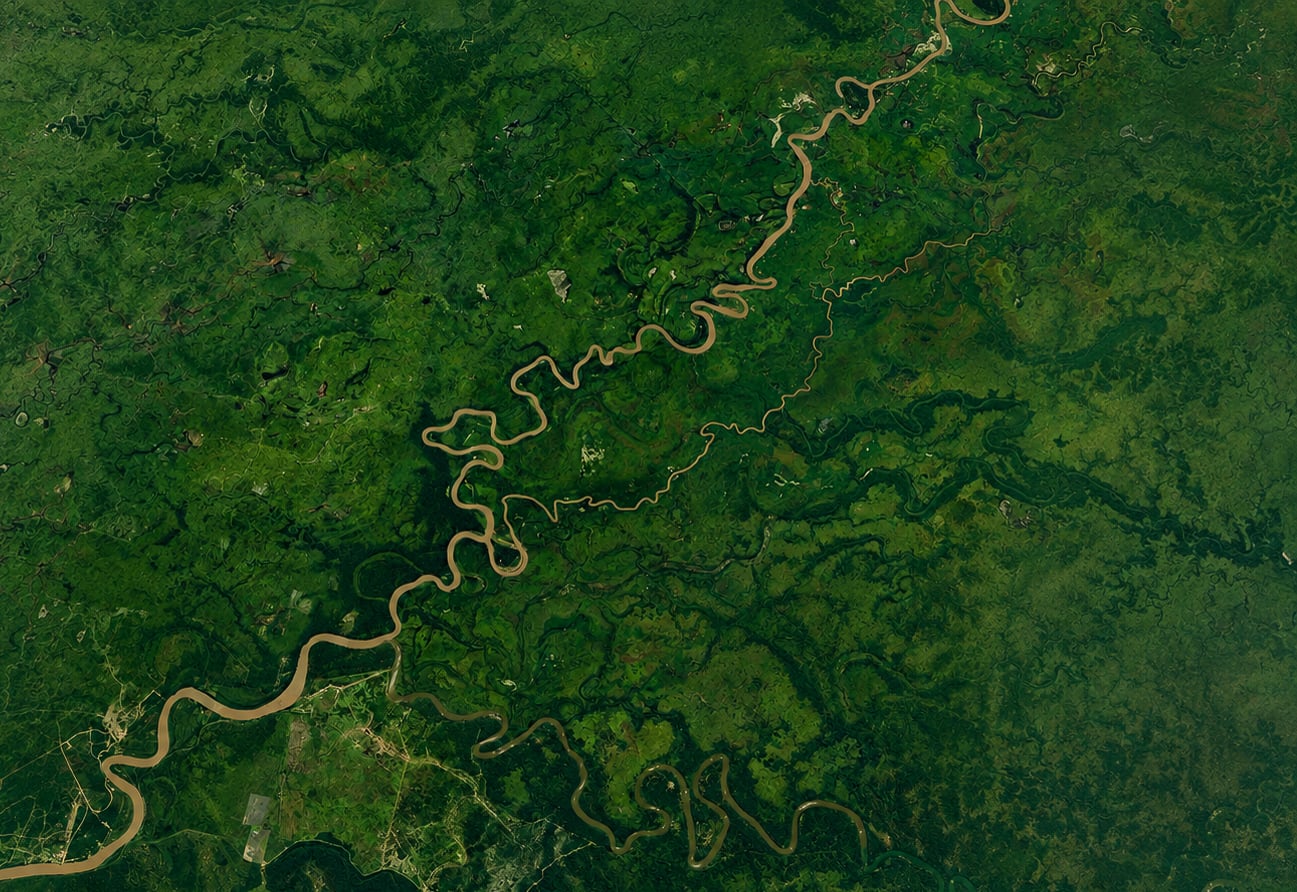
Stretching across approximately 100,000 hectares (250,000 acres) of rivers, forests, and wetlands surrounding Porto Jofre in Brazil’s Northern Pantanal, Jaguarland is widely recognized as the finest place on Earth to observe wild Jaguars.
Yet Jaguarland is far more than a destination.
It is the birthplace of a conservation model that proved wild Jaguars could become worth far more alive than dead.
Coined by SouthWild in 2007, the name “Jaguarland” today represents one of the greatest wildlife conservation success stories in the world.
The Discovery of Jaguarland
In August 2004, internationally renowned conservation biologist Dr. Charles Munn received an intriguing report from ecotourism pioneers, namely Douglas Trent and Eduardo Falcão, describing something that many experts believed almost impossible.
Wild Jaguars were being seen regularly on and near Eduardo’s father’s 1,500-acre ranch at kilometer 110 of the 145-km-long Transpantaneira raised road, deep in the Pantanal.
Curious to verify these reports, in August 2004, Dr. Munn sent biologist Edilene Gonçalves Nobre of Wolf Camps to Lerinho’s lodge to spend 19 consecutive days. She did three outings per day, morning, afternoon, and night, and saw a big cat on five of the days (26%), Four sightings were of a Jaguar and one was of a Puma.
One of the Jaguar sightings was particularly intriguing, and impossible to explain. In this case, Doug Trent’s car drove his small group of guests and Edilene 33 km south of the lodge, to the Cuiabá River in Porto Jofre and hopped in a motorboat and spent 2-3 hours boating upstream from Jofre, on the rivers that we now call “Jaguarland”. During the river outing, the group marvelled at a large male Jaguar lolling peacefully on the riverbank only a few meters from their boat. The gawking tourists were amazed that the Jaguar seemed so very relaxed and unconcerned. Why was it SO relaxed? What was going on?
If one Jaguar behaved this way, could there be more?
The following year, SouthWild launched a systematic expedition to answer that question.
Using radio-equipped boats and conducting daily surveys across nearly 100 kilometers (62 miles) of interconnected rivers, the team made a remarkable discovery.
If you put two boats on the river, going to different parts of the river labyrinth, the probability of at least one boat finding a wild Jaguar was 75 percent. Furthermore, the Jaguars in that particular part of the Pantanal were relaxed in the presence of motorboats, as since 1998, there had been a lot of sport fishing in that particular part of the Pantanal, and the tens of thousands of passes per year of sportsfishing boats without guns eventually convinced the Jaguars that motorboats were harmless. Additionally, just for fun, a lot of the sportsfishermen tossed spare piranhas at the big cats. These fish snacks made the cats even more convinced that sportsfishermen were harmless and often, in fact, helpful.
A new chapter in wildlife conservation had begun.
No other place in the world offered anything comparable.
Dr. Charles Munn named this extraordinary landscape “Jaguarland”, and it caught on to the point that even famous Emmy-winning wildlife cameraman Lawrence Wahba used it in one of his most recent films about the Jaguars of Jaguarland.
Why Jaguarland Exists
Extremely few places on Earth can boast reliable Jaguar sightings.
Jaguarland is different.
Extraordinary wildlife encounters rarely happen by chance.
Jaguarland emerged because four remarkable factors came together over several decades.
The End of Hunting
In 1967, Brazil banned all sport hunting, but it took a couple of decades for the law to be enforced effectively, but by the early 1990’s, all hunting from boats had stopped. Jaguars gradually learned that boats no longer represented danger, and of course, they adored the fish snacks that friendly Brazilian sportsfishermen tossed at them.
Fear rapidly gave way to tolerance and even anticipation.
Life Along the Riverbanks
Most Jaguar populations live in wet or dry forests, and they spend most of their time hidden as they hunt forest fauna such as peccaries and deer. Jaguarland’s cats, however, had always preferred hunting Caimans and Capybaras along the riverbanks, and by the late 90’s, they could hunt in the open along the rivers without fear of boats.
At this point, these very specific rivers became the perfect setting for respectful wildlife observation.
Thousands of Peaceful Encounters
For many years, thousands of small fishing boats navigated these waterways carrying unarmed people.
Generation after generation, Jaguars experienced harmless encounters with humans.
Without anyone realizing it, these repeated encounters and tossed fish rapidly reshaped the animals’ perception of boats.
An Unexpected Contribution
Many sport fishermen tossed some spare fish at the Jaguars who were waiting patiently on the riverbanks.
Although a number of people discourage this practice today, nevertheless, the playful tossing of fish unintentionally habituated the Jaguars to these fishing boats. Combined with the absence of hunting, this unusual historical interaction helped shape the most tolerant populations of wild Jaguars ever documented.
Why Jaguars Are So Visible Here
The region’s intricate network of rivers creates natural travel corridors where Jaguars hunt mostly caimans and some Capybaras along the riverbanks.
During the dry season, wildlife concentrates around these waterways, creating remarkable opportunities for observation.
The result is extraordinary.
Guests often witness behaviors that are almost impossible to observe elsewhere:
- Jaguars swimming down the river slowly, hunting while in the water.
- Mothers teaching cubs to hunt.
- Adult male Jaguars fighting over females in heat.
- Jaguars climbing trees that overhang the water and then jumping down onto caimans.
- Courtship and mating.
- Cubs playing under the watchful eyes of experienced mothers.
These are not staged encounters.
They are authentic moments unfolding naturally in one of the richest ecosystems on Earth.
The Living Library of Jaguars
Jaguarland is unique for another reason.
Since 2006, SouthWild has photographed and identified every Jaguar using each animal’s unique facial and body markings and rosette patterns, creating the world’s longest-running photographic identification project for wild Jaguars.
Today, the Jaguar Dossier chronicles the lives of more than 320 individually identified Jaguars documented over two decades.
A number of wildlife destinations know where Jaguars might be lurking and sometimes glimpsed.
Jaguarland, however, knows who they are.
Visitors do not simply see a Jaguar.
They may meet Patricia, one of Jaguarland’s great matriarchs.
Or Amber, raising the next generation.
Or Nels, the famous “submarine stealth hunter”, who is one the dominant males of the region.
Every individual has a name.
A territory.
A family history.
A story.
A Place That Protects What It Reveals
Jaguarland was not created by fences.
It was created by changing how people value wildlife.
Jaguarland demonstrated that when local communities benefit from wildlife, Jaguars can thrive alongside people.
Responsible ecotourism transformed the Jaguar from a perceived threat into one of the Pantanal’s most valuable natural assets.
For nearly two decades, SouthWild has invested continuously in this vision through scientific monitoring, partnerships with local ranchers, livestock compensation programs, guide training, habitat protection, and the first and longest-running photographic identification database of wild Jaguars.
Today, each year, tens of thousands of wildlife enthusiasts from around the world travel to Jaguarland. Their visits generate income for local communities, create jobs, support conservation initiatives, and demonstrate that a living Jaguar is far more valuable than a dead one. Jaguarland has become one of the clearest examples anywhere that responsible ecotourism can protect wildlife while improving local livelihoods.
Every expedition contributes to keeping that story alive.
SouthWild: The Original Jaguarland Experience
Every year, thousands of wildlife travelers journey to Jaguarland for one simple reason.
There is simply nowhere else like it.
Here, sightings are not measured only by numbers.
They are measured by quality.
Watching a Jaguar emerge silently from the forest, seeing a mother call her cubs from the reeds, photographing a powerful male resting beneath ancient trees, or witnessing a successful Caiman hunt just meters away: these are experiences that redefine what wildlife travel can be.
Our guides do not simply know where Jaguars were yesterday.
They understand territories, family relationships, seasonal movements, hunting behavior, and the subtle clues that often lead to extraordinary encounters.
Their knowledge has been built through decades of daily field experience in Jaguarland.
Jaguarland Today
Conservation does not end with the creation of protected areas.
SouthWild owns 3,120 hectares (7,710 acres) of strategic private lands in Jaguarland including 100% of the land around the Black Channel (“Corixo Negro” in Portuguese) and long sections of Corixo da Ilha and Corixo São Pedrinho, helping preserve the most Jaguar-rich habitats inside the 270,000-acre Encontro das Águas State Park.
Together with the Government of Mato Grosso, local communities, researchers, and responsible tourism, these privately protected landscapes contribute to safeguarding the world’s densest and most visible population of wild Jaguars.
Every journey to Jaguarland helps strengthen this long-term commitment to conservation.
When you visit Jaguarland with SouthWild, you become part of a much larger story.
Your journey helps support wildlife conservation, scientific monitoring, local employment, community partnerships, and a model of ecotourism that has inspired newer, similar initiatives across the Americas.
Jaguarland is proof that conservation is strongest when nature benefits everyone.
It is where extraordinary wildlife encounters create lasting memories.
It is where science meets adventure.
The story of Jaguarland is still being written.
We invite you to become part of it.